Cult of the Monument
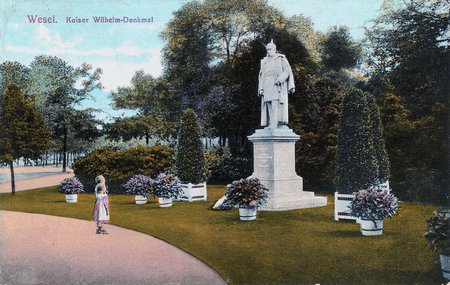
Triggered by the longing for national unity and a German national state, an excessive cult of the monument arose in the 1830s. While it was primarily monuments to “poets and thinkers” that adorned the public squares, parks and avenues in the beginning, after the German Empire was founded in Prussia in 1871 there was a great increase in royal portraits and busts of the Hohenzollern dynasty, followed in the 1880s by monuments to Otto von Bismarck, the first Chancellor of the Kaiserreich. The fact that busts of the Kaiser were erected in the remotest provinces brings to mind the representation of power in the Roman Empire. The demonstrative adulation of the Kaiser and Bismarck busts, to which was added the cult of Hindenburg during the Weimar Republic, corresponded to the desire of the communities and of large sectors of the population for national identity by means of political dramatizations and celebrations. Begas, the creator of Kaiser and Bismarck representations for the capital, was commissioned by numerous smaller towns and cities to provide them with copies. The originals were slightly modified and then quickly reproduced in series.
![Frontispiz des Buches Kaiser-Friedrich-Quelle [.] zu Offenbach am Main von Rudolf Delkeskamp, Gießen 1905, Offenbach am Main, Haus der Stadtgeschichte, Archiv](pics/12a_450.jpg "Frontispiz des Buches Kaiser-Friedrich-Quelle [.] zu Offenbach am Main von Rudolf Delkeskamp, Gießen 1905, Offenbach am Main, Haus der Stadtgeschichte, Archiv")