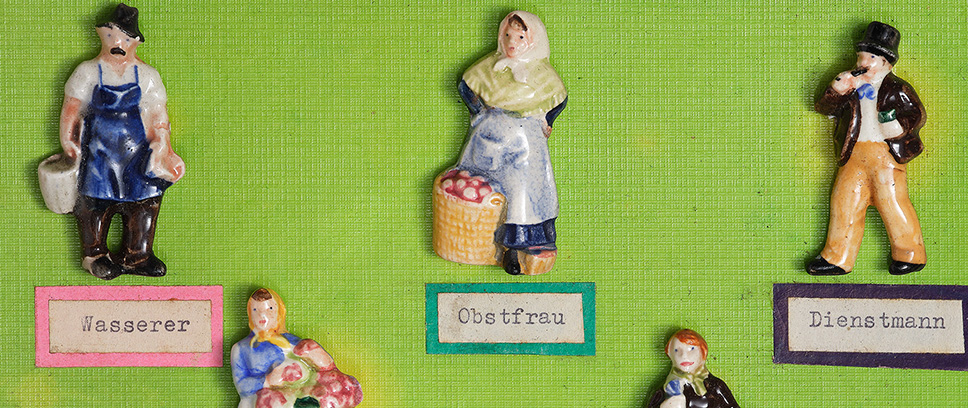
Rusty Party Badges? On Collecting Objects about National Socialism in the Deutsches Historisches Museum
Sören Kutzner and Dr Thomas Weissbrich | 25 February 2026
The blog series on the work of the collections at the Deutsches Historisches Museum (DHM) focuses on key issues such as decisions for or against the acquisition of objects, the different ways of accessing them, the changing research questions of the collections, research into the provenance of the objects, and many other aspects. Sören Kutzner, former trainee in the Collections Department, and Dr Thomas Weißbrich, Head of the Militaria Collection, focus on a special category of objects that repeatedly raises questions about whether and how they should be included in museum collections.
Found objects
It starts with a phone call or an email announcing a donation, or an envelope with no return address arriving in the post. Objects from the Nazi era repeatedly find their way to the DHM in various ways. The range is broad – there are individual items or extensive ensembles, utility and everyday objects, clothing, official documents, private photo albums, books, newspapers and magazines, and badges.
The donation of such items has increased significantly in recent years, an effect that is linked to the gradual disappearance of the generation of contemporary witnesses as well as changes in the culture of remembrance. Personal items, often stored for decades in cupboards, attics or cellars, pass into the hands of subsequent generations after the death of their owners. Many of these heirlooms raise the question of what to do with them, especially when Nazi symbols are clearly visible on them. Some people quickly decided that they do not want to keep these items. For others it is a matter of historical awareness and a deep aversion to anything associated with Nazism, while sometimes it is simply a lack of interest.
However, there are often concerns about selling these heirlooms like other antiques. Moral considerations lead to the view that it is not proper to make money from Nazi items. People are often outraged when uniforms belonging to prominent politicians or military figures are sold at auctions for huge sums. However, most objects still found in households today do not fetch top prices. Many people cannot deal with the widespread belief that if sold, these items could fall into the “wrong hands” and be used by right-wing extremists to glorify National Socialism. It cannot be ruled out that bidders with ideological motivations might participate in auctions, but it is also clear that there are many collectors without such motivations.
It is difficult to determine what role Nazi relics actually play in extremist right-wing circles. In Germany, the public display of what are considered anti-constitutional Nazi symbols is prohibited under the Criminal Code. Right-wing extremists therefore tend to use new symbols. [1] In many other European countries and the United States, however, it is not explicitly prohibited to wear these symbols.
Some heirs see donating heirlooms to a history museum as a way out of this perceived dilemma. This is often accompanied by a desire to place the items where they will be kept safe from misuse. Another consideration is that they will then be available for research or museum displays, thereby contributing to education. The decision to accept the offers is made by the curators responsible for the different collections, who consider various museum aspects such as the condition of the items and the need for restoration. At the DHM, these are the departments of everyday culture, militaria, applied arts and graphic arts, paintings and sculptures, documents, financial and economic history, photography, posters and postcards, and the library.
Collecting at the Museum
The DHM collection owes its diversity to the many donations it has received, which means that it is, to a certain extent, shaped by chance. In the case of National Socialist objects, this means that rare awards are rarely represented, while those that were awarded en masse are represented en masse. Among the items that appear multiple times is the “Honour Cross of German Mothers”, whose three classes – bronze, silver and gold – were awarded around 5 million times between 1938 and 1945 (Fig. 1). [2] Among the rare awards is the so-called “Wound Badge of 20 July”, donated after the failed assassination attempt on Adolf Hitler (1889-1945), of which only 24 badges were awarded, which are now all in private collections. [3]
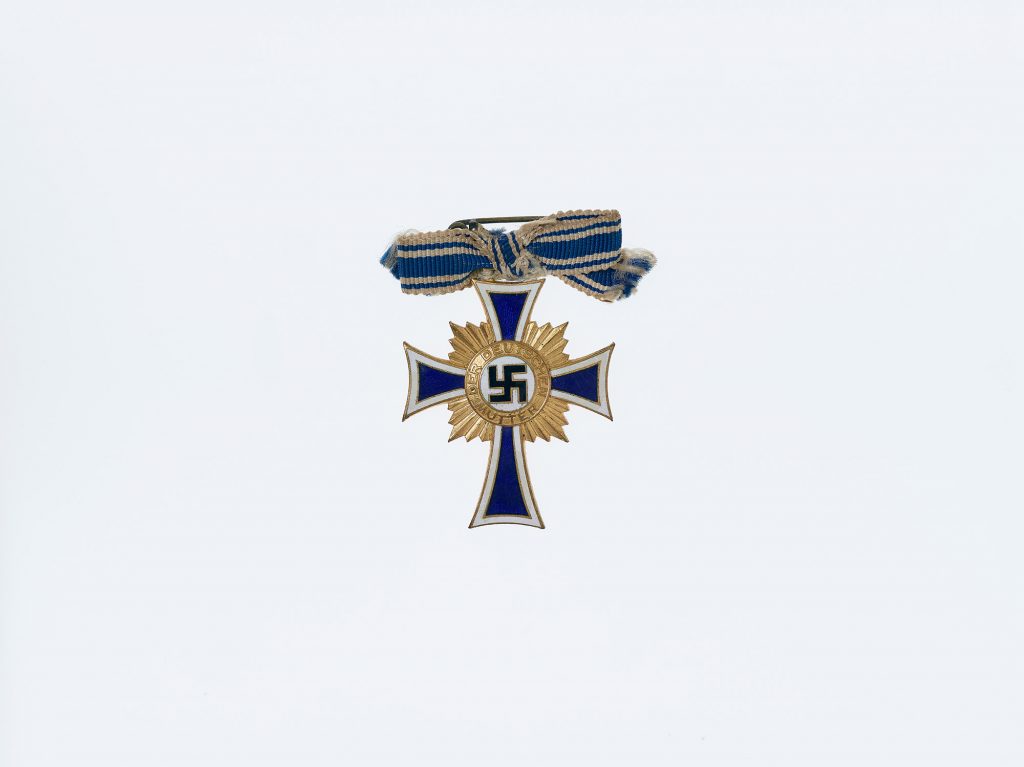
Of particular interest to the museum are objects that have a biographical context and are linked to individual stories. However, after some 90 years, this is now rarely the case. But it is precisely these exceptional stories that make them such revealing sources. They provide insights into everyday life under the Nazi regime and sometimes offer surprising perspectives – such as a NSDAP party badge that was worn only once and then disappeared into a drawer, or the “Honour Cross of German Mothers” deliberately displayed by a woman while shopping in order to avoid having to queue at the grocery store, which caused anger among those who had been waiting longer in line. [4] In addition to donations, which make up around two-thirds of the museum’s objects, the DHM occasionally purchases individual objects from the context of National Socialism, but as a museum funded by the federal government, it does so with restraint. [5]
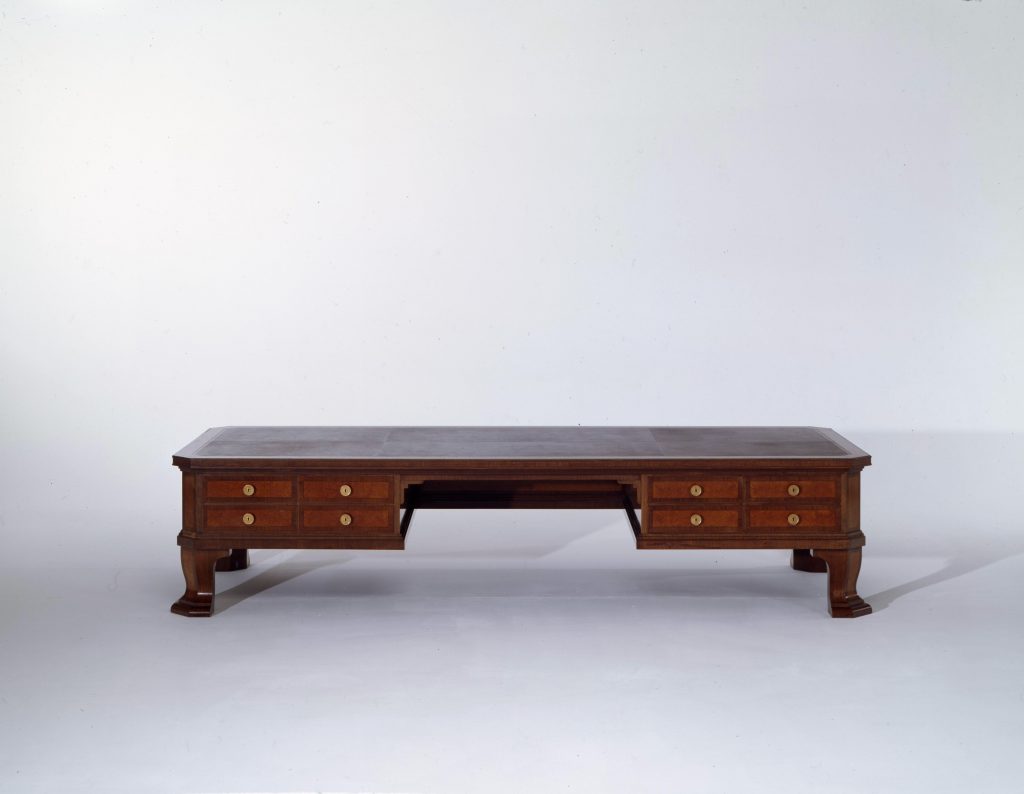
In addition, the DHM has numerous permanent loans of objects belonging to the Federal Republic of Germany. These include individual items such as a desk designed by Albert Speer (1905–1981) for the New Reich Chancellery (Fig. 2) and two large art collections. One is the “German War Art Collection” consisting of paintings and prints by German artists that were confiscated by the US Army after the Second World War and later restituted, with only a few exceptions. [6] The other extensive permanent loan from the federal government consists of artworks acquired between 1938 and 1944 by the German Reich at the “Great German Art Exhibitions” in Munich.
Contrasts
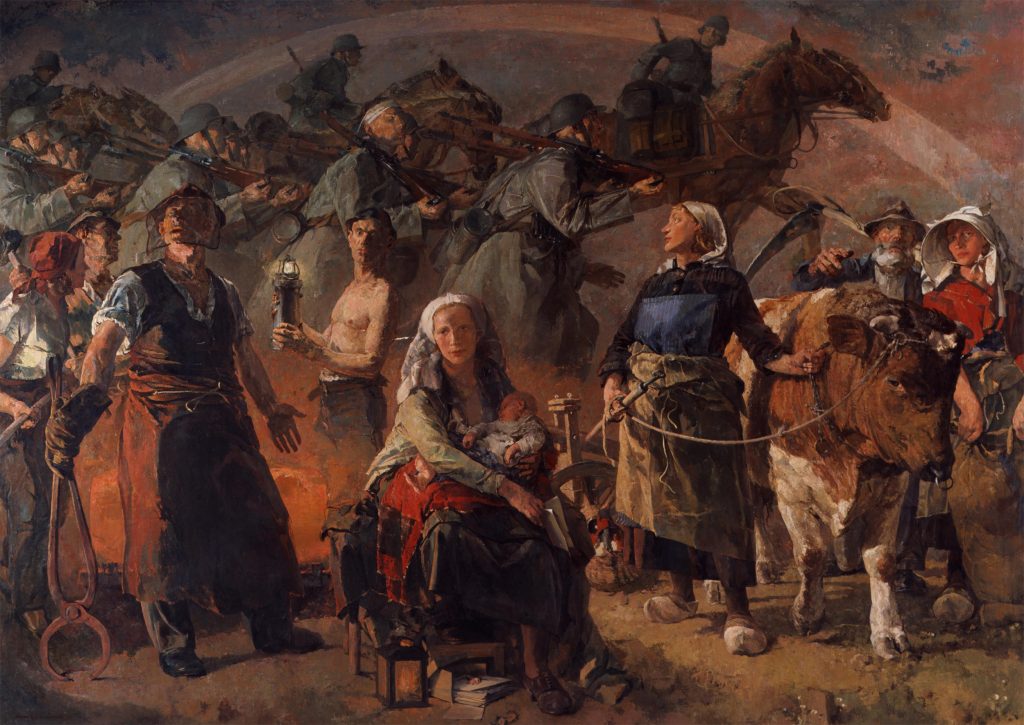
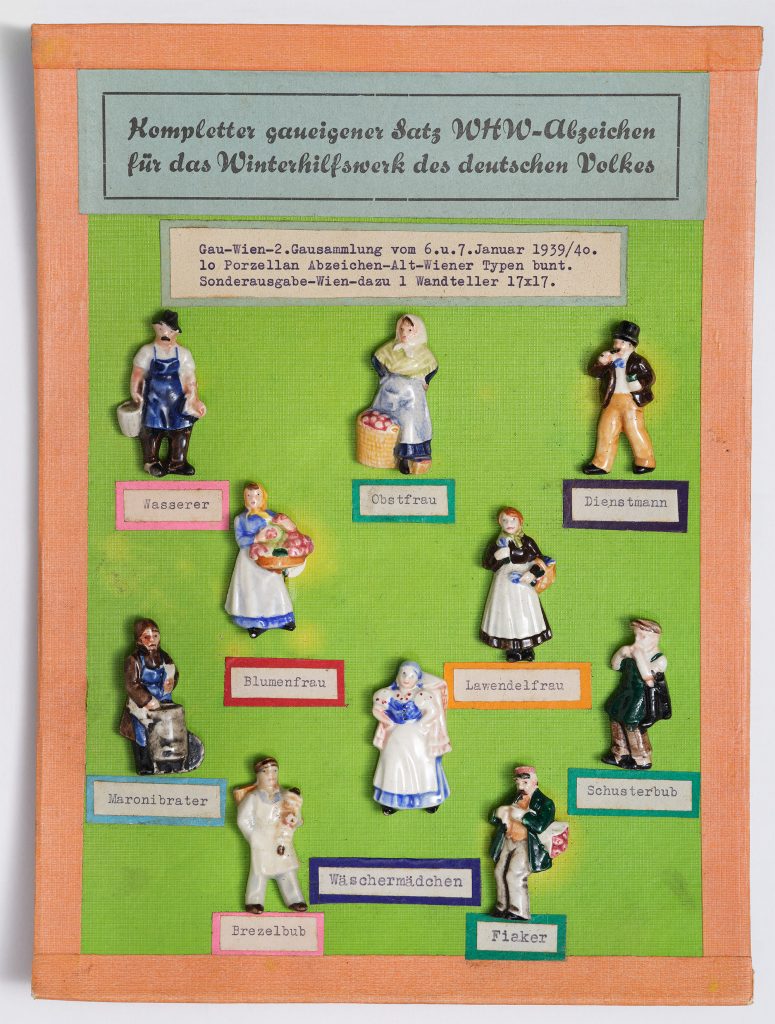
Apart from propagandistic paintings such as “Kämpfendes Volk” (A Fighting People) by Hans Schmitz-Wiedenbrück (1907–1944) (Fig. 3), it is the comparatively inconspicuous items that are significant due to their restraint, such as the pendants sold for the “Winter Relief Fund of the German People” that aimed to contribute to the formation of the “national community” (Fig. 4).
Collecting items related to National Socialism cannot, of course, be limited to genuinely National Socialist objects. In order to capture the historical complexity of the circumstances, the museum strives to present a broad spectrum. In this respect, the current collection benefits from the collection of the former Museum für Deutsche Geschichte (Museum of German History), the central history museum of the GDR, which was taken into the DHM in 1990. [7] One of the fundamental themes of that museum was anti-fascism, which was central to the GDR’s self-image. [8] As the collection work at the time focused on this theme, numerous such objects were gathered, in particular to document the communist-led struggle against the Nazi regime. The collection of the socialist history museum included, for example, items from the personal possessions of KPD chairman Ernst Thälmann (1886–1944) or from the paramilitary “Red Front Fighters’ League”, many of which were festively donated by contemporary witnesses or transferred to the museum by state institutions. [9]
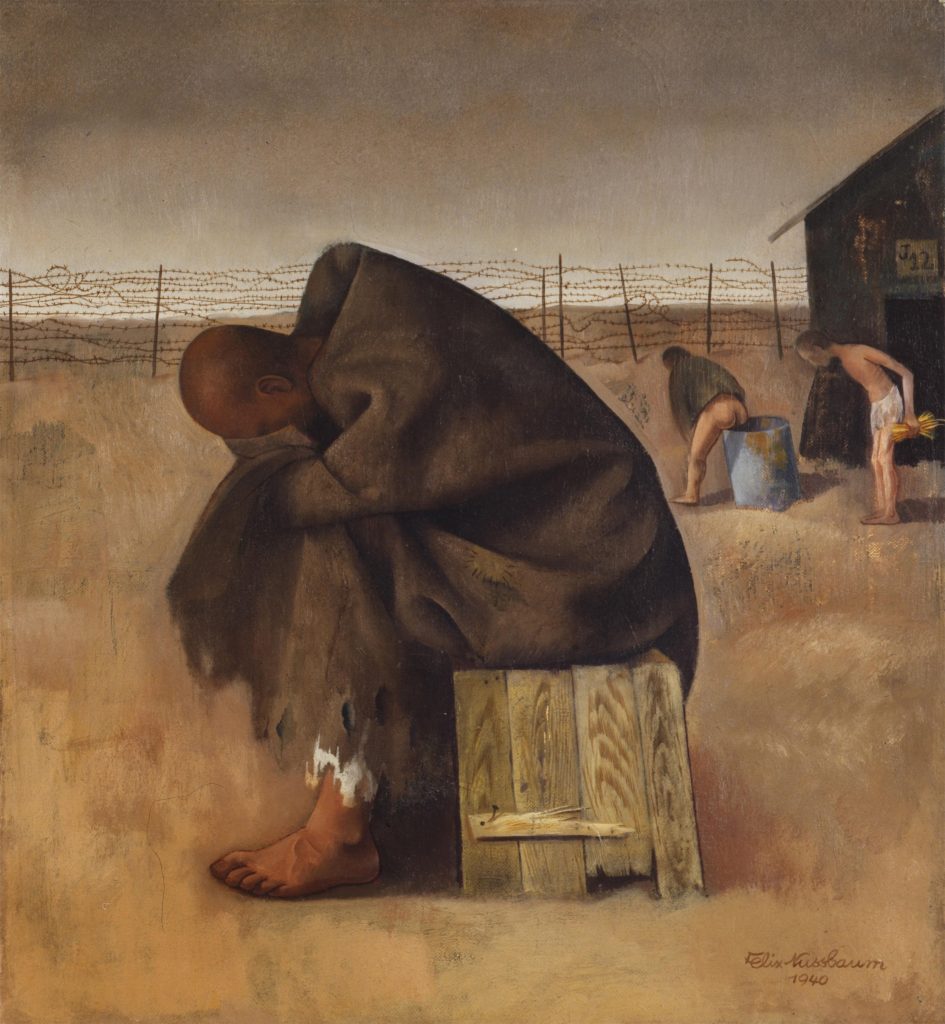
Since its foundation in 1987, the DHM has taken careful account of Jewish life, which had not played a significant role for the East Berlin history museum with its Marxist-Leninist perspective. [10] One of the early acquisitions is the outstanding painting “Crouching Prisoner” (Fig. 5) by the Jewish artist Felix Nussbaum (1904–1944). In 2021, the DHM acquired the extensive collection of Wolfgang Haney (1924–2017) on antisemitism under National Socialism, which was compiled over decades and consists mainly of documents. [11]
While all these large or small, unique or mass-produced objects are stored in the depot according to the collection areas, it is the exhibitions that bring them (back) into the public eye. This is the case with the permanent exhibition (2006-2021) and in several temporary exhibitions such as “1.9.39. An Attempt to Deal with Memories of the Second World War” (1989), “Holocaust. The National Socialist Genocide and the Motives for its Remembrance” (2002) and “Hitler and the Germans. Nation and Crime” (2010/11). [12] In recent years, artworks from the “German War Art Collection” and the “Haus der Deutschen Kunst” have been on loan to neighbouring countries, most recently in the exhibition “Art in the Third Reich” (2023) in Arnhem, the Netherlands. [13] Here, the exhibition organisers explored questions of “seduction and distraction”, thus shedding new light on the work of National Socialist artists.
Exhibitions relate the various objects to each other in order to reinforce them or to create contrasts, explaining their stories with the help of images and texts, media technology or guided tours. To this end, the DHM curators can draw on our rich museum collection. Their selection options are constantly expanding – not least thanks to a steady stream of new “finds”.
If you own objects from the Nazi era and are considering donating them to the DHM, please contact the Collections Department. The best way to do this is to send an email to sammlung@dhm.de.
[1] Cf. Steven Heller, The Swastika and Symbols of Hate. Extremist Iconography Today, New York 2019.
[2] Cf. Jörg Nimmergut, Deutsche Orden und Ehrenzeichen bis 1945, Bd. IV., München 2001, p. 1937-1941.
[3] Cf. Jörg Nimmergut, Deutsche Orden und Ehrenzeichen bis 1945, Bd. IV., München 2001, p. 2225-2232.
[4] Cf. Irmgard Weyrather, Muttertag und Mutterkreuz. Der Kult um die „deutsche Mutter“ im Nationalsozialismus, Frankfurt a.M. 1993, pp. 155-156.
[5] Cf. Burkhardt Asmuss, „Chronistenpflicht“ und „Sammlerglück“. Die Sammlung „Zeitgeschichtliche Dokumente“ am Deutschen Historischen Museum, in: Zeithistorische Forschungen 4 (2007), pp. 177-188.
[6] Cf. Veit Veltzke (ed.), Kunst und Propaganda in der Wehrmacht. Gemälde und Grafiken aus dem Russlandkrieg, Bielefeld 2005.
[7] Cf. https://www.dhm.de/museum/geschichte-und-architektur/geschichte/
[8] Cf. Herfried Münkler, Die Deutschen und ihre Mythen, Berlin 2009, pp. 421-453.
[9] Cf. https://www.dhm.de/blog/2022/04/13/wie-die-turnhose-ernst-thaelmanns-ins-museum-kam-eine-schenkung-des-instituts-fuer-marxismus-leninismus-an-das-museum-fuer-deutsche-geschichte/
[10] Cf. https://www.dhm.de/museum/geschichte-und-architektur/geschichte/
[11] Cf. https://www.kulturstiftung.de/sammlung-haney-dhm/
[12] Cf. Hans Ottomeyer / Hans-Jörg Czech, Deutsche Geschichte in Bildern und Zeugnissen, Berlin / Wolfrathshausen 2007; Dieter Vorsteher u.a. 1.9.39. Ein Versuch über den Umgang mit Erinnerungen an den 2. Weltkrieg, Berlin 1989; Burkhardt Asmuss (ed.), Holocaust. Der nationalsozialistische Völkermord und die Motive seiner Erinnerung, Berlin 2002; Hans-Ulrich Thamer / Simone Erpel (ed.), Hitler und die Deutschen. Volksgemeinschaft und Verbrechen, Dresden 2010.
[13] Cf. Jelle Bouwhuis / Almar Seinen, Art in the Third Reich. Seduction and Distraction, Zwolle 2023.
|
|
Dr Thomas WeißbrichDr Thomas Weißbrich is head of the DHM’s military collection, which includes uniforms, flags, medals, orders and uniform-related graphics. |

|
|
Sören KutznerSören Kutzner is a former academic trainee in the Collections Department of the Deutsches Historisches Museum. |