
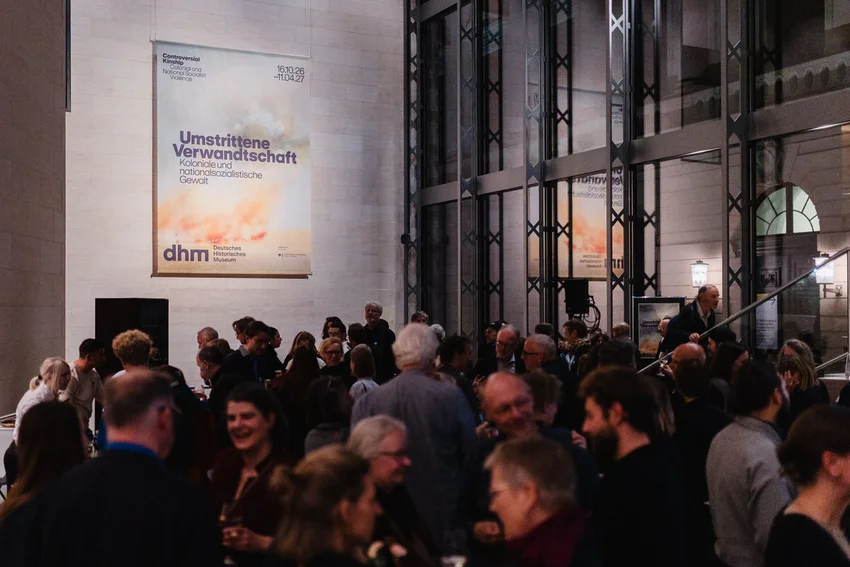
Recap: the opening of the exhibition "Controversial Kinship. Colonial and National Socialist Violence"
20 October 2026
EditorsControversial Kinship
5 October 2026 Reading duration 2 Min.
The DHM presents four new publications this autumn, just in time for the Frankfurt Book Fair. Together, they explore the controversial “kinship” between colonial and National Socialist violence, examine what historical objects reveal about the German occupation of Europe from 1939 to 1945, trace the postwar careers of artists on the “Divinely Gifted List” drawn up on the orders of Goebbels and Hitler, and shed light on relations between Germany, Russia, and the United States.
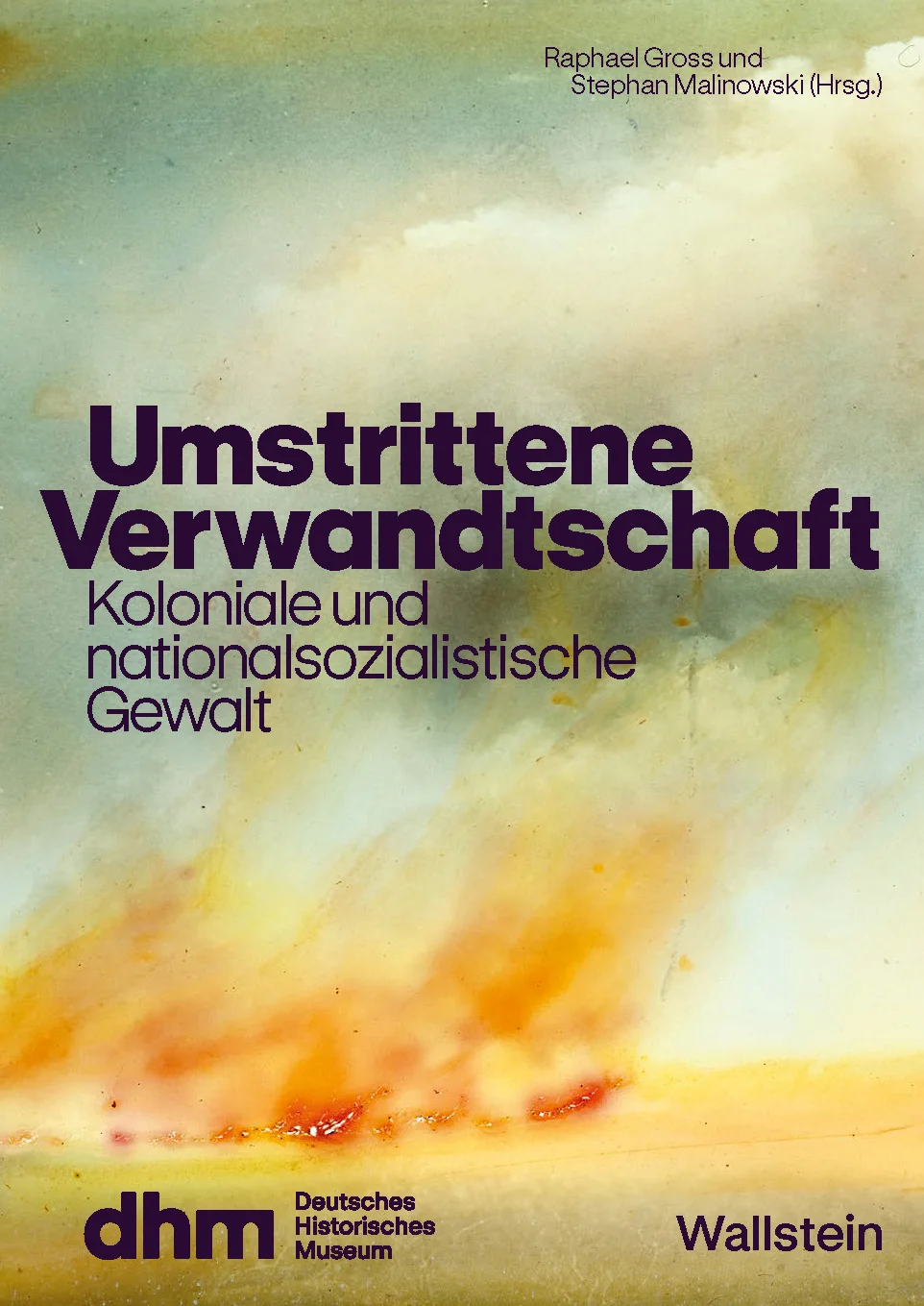
In recent years, questions surrounding comparisons between colonialism and Nazism have fuelled fierce debates over how history is interpreted and remembered.
This volume investigates the alleged “kinship” between the two regimes of violence: centuries of European colonial rule versus the relatively brief period of Nazi rule in Europe, marked by a radical escalation of persecution and violence. While the two appear to have much in common at first glance, closer examination reveals significant differences. Focusing on the period from 1900 to 1960, the contributors explore the historical foundations of this comparison, addressing themes such as racism, antisemitism, forced labour, collaboration, and resistance. Drawing on a broad spectrum of international examples, the volume seeks to return a highly charged debate to a more empirical footing.
With contributions by Aomar Boum, Sebastian Conrad, Frederick Cooper, Moritz Feichtinger, Ulrich Herbert, Leslie James, Fabian Krautwald, Emma Kuby, Claus Leggewie, Wendy Lower, Stephan Malinowski, Jürgen Matthäus, Aram Mattioli, Anthony McElligott, Stefanie Middendorf, Michelle Moyd, Avner Ofrath, Grzegorz Rossoliński-Liebe, Baijayanti Roy, Martin Thomas, Natalya Vince, Nikolaus Wachsmann, Fabian Weber, and Markus Wurzer.
320 pages, €28, ISBN 978-3-86102-240-4
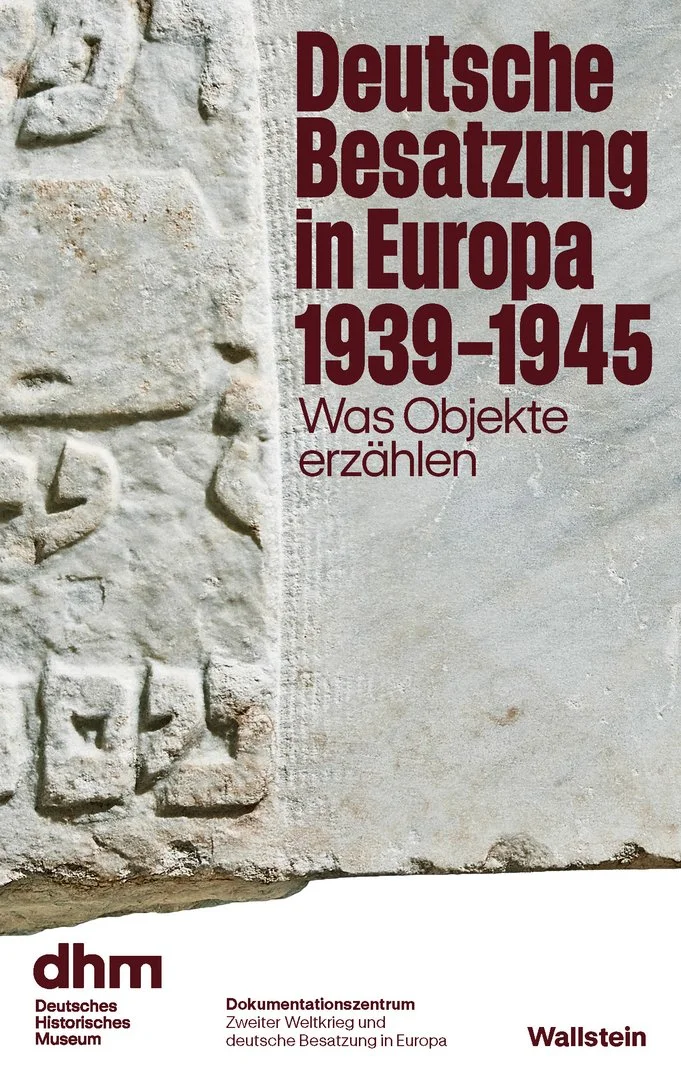
Between 1939 and 1945, more than 230 million people in territories spanning over 30 present-day countries lived under violent and repressive German rule. This volume uses a range of historical objects to explore Germany’s war of aggression and the occupation that followed, addressing topics such as forced labour, camps, plunder, cultural destruction, hunger, sexual violence, the murder of institutionalised patients, the Shoah, the genocide of the Sinti and Roma, cooperation with the occupiers (whether voluntary or coerced), resistance, and remembrance.
Working with a wealth of photographs, documents, and other historical artefacts, the contributors identify differences between countries and population groups, as well as broader patterns of German occupation in Europe. In the process, they draw attention to crimes that often remain little known in Germany but continue to have repercussions in the countries where they were committed.
With contributions by Volha Bartash and Leonard Stöcklein, Marc Buggeln, Havi Dreifuss, Piotr M. Majewski, Katja Makhotina, Leon Saltiel, Pia Schölnberger, Katrin Stoll, Dmytro Tytarenko, Helen Upcraft, Olivier Wieviorka, and Ingrid de Zwarte.
224 pages, €24, ISBN 978-3-8353-6031-0
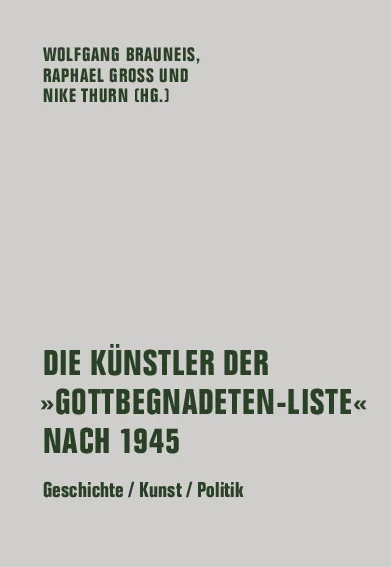
Many of the visual artists on the Gottbegnadeten-Liste, the “List of the Divinely Gifted” compiled on the orders of Goebbels and Hitler, saw their careers continue virtually uninterrupted after 1945. This volume brings together perspectives from art history and contemporary history to critically examine the networks through which these artists secured commissions. It also documents the reception of their work – much of which remains in public and semi-public spaces with little or no historical contextualisation – and discusses current approaches to these works and how they should be dealt with in the future. Examples range from Berlin’s Olympic Park and the Vienna State Opera to art incorporated into Munich’s cityscape. Through broader surveys and studies of individual artists and their works, including Fritz Behn, Arno Breker, Hans Breker, Rudolf Eisenmenger, Hermann Kaspar, Georg Kolbe, and Willy Meller, this publication makes an important contribution to the study of art after National Socialism.
With contributions by Jutta Braun, Wolfgang Brauneis, Irith Dublon-Knebel, Stefanie Endlich, Veronika Floch, Ambra Frank, Julia Friedrich, Swantje Greve, Clemens Heinrichs, Martin Hochleitner, Peter Paul Kubitz, Michaela Melián, Kaspar Mühlemann Hartl, Oliver Rathkolb, Dorothea Schöne, and Franziska von Stenglin.
248 pages, €26, ISBN 978-3-95732-660-7
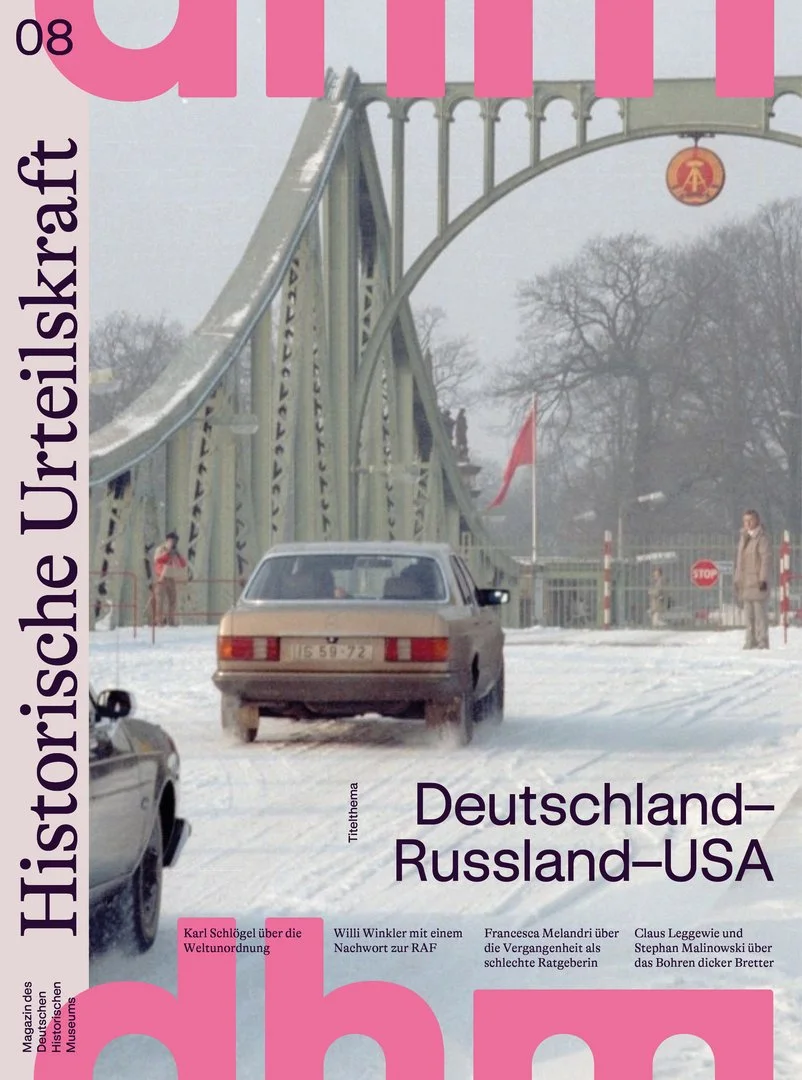
Relations between Germany, Russia, and the United States are undergoing a fundamental transformation, and long-standing alliances and relationships are being called into question. The eighth issue of the DHM’s magazine Historical Judgement, produced in collaboration with Karl Schlögel, explores the ties between the three countries. Rather than offering an encyclopaedic overview or a definitive assessment, it focuses on a selection of revealing situations that reflect the full complexity of a triangular relationship built up over generations. As in previous years, this issue also includes an English-language supplement featuring articles on the main theme.
With contributions by Kate Baldwin, György Dalos, Jan-Werner Müller, Lawrence Scaff and Katherine Zubovich, and many more.
This year’s essay on historical judgement is written by the Italian novelist Francesca Melandri, whose work has grappled with Italy’s historical entanglement with National Socialism. She takes over from Volker Braun and Ursula Krechel, who wrote the essays for the previous two issues. Elsewhere in the magazine, Stephan Malinowski talks to Claus Leggewie about comparisons between colonial and Nazi violence, Willi Winkler reflects on the German Autumn of 1977, and Janis Lutz discusses the GDR’s contribution in 1959 to a series of country-specific exhibitions at the Auschwitz Memorial.
Additional contributions by Julia Franke, Aaron Jochim, Markus Laufs, and Matthias Struch.
As always, this issue contains an English supplement with articles on the main theme.
Approx. 104 pages, €16, ISBN 978-3-86102-238-1
Forthcoming in November 2026
20 October 2026
EditorsControversial Kinship

9 October 2026
8 Min.Controversial Kinship

9 October 2026
7 Min.Controversial Kinship

9 October 2026
8 Min.Controversial Kinship
9 October 2026
6 Min.Controversial Kinship

9 October 2026
8 Min.Controversial Kinship

9 October 2026
6 Min.Controversial Kinship
9 October 2026
6 Min.Controversial Kinship

9 October 2026
6 Min.Controversial Kinship

9 October 2026
8 Min.Controversial Kinship