

Recap: the opening of the exhibition "Controversial Kinship. Colonial and National Socialist Violence"
20 October 2026
EditorsControversial Kinship
9 October 2026 8 Min.
Debates about the similarities and differences between colonial violence and Nazi rule have carried on since the 1930s and continue to the present day. Rooted in the fields of history, the social sciences, and cultural studies, these debates shape political discourse, media coverage, art, and the cultures of remembrance. The discussion focuses on questions of continuity, discontinuity, and comparability.
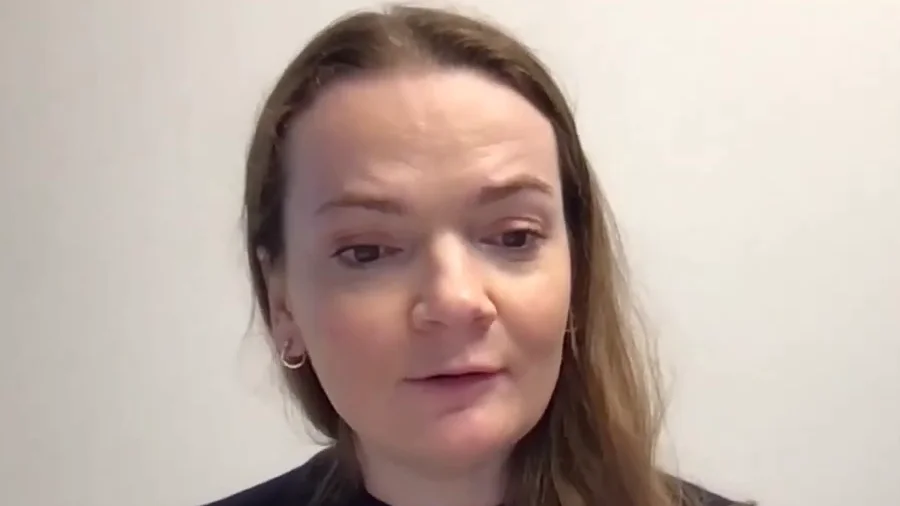
The interviews with experts as part of the exhibition “Controversial Kinship. Colonial and National Socialist Violence” present a range of perspectives and positions in the debate. Historian Natalya Vince, University College Oxford and University of Oxford, talks about resistance in colonialism in a video interview:
“Anti-colonial resistance is, by its very nature, asymmetrical. So, it is the colonial state which has a regular army, which has a police force, which has an intelligence service. And, of course, in the period which we’re looking at, all of these institutions are male-dominated. So, in regular warfare, that is why it is dominated by men. And, of course, anti-colonial resistance is irregular warfare. Anti-colonial movements don’t have at their disposal all of those institutions. And, therefore, they rely on tactics of urban and rural guerrilla. And already, straight away, what that does is it breaks the distinction between combatant and non-combatant. Those two roles are completely merged. And, therefore, that brings about opportunities for women, firstly, to participate in armed combat, to carry out acts of violence, whether that’s in rural or urban settings.”

Dr. Stephan Malinowski is the curator of the exhibition “Controversial Kinship. Colonial and National Socialist Violence” at the Deutsches Historisches Museum.
Natalya Vince is a historian at the University College Oxford and the University of Oxford.
20 October 2026
EditorsControversial Kinship
9 October 2026
8 Min.Controversial Kinship

9 October 2026
7 Min.Controversial Kinship

9 October 2026
8 Min.Controversial Kinship

9 October 2026
6 Min.Controversial Kinship
9 October 2026
8 Min.Controversial Kinship
9 October 2026
6 Min.Controversial Kinship
9 October 2026
6 Min.Controversial Kinship
9 October 2026
6 Min.Controversial Kinship

9 October 2026
8 Min.Controversial Kinship