An Amazing Form of Public Opposition. Environmental posters from the GDR by Manfred Butzmann und Martin Hoffmann
17 April 2024
Matthias StruchCollecting
16 May 2024 Reading duration 8 Min.
A glance at the collections of the Deutsches Historisches Museum reveals the immense variety of objects that are related to different epochs and topics of German history. They tell stories of our past or current lives, of famous or often unknown persons and events. In our series “Umwelt sammeln” (Environment collecting) we present various objects that have to do with the topic of “environment”. Unexpected questions raised by the heads of the different collection sections open new perspectives on historical objects and often reveal startling parallels to questions that deal with our current world.
Plants are researched in the fields of botany and biology, but also play an important role in the sphere of medicine. The DHM has an instructive compendium by the Italian physician Pietro Andrea Mattioli (1501–1578) in its collections. In this work Mattioli, who was the personal physician at the archducal court in Prague, brought together his immense knowledge of the preparation and application of medicines based on naturally occurring “herbs” and plants. In this last contribution to the series Umwelt sammeln, Stephanie Neuner, head of the department of the Core Exhibition, offers a look at this fascinating field of knowledge that evolved in the Early Modern Age.
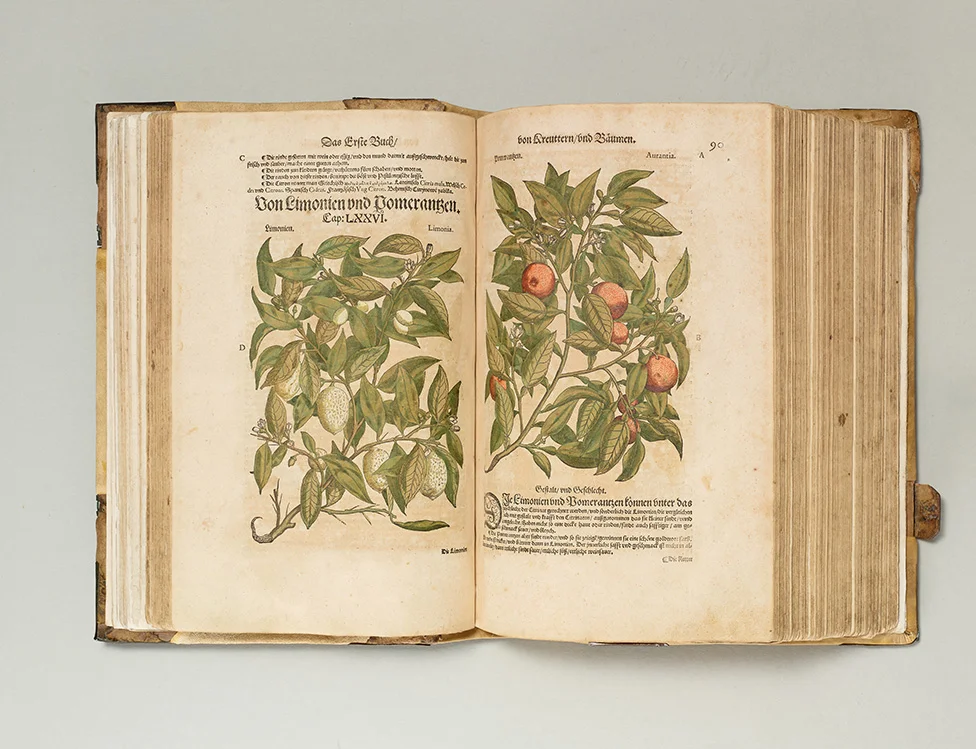
“Limes and bitter oranges”, in: Mattioli, New Kreüterbuch, 89 C, 90 A © DHM
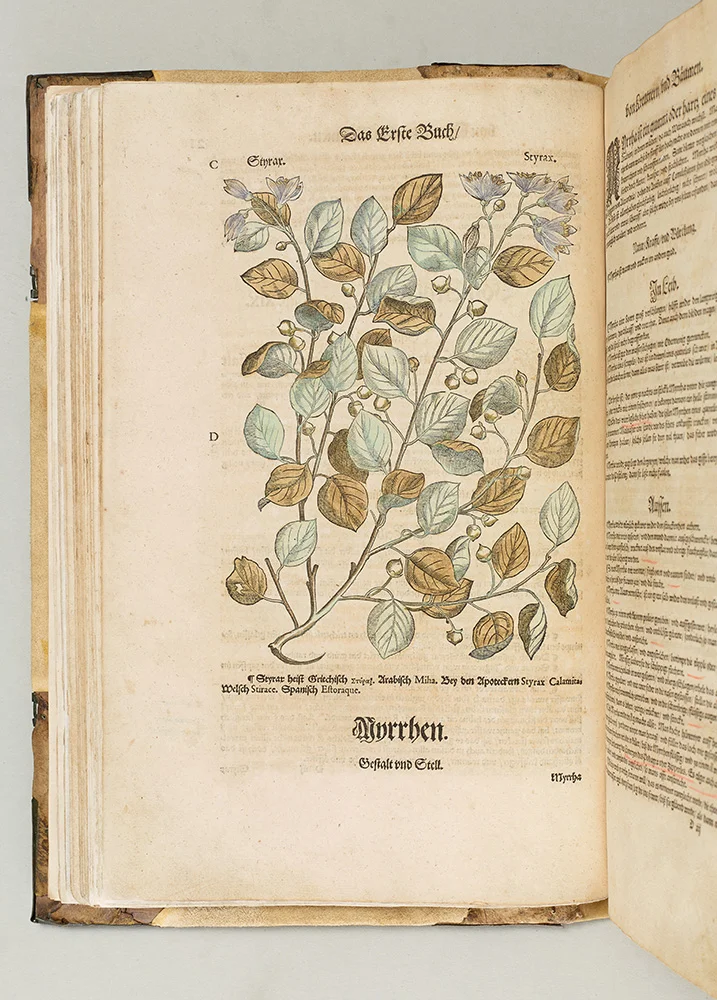
„Styrax“, in: Mattioli, New Kreüterbuch, 21 C © DHM
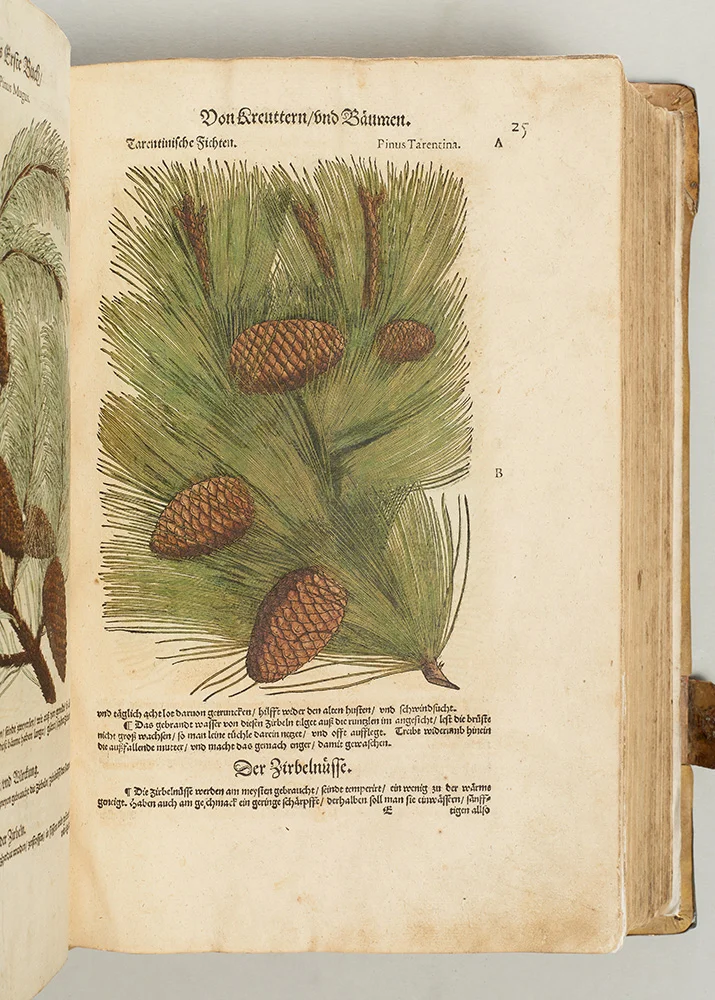
“Tarentinian Spruce”, 25 A © DHM
With some 1200 pages, the work by Pietro Andrea Mattioli from 1563, which translates as “The New Herbal Book. With the most beautiful and comely figures of all plants never previously brought to light in any language” presents the collected state of knowledge of botany and herbal medicine in 16th century Europe. As an expression of humanistic intellectual practice, the work integrates the lore of Mediterranean plants set down by such ancient authors as Dioscorides and Pliny the Elder, but expands it to include flora north of the Alps as well as plants from the so-called New World. The Herbal Book contains an immense amount of knowledge with regard to the therapeutic uses of plant and animal substances for the treatment of a great variety of disease symptoms. Not only science known to academic physicians is collected here, but an intrinsic part of the medical experience related here stems from pharmacists and non-academic healers as well as patients, whose feedback on the medicinal effects came directly to the attending doctors. Mattioli, as was common in the intellectual circles of his time, was in close contact with a Europe-wide network of scholars who exchanged their views in written correspondence, but also sent each other samples of dried herbs and drawings of plants from throughout the world.
In the Herbal Book, Mattioli did not prepare his knowledge of the materia medica solely for academic physicians, but also for pharmacists, surgeons and midwives, and in German and Old Czech translation for all who practised self-medication. The German translation from the Latin by the physician Georg Handsch (1529–1578) contributed significantly to the further spread and general reception of the Herbal Book. Different tables of contents for the names of the plants as well as disease symptoms listed according to regions of the body and pathology made it easier to use. If they could not read, the herb women and maids who collected the plants on behalf of doctors, itinerant surgeons and pharmacists could be instructed by means of the pictures. Unlike nobles and wealthy burghers, people who could not afford to buy the expensive book could perhaps look at it in a communal or private library.
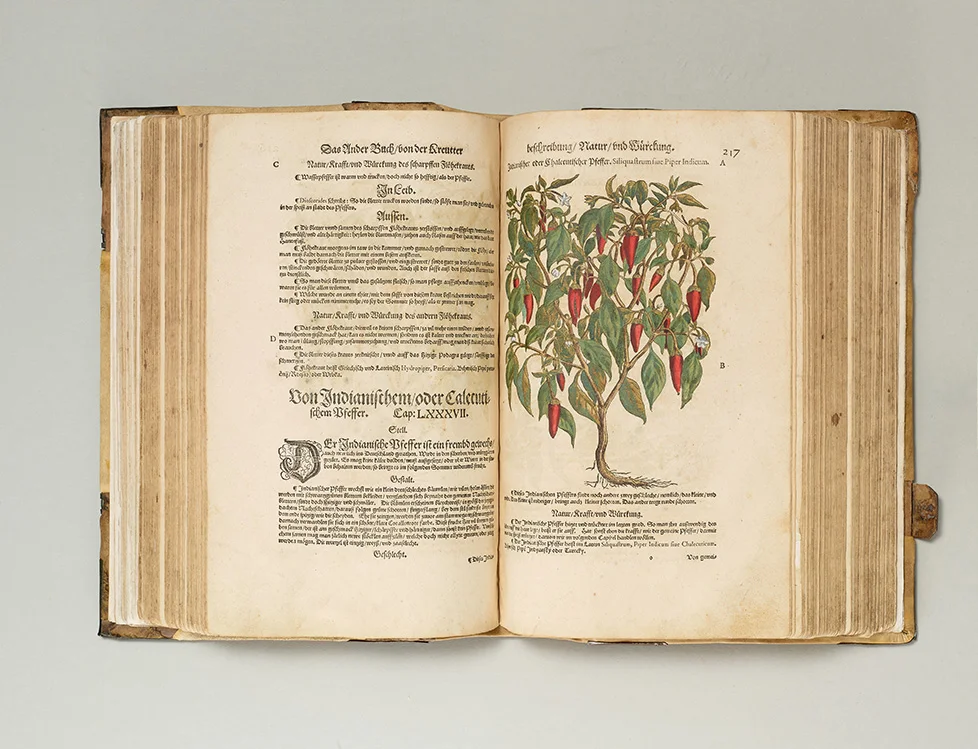
“Native American pepper”, in: Mattioli, New Kreüterbuch, 216 D, 217 A © DHM
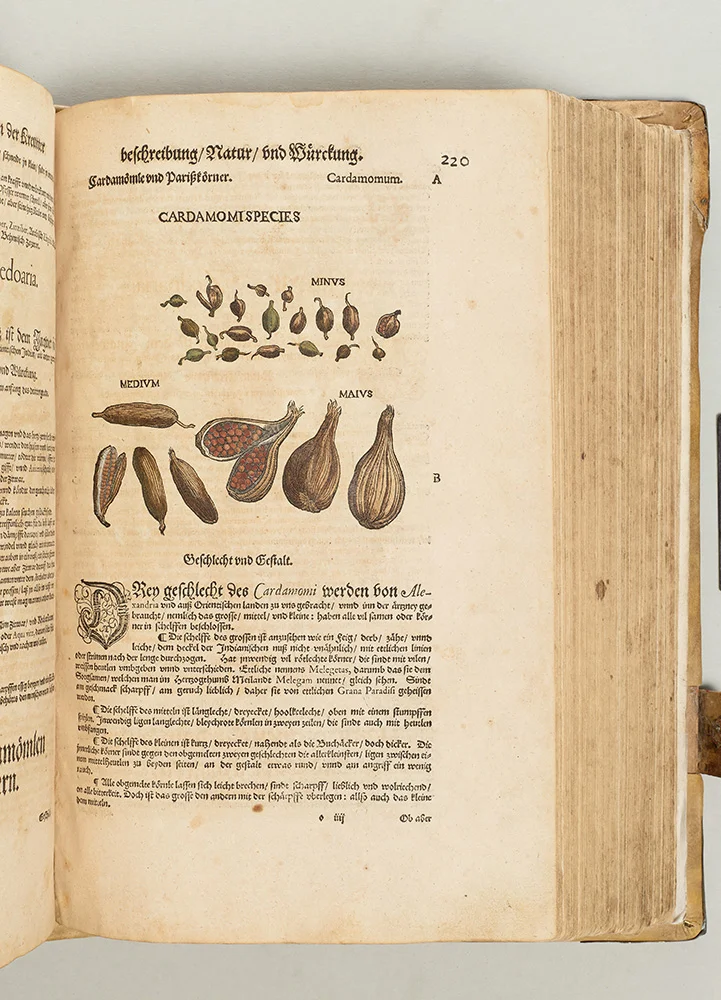
„Cardamom“, in: Mattioli, New Kreüterbuch, 220 A © DHM
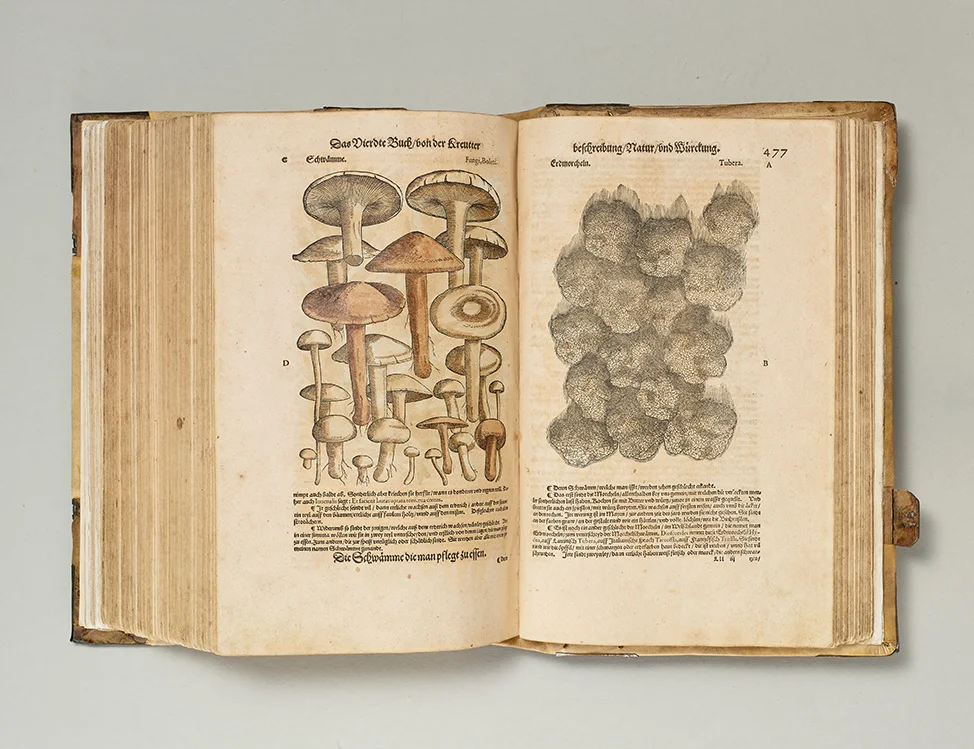
“Sponges” and “earth morels”, in: Mattioli, New Kreüterbuch, 476 C-D, 477 A. The printed illustrations had to be painstakingly colored by hand. Shading was used to compensate for the lack of color © DHM
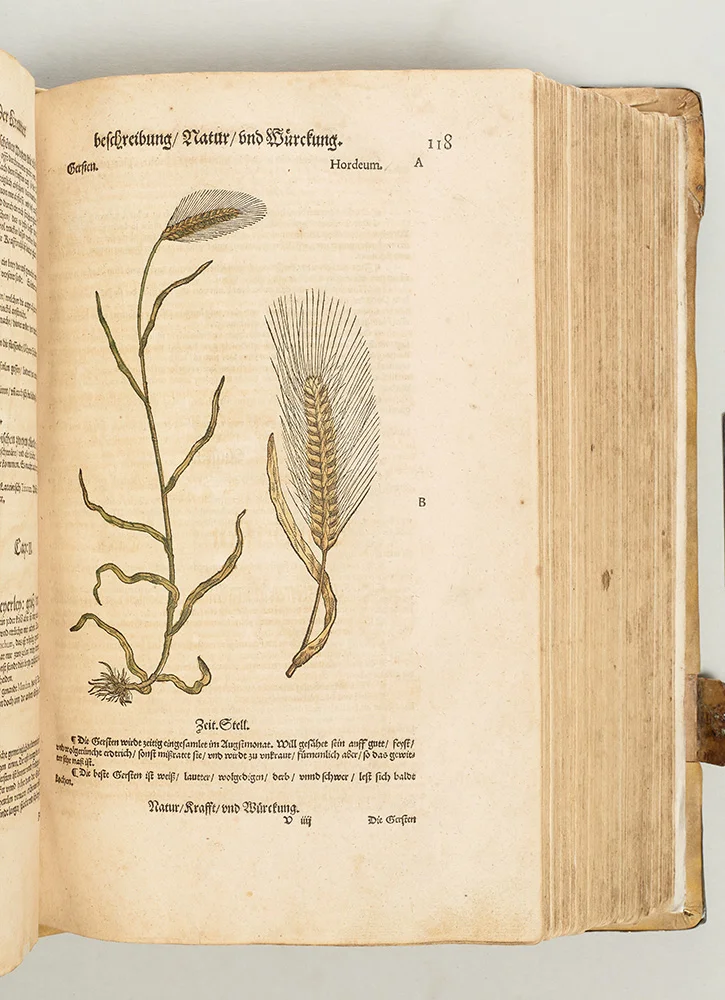
"Barley“, 118 A © DHM
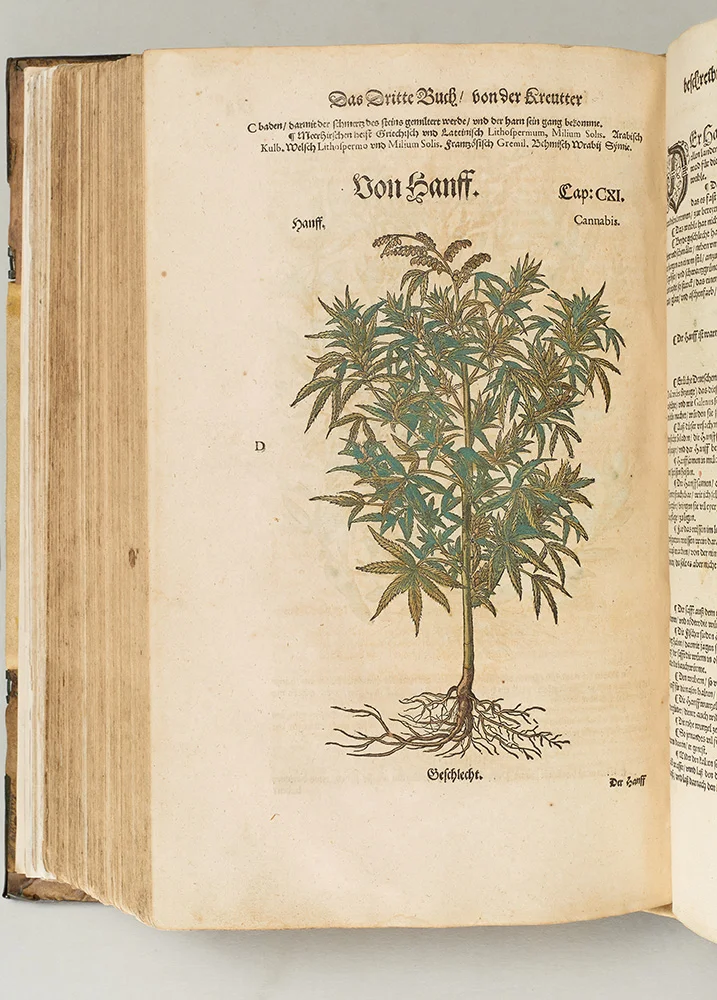
„Hemp“, in: Mattioli, New Kreüterbuch, 384 D. Mattioli describes how hemp seeds, cooked into a porridge, were a common everyday food. He recommended a decoction of hemp seeds boiled in milk or wine to treat “stomach cramps” or “persistent […] coughs” © DHM
The descriptions and instructions for use of the plants listed in the Herbal Book – trees, bushes, fruit, grain, vegetables, mushrooms and wild flowers – reflect the contemporary state of pathology and herbal medicine. At the same time, they mirror the understanding of nature prevailing at the time, which was based on Aristotelian doctrine which asserted that people lived in a world marked by the four elements fire, water, air and earth. Accordingly, every material, every body, and indeed every herbal plant possessed a warm, cold, dry and moist quality that was pertinent to the ability to heal diseases. If a “cold stomach” was the health problem, a medicine vested with the opposite quality was prescribed, in this case a remedy with a warm or hot, dry quality like ginger, cardamom or pepper. Many plant substances had a very wide range of healing effects: Pepper “bolsters the cold stomach”, “dispels the winds”, we learn in the Herbal Book. It stimulates the appetite and propels urine; in the form of a suppository it acts as a contraceptive, combats as a plaster “hard nodules” and “goitre”, or also “throat furuncles” if mixed with honey cures. Against “fever” and “cold”, pepper should be taken together with small bits of ginger and cinnamon soaked in wine vinegar.
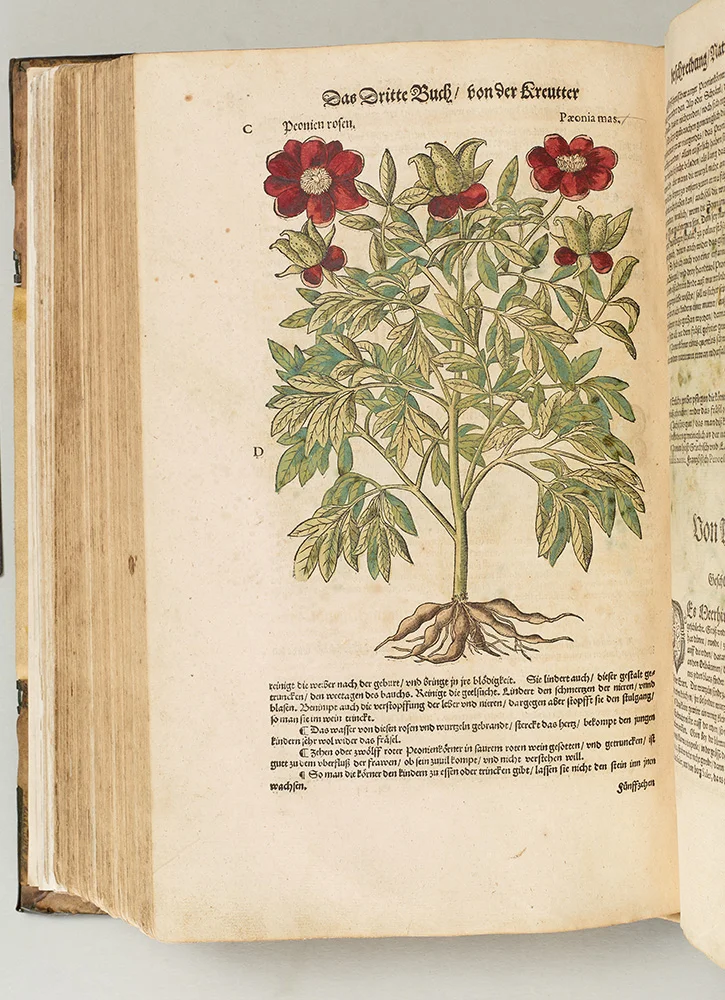
„Peonien rosen“, 382 C © DHM
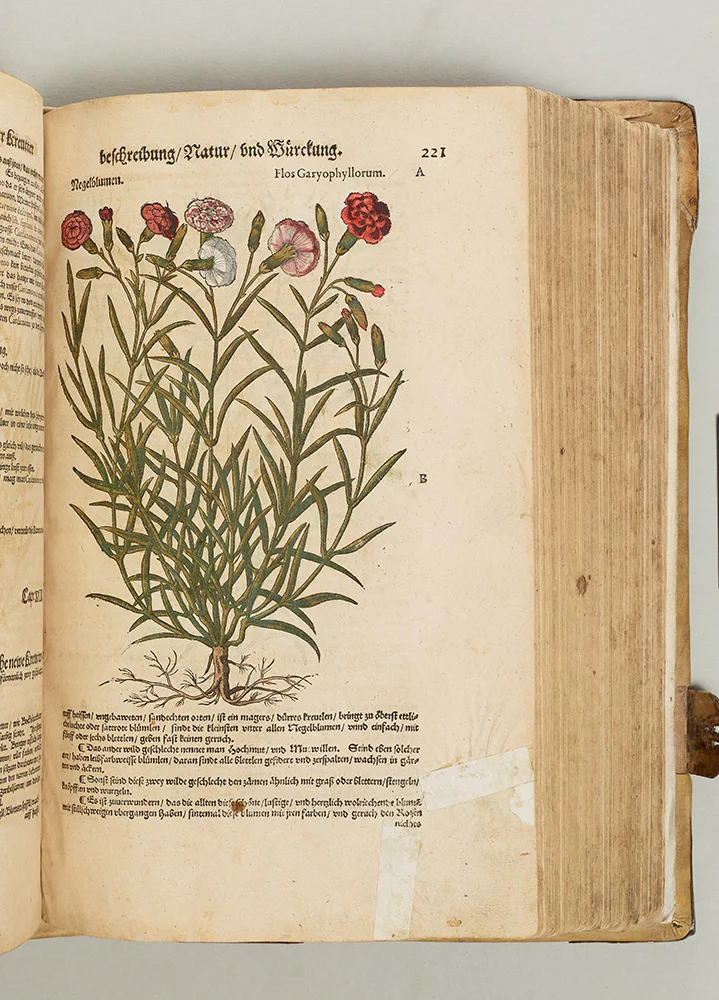
„Nail flowers“, in: Mattioli, New Kreüterbuch, 221 A © DHM
Stems, blossoms, leaves and roots were crushed, pulverised or boiled and used in different forms: as a potion, often mixed with wine, as concentrated juice (electuaries), for children sweetened with sugar or honey, as a tincture or pill, as a bath, plaster, ointment or compress. Purifying, i.e., cleansing therapies were considered particularly important in order to free the body of damaging substances. Black hellebore was supposed to help with “falling sickness” and “melancholy”, because it “purged” and drove out “all kinds of wetness through defecation.” An alcoholic brew made of the roots and leaves of the peony was also believed to have a cleansing effect, especially for discomfiture of women in childbed or against infants’ cramps. Bloodletting and enemas were other standard cleansing or purging procedures.
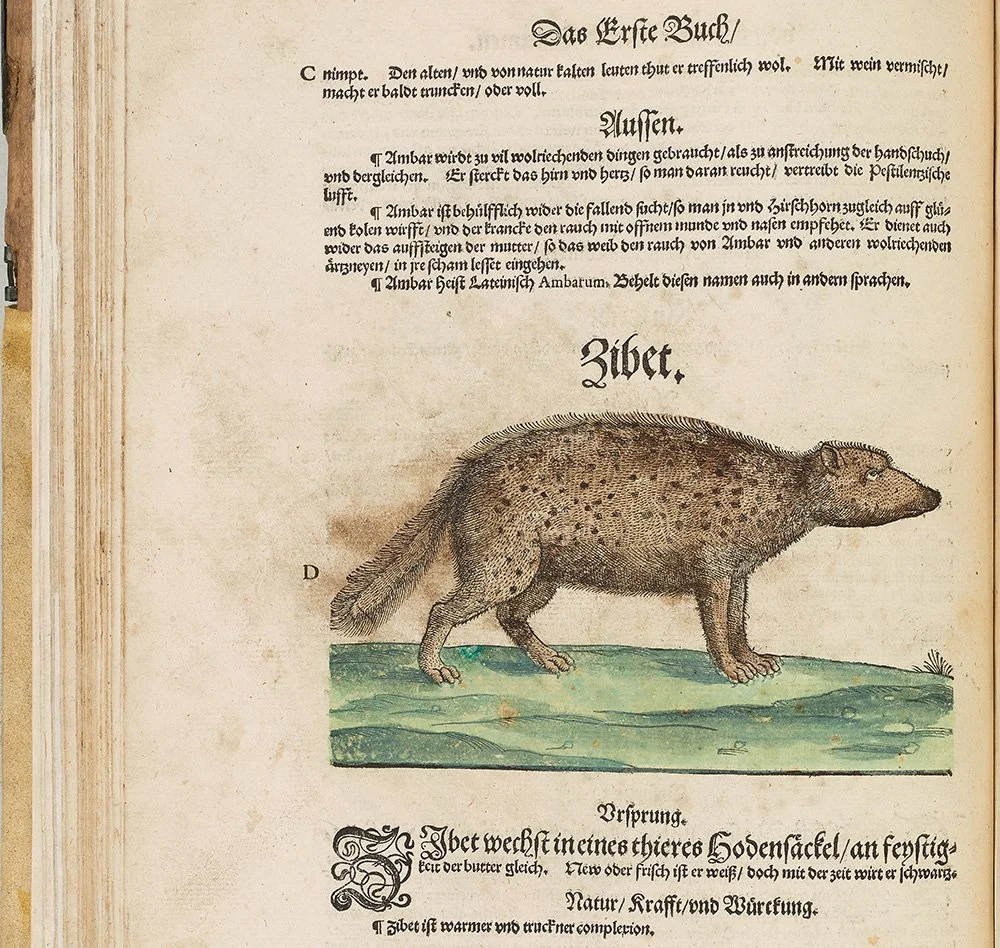
„Civet“, in: Mattioli, New Kreüterbuch, 17 C © DHM
The Herbal Book also takes reference to animal substances such as amber, which were valued as fragrances. “Amber” (or “ambergris” as an animal product), a hard marine substance derived from the excrements of the sperm whale, and “civet”, a substance occurring in the animal’s scrotum, were believed to have an eroticising effect. As scents they also combated the “pestilent air”. Not unusual was a mixture of plant, animal, mineral or other organic substances such as shells, mussels, pearls, or even “mumia” (ground mummy), although such a medicinal preparation was clearly a luxury item. Alongside the qualities of warm, cold, dry and moist, natural philosophers of the time were also aware of occult, hidden qualities. Witchcraft was seen as a believable source of illness as long as it could be confirmed by witnesses. It is therefore not surprising that Mattioli’s book also contains remedies for a “bewitched” dog that no longer barked or protected the property against intruders. A spot of the plant “weasel’s snout” did the trick. It was also thought possible to be able to forecast “price increases, war, or pestilence” with the help of plants by interpreting, for example, the pod of the gall nut, or oak apple, according to the saying “The fly means war/the worm dearth/the sun the course of death."
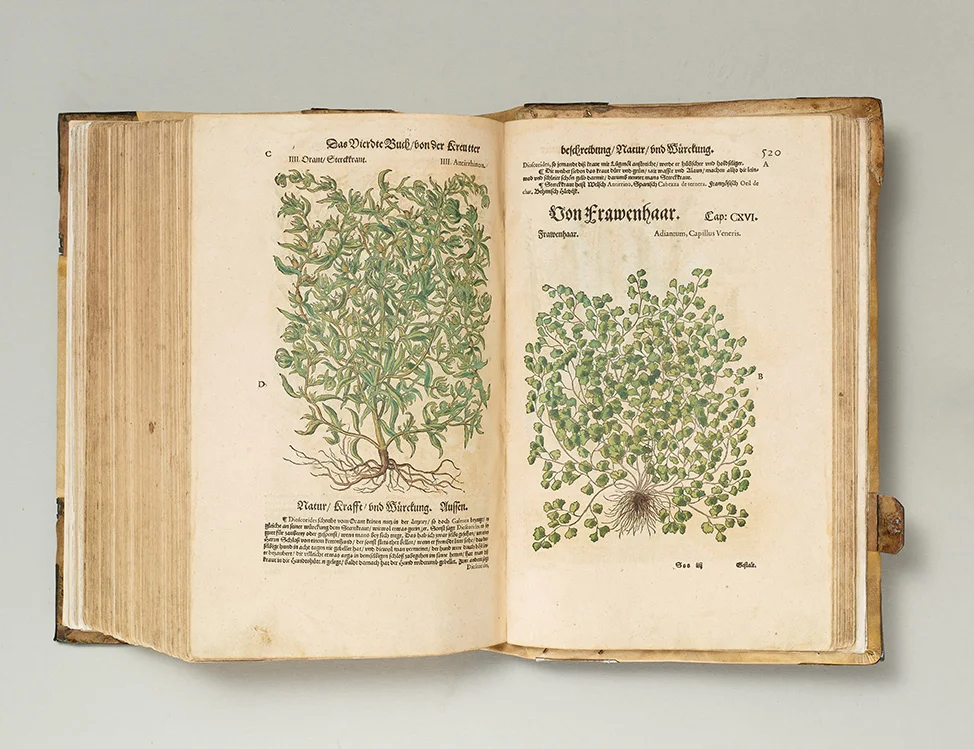
„Sterckkraut“ and „Frawenhaar“, in: Mattioli, New Kreüterbuch, 519 C, 520 A © DHM
The Herbal Book addressed above all the “ordinary man”, or rather the “house father” or “house mother” who was responsible for the healthcare of the family and who collected all sorts of practical knowledge about the household, the garden and domestic animals. The spectrum of advice in the book ranges from the conservation of meat and other foodstuffs, the elimination of bugs, and the dying of clothing with plant-based dyes. The book ends with tips on distilling and boiling that are useful for the preparation of medicines and other things in one’s own kitchen. The substances to be used depended on the financial resources available to the user and the products available at the local apothecary as well as the accessibility of the town to commerce and foreign trade in order to import plants that did not grow domestically.
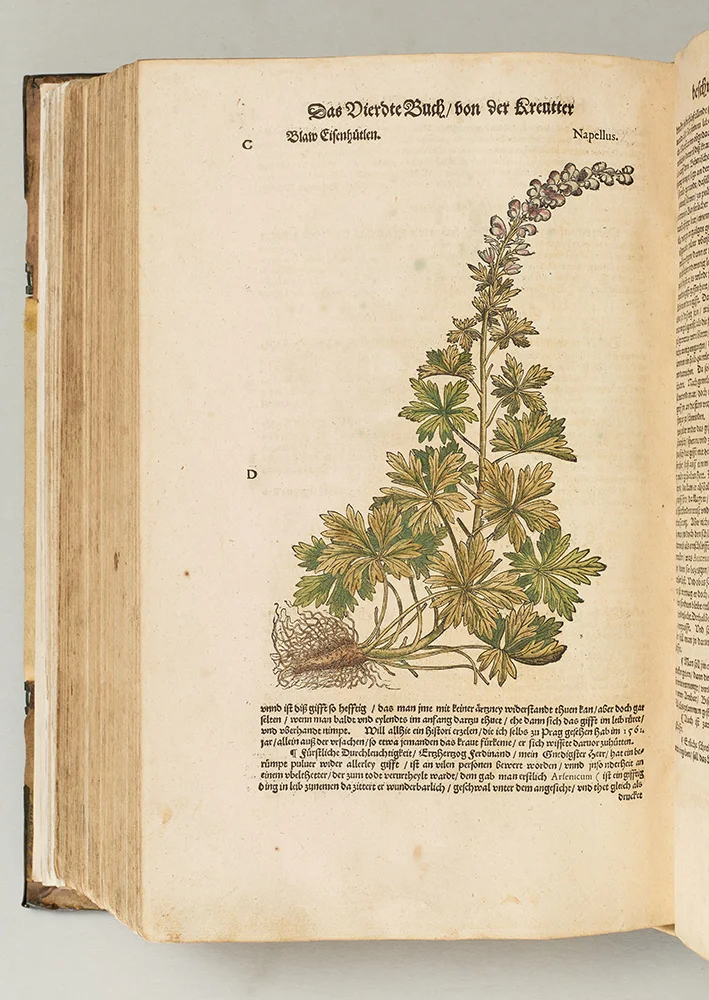
„Blaw Eisenhütlen“, 472 C © DHM
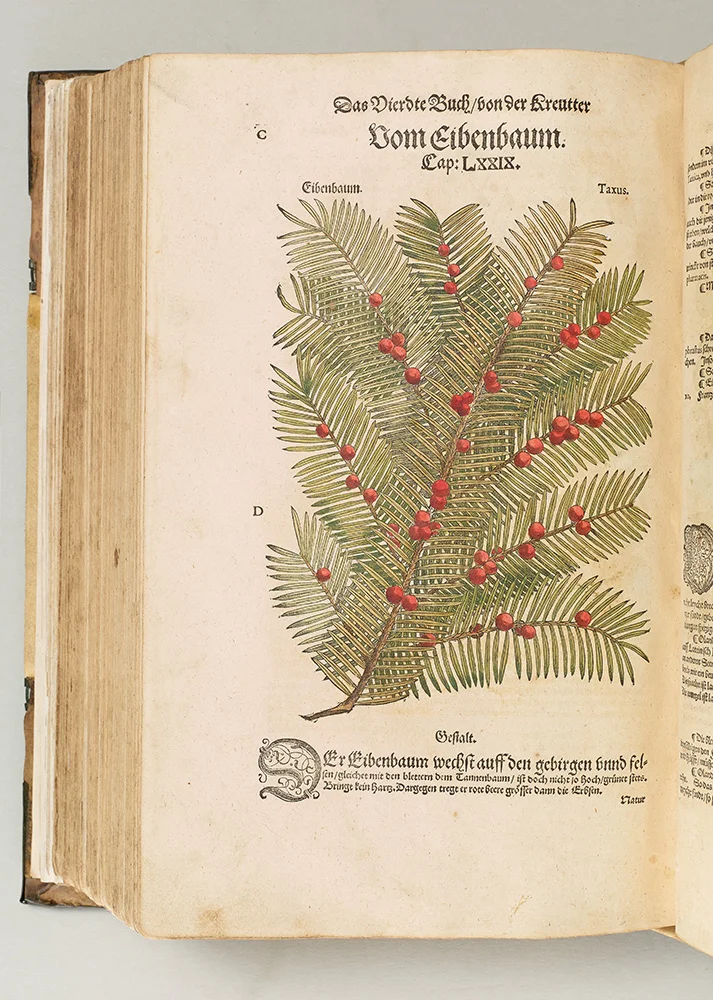
„Yew Tree“, in: Mattioli, New Kreüterbuch, 474 C. Distinguishing between poisonous and non-poisonous plants was a matter of life and death. The effects of poisons and antidotes were tested on people sentenced to death. Mattioli also reports on this in his herbal © DHM
With its wide circulation the book not only spread botanical knowledge to readers by means of the text, but also provided a deep aesthetic experience through the special quality of its almost 800 often coloured prints. An integral component of the work and its knowledge of the material medica was the skill of the draughtsmen Giorgio Liberale and Wolfgang Meyerpeck as well as that of the form cutters of the woodcuts in depicting the detailed illustrations of the plants. The Herbal Book thus underscores the importance of the visual dimension of scientific knowledge in the Early Modern Age.
The handwritten notes and underlinings in the copy of the Herbal Book in the DHM’s collection reveal much about its fate after the 16th century. It is not surprising that it continued to be used, since the materia medica did not change fundamentally until far into the 19th century. In one example of such notes, someone showed a particular interest in the medicinal treatment of “falling sickness,” or “epilepsy,” as he or she now called the syndrome. Before the work arrived in the museum’s collection, it was owned in the first half of the 20th century by a dentist and then by a healer and clairvoyant in Upper Bavaria. Also found in the book were a number of dried and pressed plants, but it is difficult to judge where they came from. In any case, they are evidence of the work’s practical use and they confirm that the information contained in it continued to be applied and further developed for centuries after Pietro Mattioli’s Herbal Book was first published.
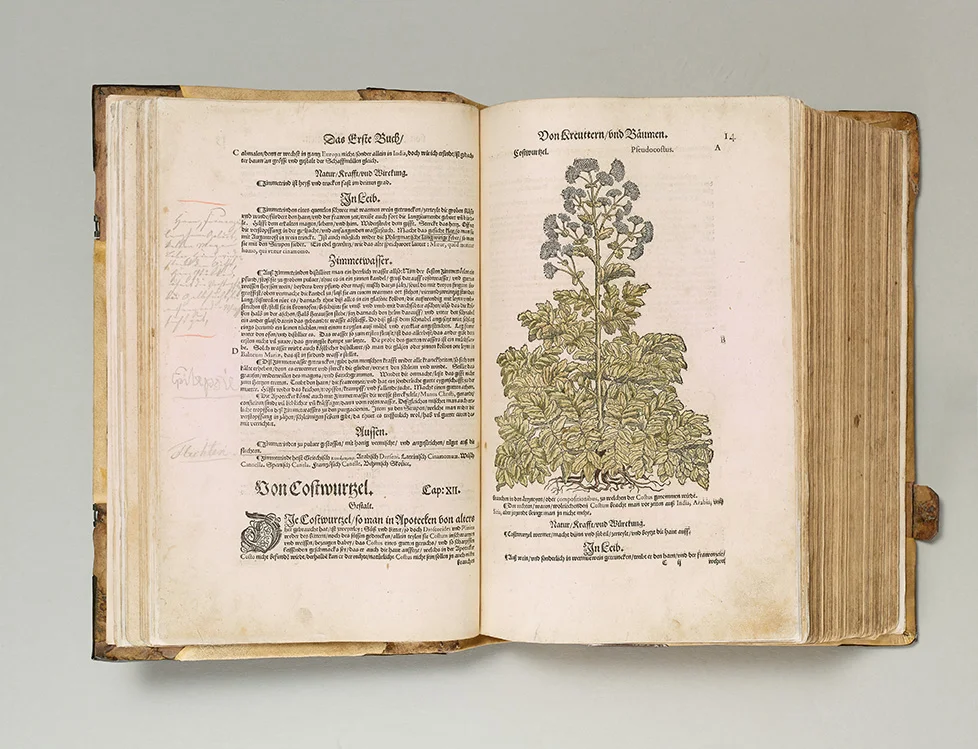
“Cinnamon Water”, in: Pietro Andrea Mattioli: New Kreüterbuch, Prag 1563, S. 13 C © DHM
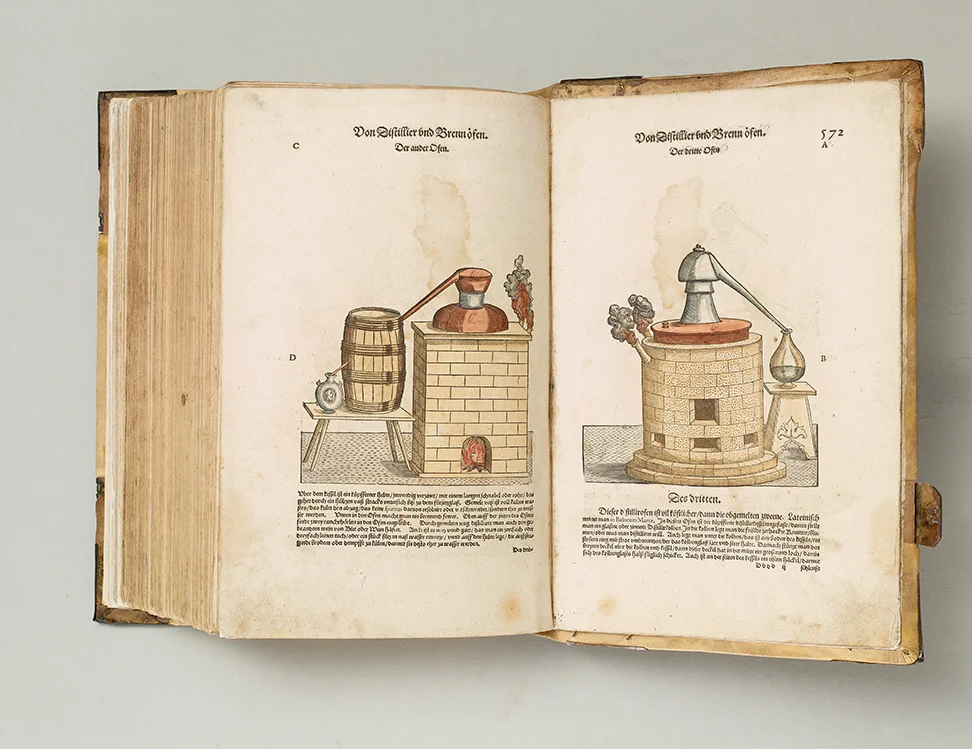
“From Distillers and Distillation Furnaces”, in: Mattioli, New Kreüterbuch, 571 D, 572 A © DHM
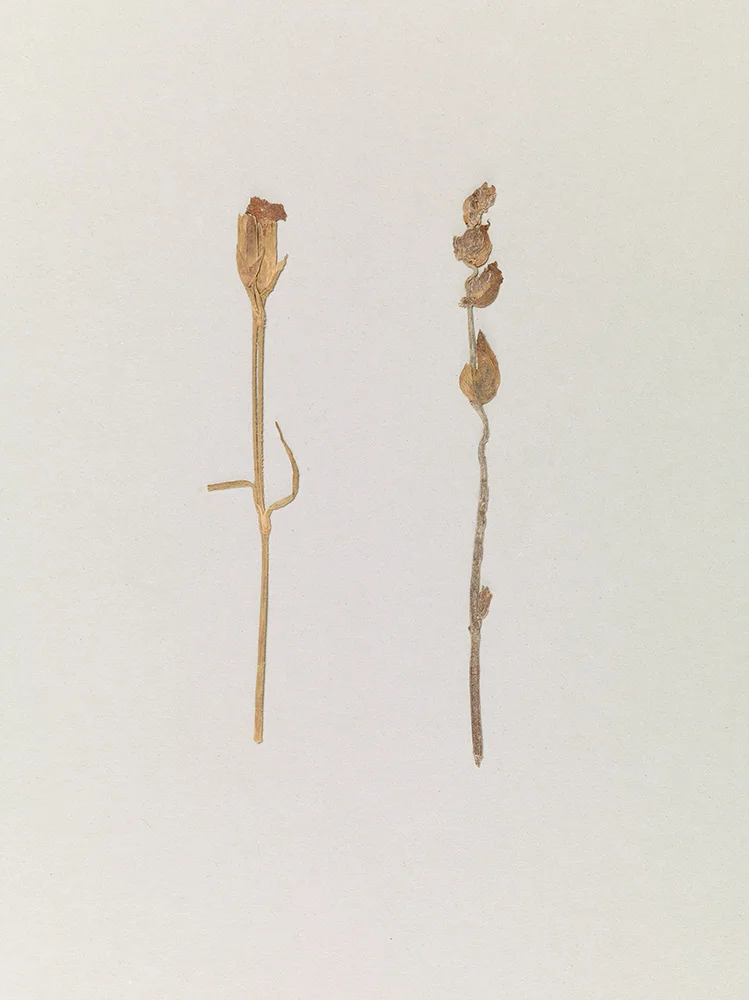
Dried plants in the DHM copy of New Kreüterbuch by Pietro Andrea Mattioli © DHM
![[Translate to English:] Portraitfoto von Stephanie Neuner. Sie hat kurze blonde Haare, trägt ein blaues Hemd und eine schwarze Hose.](/journal/fileadmin/_processed_/e/e/csm_Stephanie_Neuner_01_9d07b113d1.webp)
Dr Stephanie Neuner is head of the Core Exhibition and deputy project manager of the New Core Exhibition at the Deutsches Historisches Museum.
17 April 2024
Matthias StruchCollecting
13 March 2024
Lili ReyelsCollecting
15 November 2023
Julia FrankeCollecting