
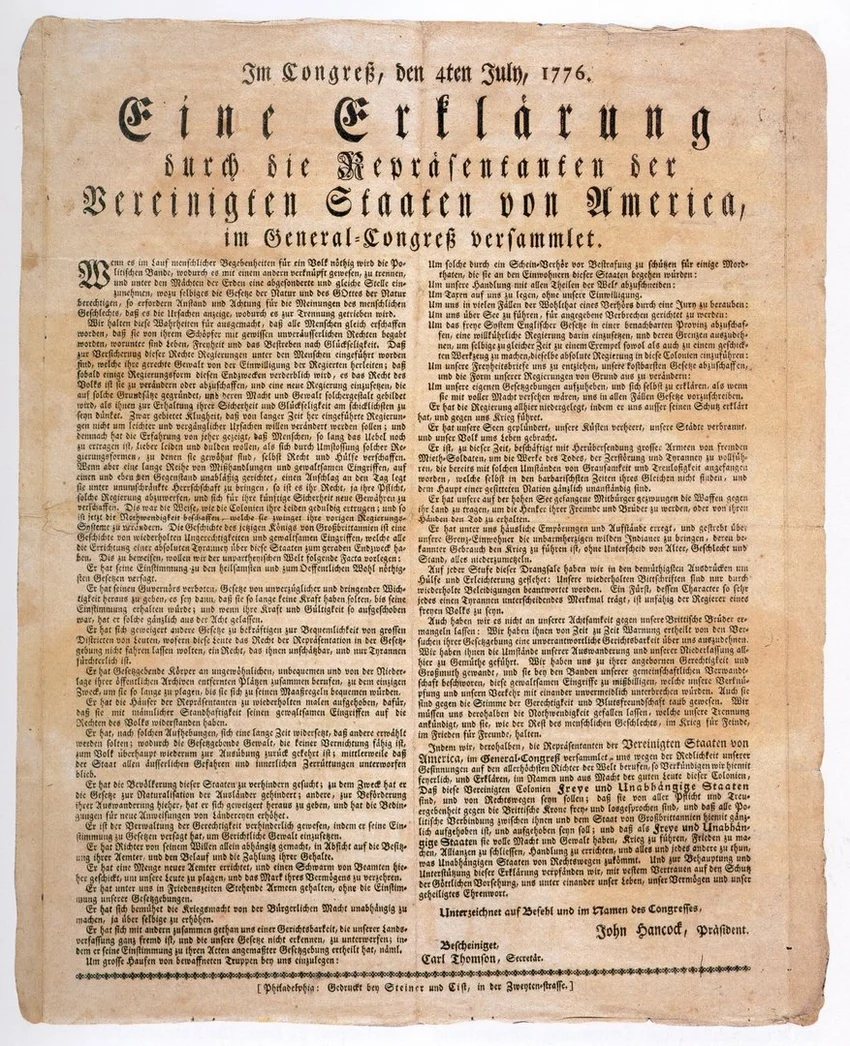
Freedom on Paper: The German edition of the United States Declaration of Independence
3 July 2026
Wolfgang Cortjaens , Dorlis BlumeObjects. History. Stories.
9 September 2026 Reading duration 7 Min.
Among the exhibits in Objects. History. Stories. Reviewing the Collection is a mysterious hexagonal wooden chest. It evokes a place in Berlin that is largely forgotten now – the German Stadium. Simon Sacha, academic trainee at the DHM, has taken a closer look at the scenes depicted on the chest, from Roman chariot races and football championship finals to the Weimar Republic’s official Constitution Day celebrations.
As you approach the chest, a wealth of images unfolds before you. The intricate marquetry is alive with detail, drawing the eye from one scene to the next. The first thing to catch your attention, however, is the top of the lid, with a wooden model of the German Stadium (Deutsches Stadion) set into it. Built at a scale of 1:500, it preserves a vanished Berlin landmark in miniature. The stadium itself was demolished in 1934 to make way for the Olympic Stadium. The 1936 Summer Olympics, held in Germany under Nazi rule, still shape how the site in Berlin’s Westend district is remembered today.
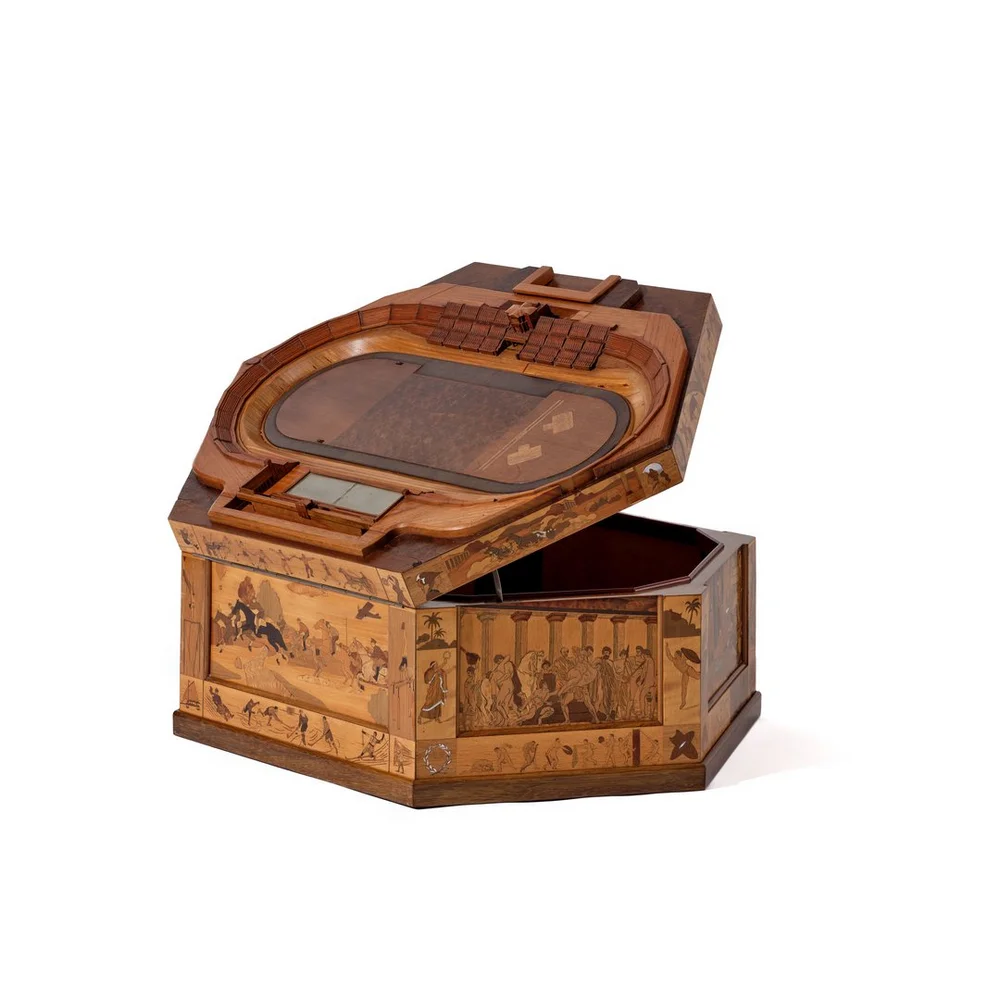
Top of the hexagonal chest with the German Stadium model set into the lid. © DHM
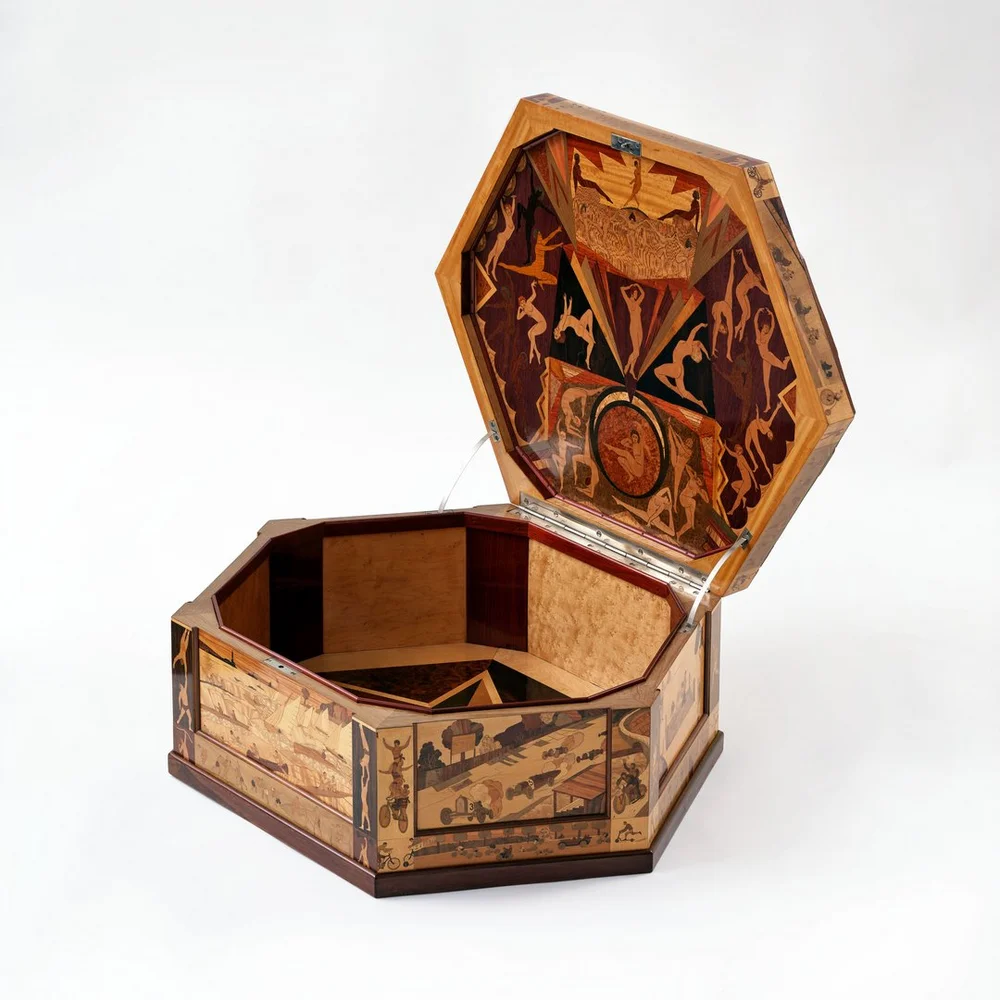
The open chest, showing the elaborate marquetry on the inside of the lid. © DHM
This was not the first time Berlin was supposed to host the Olympic Games. Some twenty years earlier, in 1912, the International Olympic Committee had awarded the 1916 Games to the city – then the capital of the German Empire – and plans for a suitable venue were already underway. The stadium would be located on the northern edge of Berlin’s Grunewald forest, on the site of a horse-racing track built in 1909, and sunk into the ground.
The Union Club, which operated the racecourse under the leadership of the Prussian nobleman Viktor von Podbielski (1844–1916), had been one of the driving forces behind efforts to bring the Olympic Games to Berlin and had financed the construction itself. Built in just 200 days at a cost of around two million marks, the stadium was one of the largest sports venues in the world.
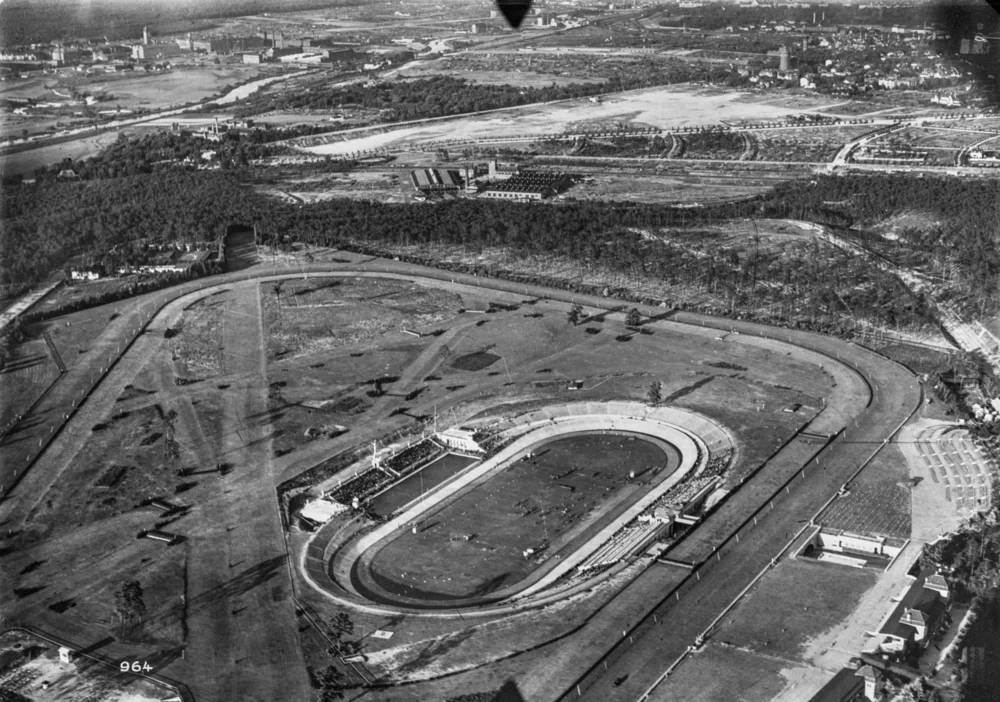
Aerial view of the German Stadium and surrounding racecourse, Berlin, 1920. © Bildarchiv Marburg
It was officially opened on 8 June 1913 with what was, at the time, the largest sports festival in German history. The date had been deliberately chosen to coincide with the twenty-fifth anniversary of the accession to the throne of Kaiser Wilhelm II (1859–1941), and the event became a grand celebration of the empire. Around 30,000 visitors filled the stands, while another 30,000 people took part on the field. Overhead, a biplane flew in wide circles. When the band struck up the imperial anthem, “Heil dir im Siegerkranz”, some 10,000 carrier pigeons took to the air as the crowd cheered.
The stadium’s architecture was also politically and symbolically charged. The design was the work of Otto March (1845–1913), a highly regarded architect of the day. Born in Charlottenburg, now a district of Berlin, March was among the first signatories of the 1880 Antisemites’ Petition and subscribed to the idea of an ethnically homogeneous German people. He wanted the stadium to serve as the stage for a “German Olympia” that would embody this ideal.
March gave three of the stadium’s most prominent features particular symbolic significance: a statue of Nike, the Greek goddess of victory, a prominently placed oak tree, and the imperial box. Taken together, they combined references to classical antiquity with ideas of “Germanness” and the social hierarchy of the German Empire. The model set into the chest also shows these elements of the stadium’s design. The grain and types of wood used suggest that the model predates the chest itself and was probably made while the stadium was under construction, around 1912.
The other sides of the chest, made in 1923/24, reflect the spirit of the 1920s. Gustav Baumann (1886–1962), a cabinetmaker who worked in Berlin and Potsdam, incorporated images that conveyed new ideas about the body, movement, and sport. The inside of the lid is particularly intricate. It depicts women dancing and exercising, alluding to reform movements such as the physical culture movement, which embraced naturalness and nudity as an alternative to industrialised urban life.
It was not just people’s ideas about their own bodies that changed during the Weimar Republic; there was also a shift in their attitudes towards sport. Influenced by the Anglo-Saxon idea of “games and sports”, sport became a mass phenomenon and an alternative to the previously dominant German gymnastics tradition known as Turnen, which was often associated with strengthening the “national body” (Volkskörper).
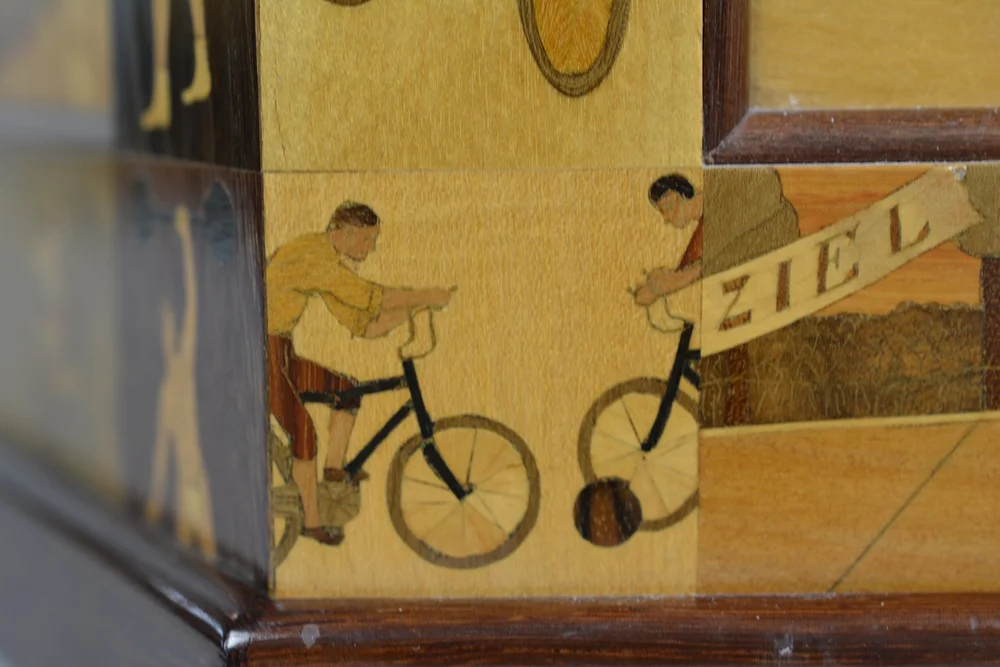
The intricate marquetry reflects the experimental spirit of the 1920s. © DHM
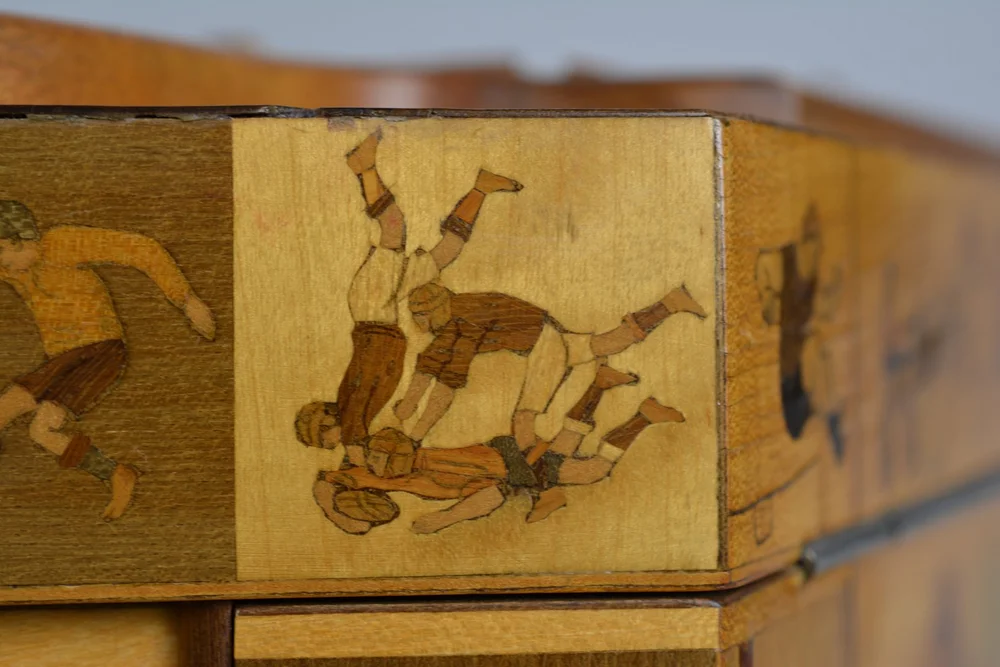
Anglo-American sports grew in popularity. © DHM
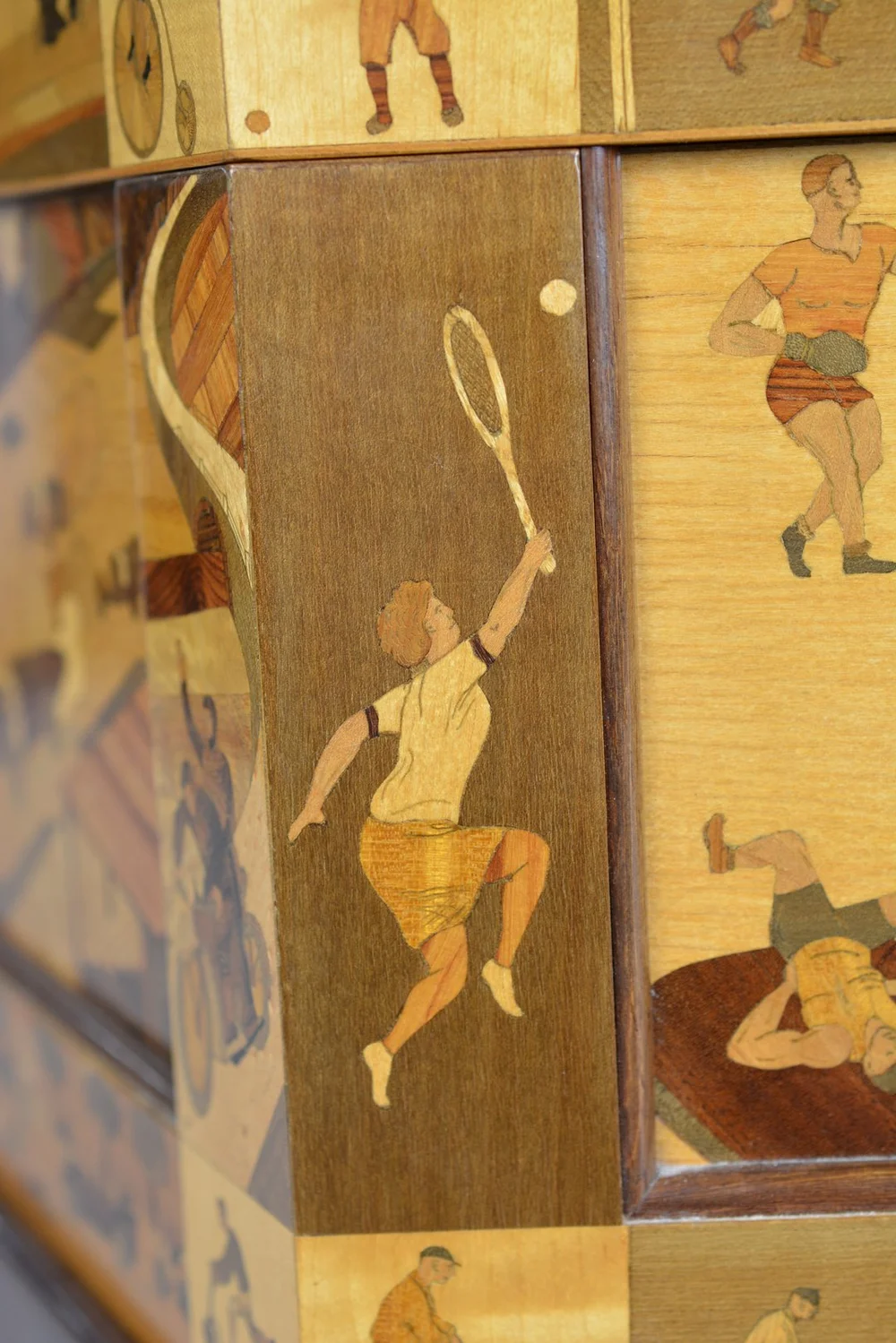
Modern sports such as tennis came to represent new ideas about the female body and women’s roles. © DHM
At first, there was little to suggest that the German Stadium would become a major sporting venue. After the outbreak of the First World War in 1914, the 1916 Games were cancelled and Berlin’s Olympic ambitions put to an abrupt end. Not long after it opened, the stadium was already in danger of slipping into obscurity. The temporary plaster sculptures around the stands overlooking the swimming pool began to deteriorate, and the restaurant at the neighbouring racecourse was converted into a reserve military hospital.
The end of the First World War in 1918 and the proclamation of the Weimar Republic marked the beginning of the German Stadium’s defining phase as a testing ground for modern sport. It hosted major events such as the 1923 German football championship final as well as games that may seem rather curious today, including motorcycle football and a contest in which people drove cars while spearing balloons. Numerous national and international athletics competitions were held there, too.
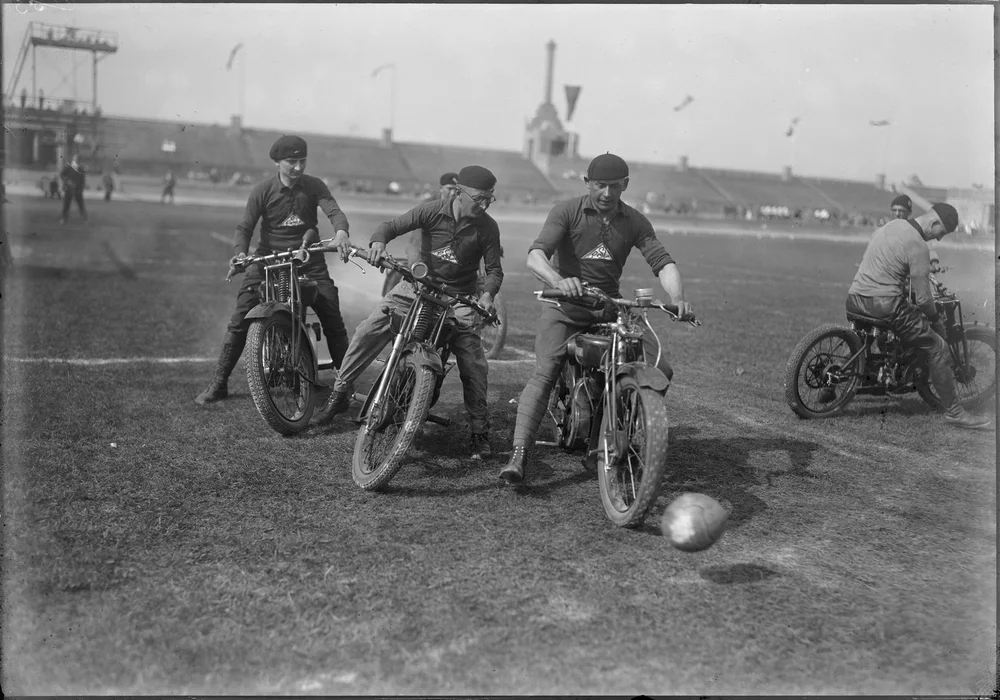
The first motorcycle football match at the German Stadium, Berlin, 1929. © Georg Pahl / Bundesarchiv
In 1920, a site behind the stands overlooking the swimming pool was chosen for Germany’s first College of Physical Education. Soon afterwards, the German Sports Forum was built nearby. It was designed by Werner March (1894–1976) and Walter March (1898–1969), the sons of the stadium’s architect, Otto March.
One important chapter in the German Stadium’s history is missing from the pictures decorating the chest – the role it played as a venue for national celebrations and public events. It hosted the German Catholic Convention (Katholikentag) and a Roman chariot race staged by US film director Fern Andra (1893–1974). Operas by Wagner were even performed on the water of the 100-metre-long swimming pool.
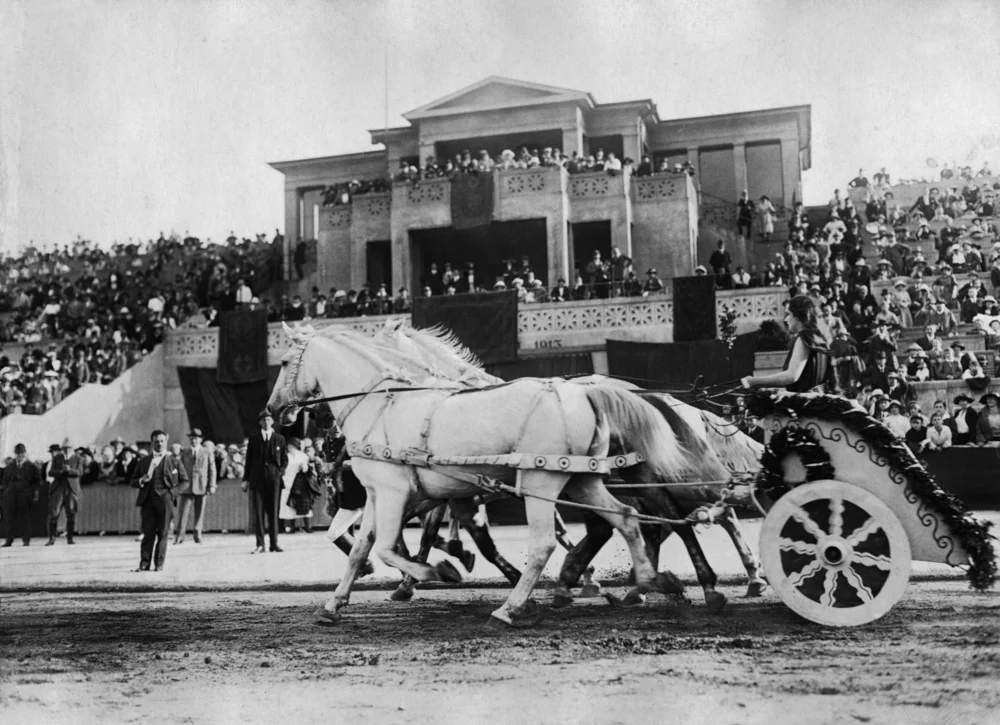
Film producer Fern Andra organised a Roman chariot race in Berlin in 1921. © Willy Römer / bpk / Kunstbibliothek, SMB, Photothek Willy Römer
The stadium also became a venue for high-profile political events. These included festivities marking the eightieth birthday of Reich President Paul von Hindenburg in 1927, a national-conservative rally against the Treaty of Versailles in 1929, and, just a few months later, the Weimar Republic’s official Constitution Day celebrations. The National Socialists also used the stadium for political propaganda purposes. Adolf Hitler made a campaign appearance there in 1932, and after the Nazis came to power in 1933, the stadium hosted events such as the “Day of German Crafts” and the “Festival of German Schools”. A year later, the stadium was demolished.
The German Stadium served as a sports venue, a place of public celebration, and a political stage under three different regimes. After it was demolished, its complex history was gradually forgotten, and the origins of the wooden chest similarly faded from memory. We still do not know who commissioned the piece or what it once contained. What makes it remarkable, however, is how the scenes and figures worked into its surfaces bring together ideas about the body, sport, and community that shaped the 1920s. Together with the stadium model set into the lid, they offer a vivid glimpse of an almost forgotten place where sport, mass culture, and politics all played out on the same ground.
Simon Sacha was an academic trainee in the Collections Department and has been working as a project assistant on the exhibition "Portraits of German History" (working title) at the Deutsches Historisches Museum since September 2026.
3 July 2026
Wolfgang Cortjaens , Dorlis BlumeObjects. History. Stories.
14 February 2024
Wolfgang Cortjaens , Thomas WeißbrichCollecting
8 August 2022
Wolfgang CortjaensCollecting