“Working with collections and researching individual objects is essentially about understanding the historical circumstances in which they were created.”
27 July 2026
Editors , Brigitte ReinekeResearch
17 August 2016 Reading duration 3 Min.
Knife to the right, fork to the left: nowadays, there is no other option for cultured Europeans when they set their tables. We explain why our ancestors had little use for fine cutlery and why Germans talk about ‘giving up their spoons’ when they pass away.
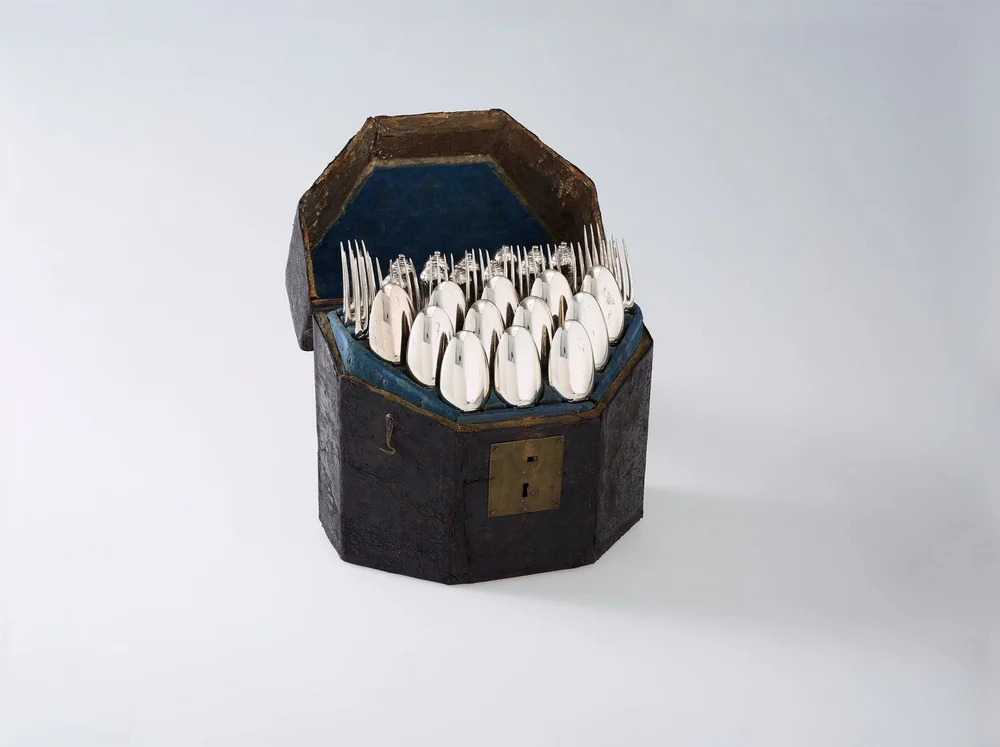
A handcrafted cutlery set for twelve people from the collection of the Dukes of Anhalt © DHM, Photo: Desnica
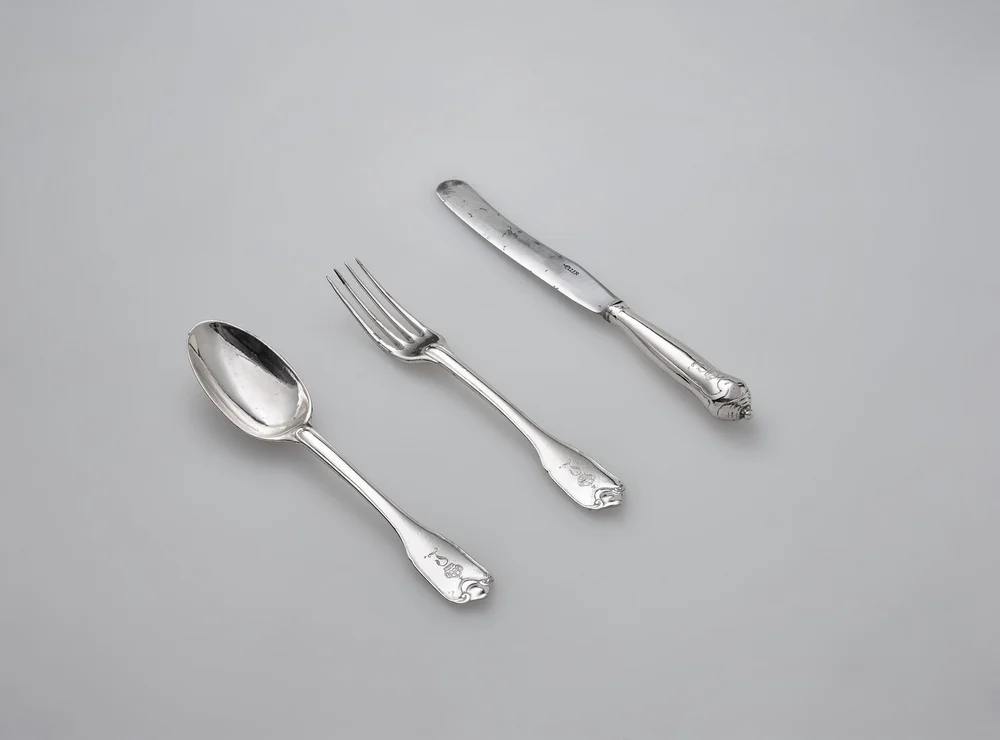
Knife, fork and spoon from a handcrafted cutlery set for twelve people from the collection of the Dukes of Anhalt © DHM, Photo: Desnica
It doesn’t take much to embarrass yourself at one of today’s exclusive restaurants. All you have to do is put down your knife and fork and tackle your fish fillet or new potatoes with the soup spoon. You can be certain that other diners will turn up their noses and cast withering glances in your direction.
Just a few generations ago, table manners like these were unheard of. Our ancestors long had little use for forks, because – from the Middle Ages to the early modern period – most people’s diets were fairly monotonous. Breakfast: mash. Lunch: mash. Dinner: mash. Usually at mealtimes, a large pan with boiled grains was placed on the table. If you didn’t have a spoon, you couldn’t eat. It was a kind of life insurance policy. People carried their spoons with them everywhere they went. ‘Giving up your spoon’ quite literally meant certain death.
The shape of a spoon is reminiscent of cupped hands, and it is one of the most primeval utensils known to humanity. Spoons made of wood and bone have been found that date back to the Palaeolithic Age; in later times, they were made of clay. With the rise of the metalworking industry, people started producing spoons professionally in the 15th century. One workshop would forge up to 40 spoons a day from raw metal. Three centuries later, craftsmen found it easier and more efficient to cut the spoons from sheet metal.
In Central Europe, the spoon remained the most important eating utensil into the 19th century. The knife was another faithful companion, primarily used to cut up the meal into small parts.
The godless fork
Nowadays, the fork is also taken for granted on the tables of the western world. Unlike the spoon and the knife, however, it had to fight for its position beside the plate.
Its reputation soon lay in tatters, with its presence – rather than its absence – regarded as a social faux pas. Although forks were a familiar sight in Ancient Rome, they were long frowned upon north of the Alps. It is even said that Hildegard of Bingen, an influential 12th century mystic, branded the fork ‘godless’. Given this kind of stigma, it had little chance of achieving mass appeal. What’s more, the image problem was compounded by the issue of competition. The fork was simply unable to give the spoon a run for its money. People simply did not need a second eating utensil for the purpose of conveying food towards their mouths.
The rise of the fork began late. The Reformation at the start of the 16th century put an end to the superstition surrounding ‘the devil’s tool’. In the same century, fruit and dipping forks made their way onto European dining tables, with French and Italian ladies considering them a sophisticated accessory.
At first, however, opposition was both widespread and substantial, with Martin Luther and Erasmus of Rotterdam mocking the fork as ‘women’s fashion’. ‘God preserve me from the fork’, said Luther allegedly.
The fork: Status symbol and women's fashion
The image of the fork in our climes improved for good in the 18th century. Once disdained, it became a symbol of luxury and sophistication amongst the aristocracy. A hand-made cutlery set for twelve people taken from the Dukes of Anhalt illustrates this change in attitudes. With the Industrial Revolution, cutlery (including forks) became a mass phenomenon.
Centuries later, the ways in which cutlery is manufactured and used have changed. When held in the hand, a chunky spoon has a different feel from a dainty table fork. Knigge, a German etiquette guide, sets out precise rules for handling cutlery. Instead of holding forks and spoons as though they were hammers or drills, we should grip and guide them elegantly at the end.
One of the most important rules is that knives, forks and spoons should be placed parallel to each other on the plate once you have finished eating. The back of the fork should be facing downwards and the blade of the knife should be adjacent to the fork. Finished.
27 July 2026
Editors , Brigitte ReinekeResearch
29 May 2026
Dorlis BlumeNature and German History
5 March 2026
Anna-Lena AlmstedtHistory today






19 February 2018
Thomas JanderHistory today