“Working with collections and researching individual objects is essentially about understanding the historical circumstances in which they were created.”
27 July 2026
Editors , Brigitte ReinekeResearch
27 July 2026 Reading duration 3 Min.
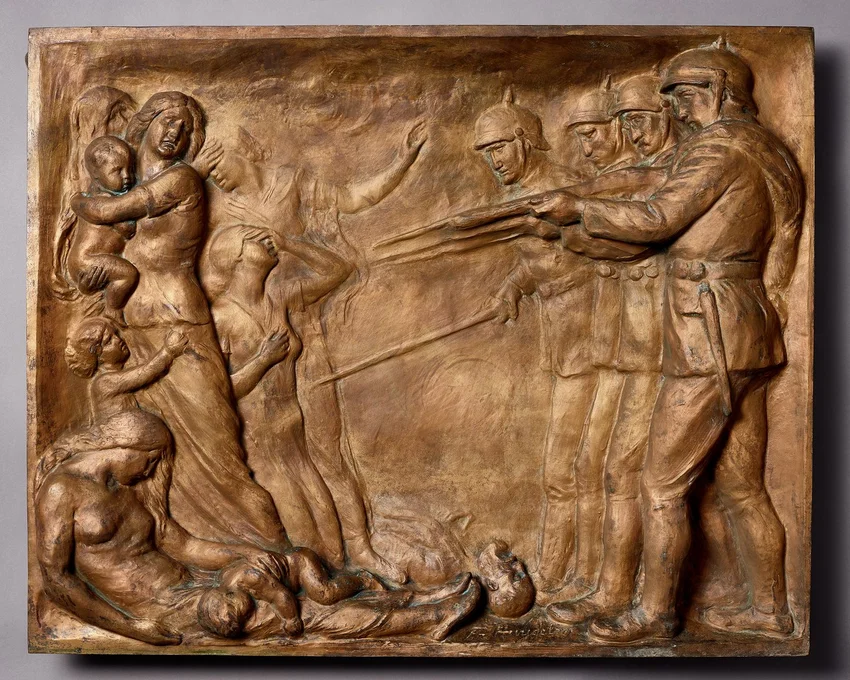
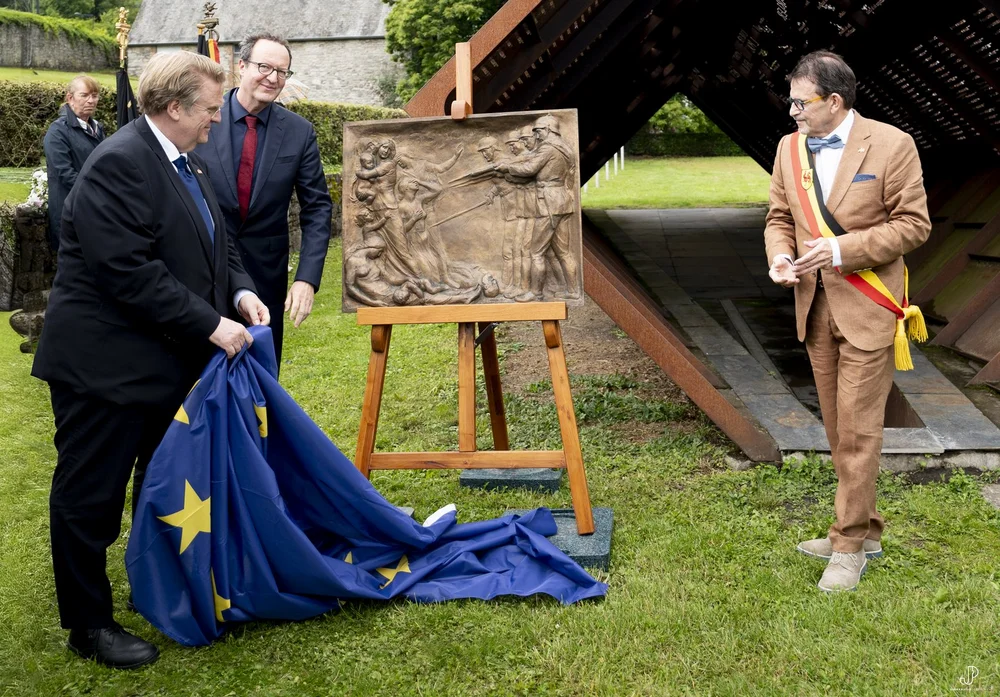
In June 2026, following extensive provenance research, the Deutsches Historisches Museum returned a bronze relief by Belgian sculptor Frans Huygelen (1878–1940) to the city of Dinant in Belgium. DHM President Raphael Gross presented the work to the city at an official ceremony attended by Martin Kotthaus, German ambassador to Belgium, and Richard Fournaux, mayor of Dinant. Created around 1927, the relief was part of a memorial in Dinant commemorating Belgian civilians shot by German soldiers on 23 August 1914, at the beginning of the First World War. Brigitte Reineke, head of the DHM’s Central Documentation and Provenance Research, explains how the return came about.
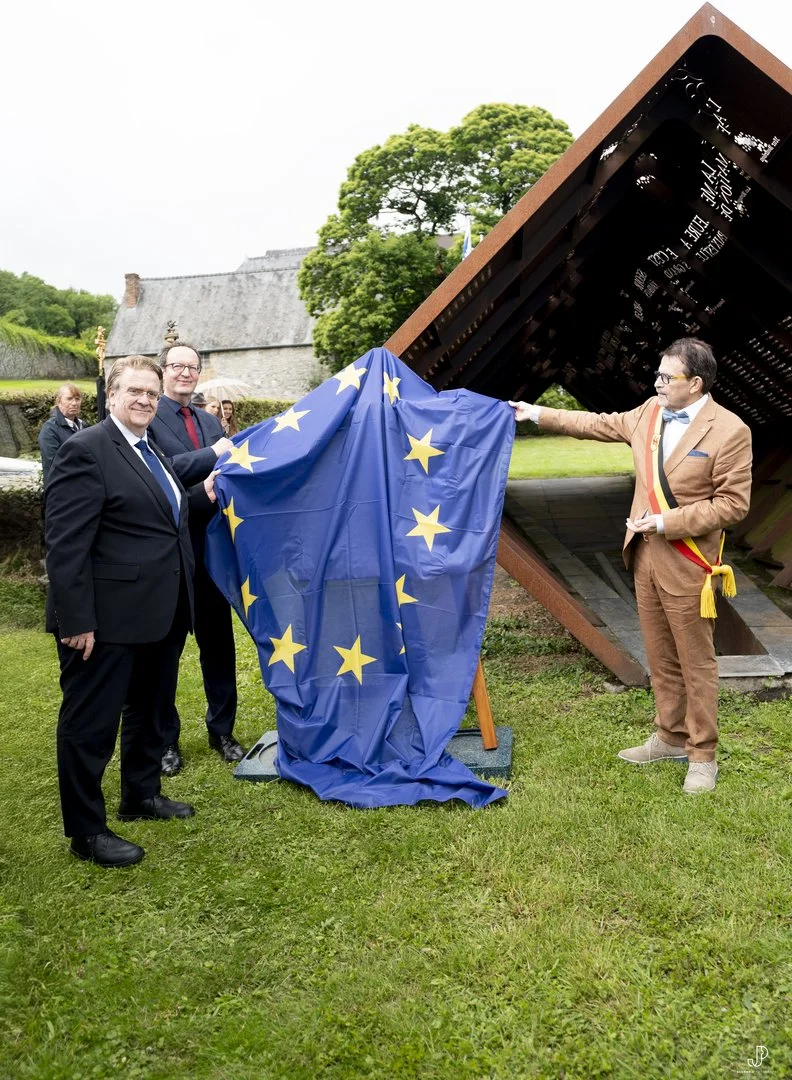
Ceremony marking the return of the Frans Huygelen relief, In Memory of Dinant, on 12 June 2026 in Dinant; left to right: Martin Kotthaus, German ambassador to Belgium; Raphael Gross, DHM president; and Richard Fournaux, mayor of Dinant © SedranJPhotography
Relief by Frans Huygelen, In Memory of Dinant, after the unveiling, c. 1927, bronze © SedranJPhotography
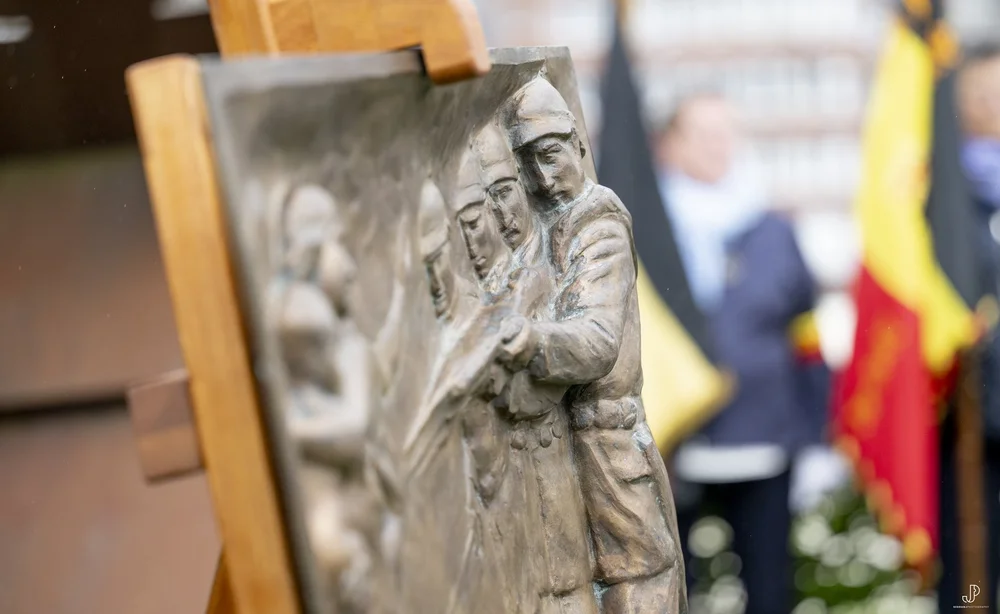
Detail of the bronze relief © SedranJPhotography
In Belgium, the bronze relief made by Frans Huygelen had long been presumed lost. How did the DHM go about tracing it?
During an inventory of the DHM’s holdings, staff responsible for the museum’s art collection looked into the bronze relief more closely. They were particularly interested in the historical context in which it had been created and the meaning it held in its original setting. These are fundamental questions when working on museum collections: where did the object come from, how was it created, and how was it originally used? Over the course of this research, a member of the collections staff came across a postcard from around 1930 showing the relief to be part of a memorial in Dinant. Prominently featured on the postcard was an inscription stating that the memorial had been erected to commemorate a massacre carried out by German Imperial troops at the beginning of the First World War. Further research, conducted with the assistance of staff from the mayor’s office in Dinant, uncovered archival records documenting an order for the memorial to be demolished and the shipment of the relief to Germany during the German occupation in the Second World War. In light of these findings, we naturally offered to return the relief, which was handed back in June 2026.
You said that research into the origins of objects, and thus provenance research, is one of the fundamental responsibilities of museums. What does this research involve at the DHM?
In the case of the Dinant relief, research into its origins and original context proved to be a means of establishing who the object actually belonged to. Ultimately, the core question is always where an object originally comes from. This also applies to provenance research in the narrower sense in which we understand it today, particularly in relation to specific historical contexts of injustice. Working with collections and researching individual objects is essentially about understanding the historical circumstances in which they were created, identifying their original owners, and tracing subsequent changes of ownership. Provenance research goes further, focusing explicitly on the forced transfer of property resulting from Nazi-era expropriation. Another area of emphasis is research into contexts of dispossession in the Soviet occupation zone and the GDR. These are our principal areas of provenance research. Where necessary, we also conduct research on wartime losses and objects from colonial contexts.
The DHM’s collection comprises around one million highly diverse objects from the late Middle Ages to the present day, all relating to German history in its wider international context. Among them are holdings from the Prussian armoury, or Zeughaus, and the GDR’s Museum of German History (MfDG), as well as acquisitions made by the DHM since its founding in 1987. How do you approach provenance research with a collection of this size?
We try to approach it from several different directions. In addition to myself, as head of the team, we have one researcher working on Nazi-looted property and another whose focus is the Soviet occupation zone and the GDR. A third researcher collaborates with the German Lost Art Foundation on projects tracing the often circuitous movement of objects in the Soviet occupation zone and the GDR. This kind of work is about mapping broad patterns rather than tracing single pieces. The way we divide the work reflects the different approaches to provenance called for by the particular history of the DHM’s holdings. We conduct systematic, collection-wide research in both areas – currently with a particular focus on the applied arts collection – and also investigate individual objects, either in response to outside enquiries or on the basis of leads arising from our own research. Our foundational research on the Soviet occupation zone and the GDR is crucial for assessing research findings in this area, particularly because we continue to hold and study the collection of the MfDG, the GDR’s main history museum. One of our most challenging jobs at the moment is verifying the provenance of the objects destined for the new permanent exhibition we’re planning. Thousands of objects have been earmarked for it, and we are looking into their histories. Over the next few years, we will be working primarily on unique items, most of them artworks or objects associated with specific individuals.
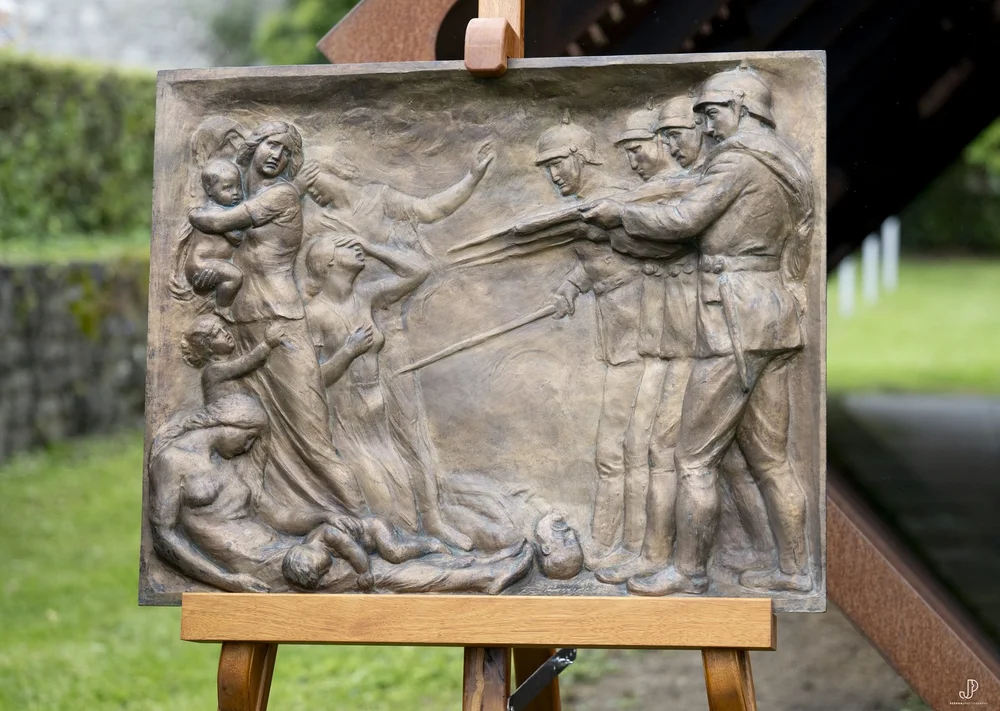
Bronze relief by Frans Huygelen, In Memory of Dinant, at the restitution ceremony in Dinant on 12 June 2026 © SedranJPhotography
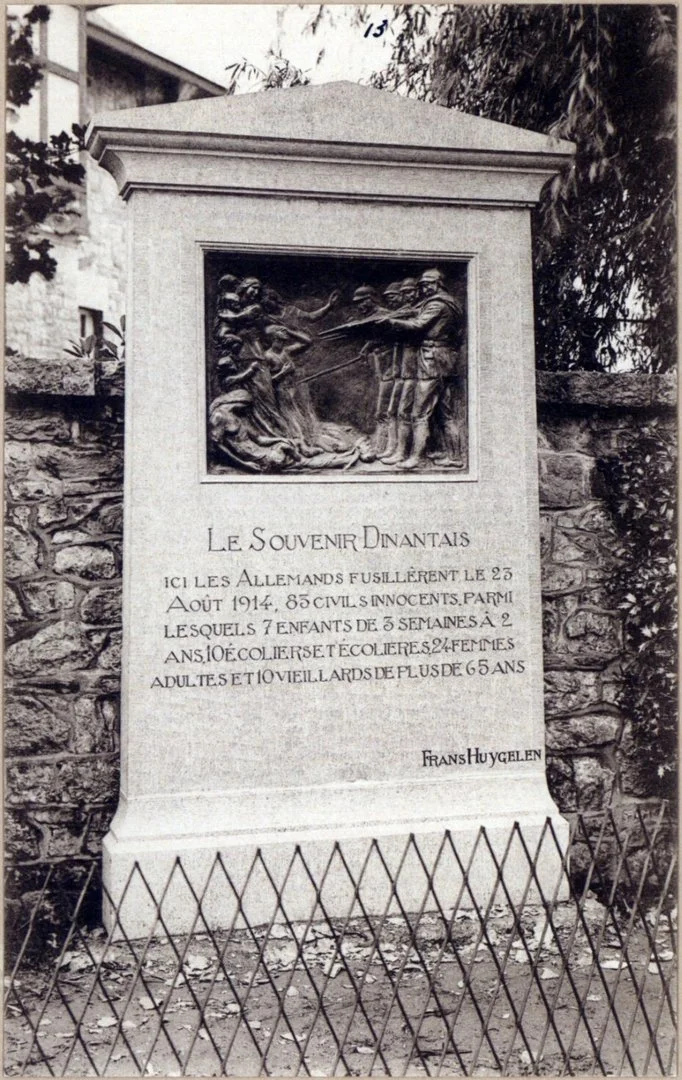
Postcard of the original memorial in Dinant, c. 1930 © DHM
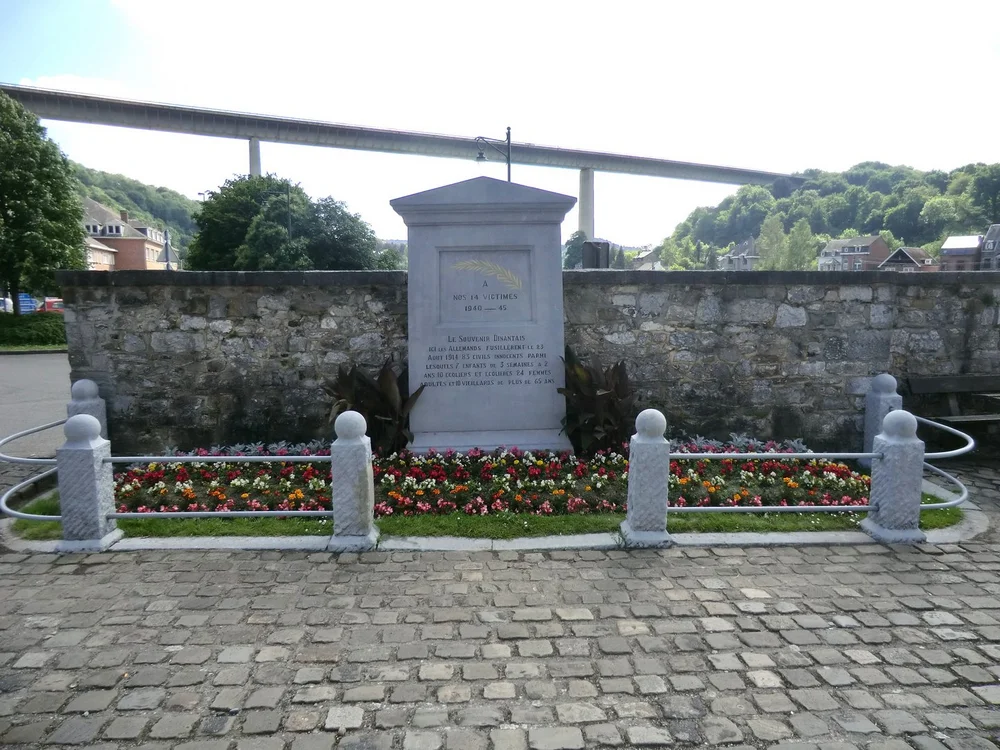
Photograph of the memorial showing inscriptions to the victims of the 1914 massacre and victims of the Second World War, Dinant, 2025 © DHM
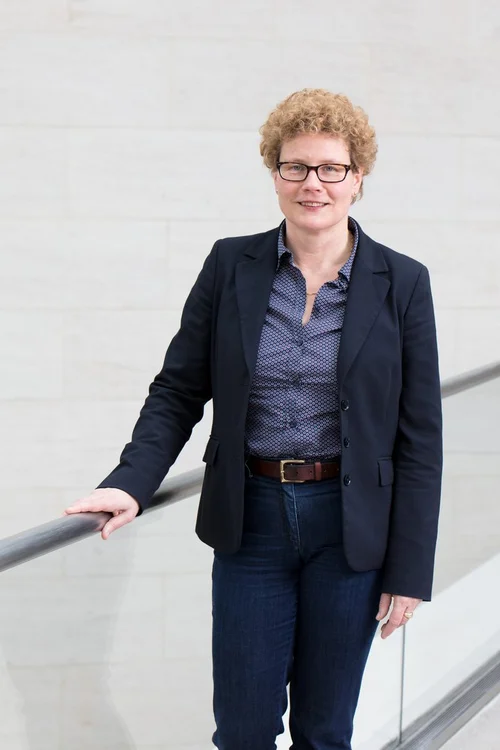
Dr Brigitte Reineke is Head of Central Documentation and Provenance Research at the Deutsches Historisches Museum.
27 July 2026
Editors , Brigitte ReinekeResearch
29 May 2026
Dorlis BlumeNature and German History
8 April 2026
Christopher JütteResearch
5 March 2026
Anna-Lena AlmstedtHistory today
4 June 2025
Sabine BenekeCollecting
18 December 2024
Fritz BackhausCollecting