The Biscuit Beetle
25 May 2026 Reading duration 3 Min.
In Part 3 of our series on pest management at the DHM, we introduce the biscuit beetle.
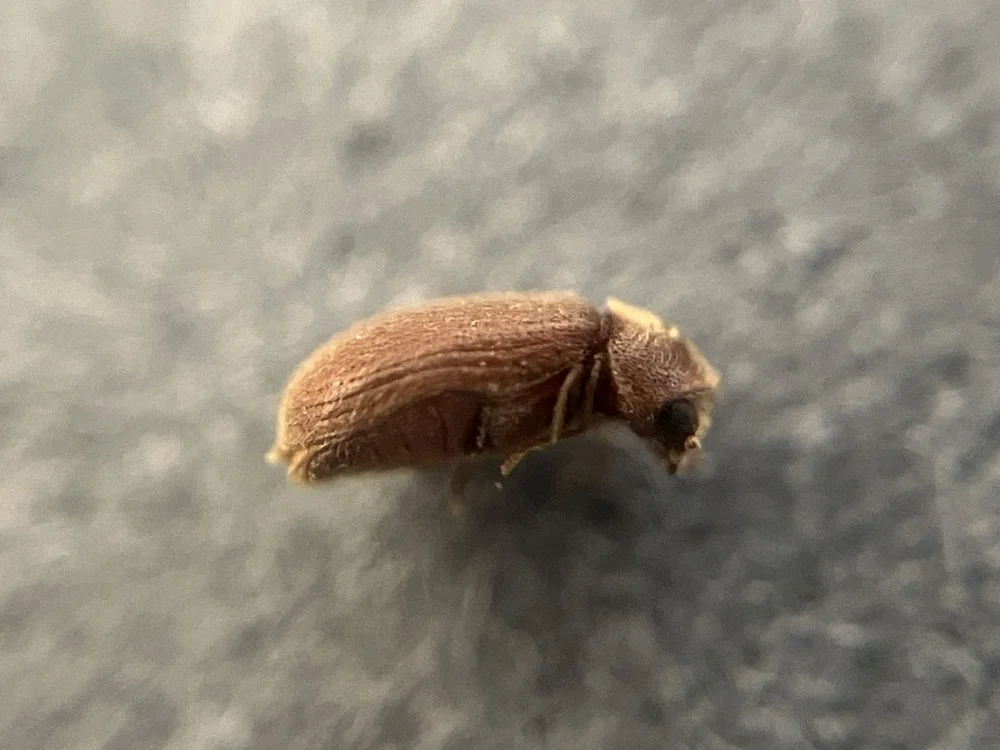
A biscuit beetle in the museum, photo: Hannah Neumann
The biscuit beetle (Stegobium paniceum) is around 3 mm long and has an elongated oval body with reddish-brown wing cases covered in fine hairs and grooves. Its broad pronotum, which covers its head like a hood, clearly marks it out as a member of the Ptinidae beetle family. It is easy to mistake the biscuit beetle for another member of this family, the common furniture beetle (Anobium punctatum), which, however, attacks wood rather than stored food. It may also be confused with another close relative, the cigarette beetle, which is very similar in size and shape. The serrated antennae of the cigarette beetle, however, distinguish it from the biscuit beetle, whose antennae end in a three-segmented club.
The name “biscuit beetle” is somewhat misleading, since these generalists feed not only on cereal products but on a wide range of plant and animal matter. In museums, they pose a particular threat to herbaria, works of folk art made of salt dough or similar materials, padding made from plant fibres, papers pasted with starch adhesive, and historic books, which is why they used to be called ‘bookworms’. As this name suggests, the real culprits are the whitish larvae. Depending on their stage of development, they range from 0.5 to 5 mm in length, and their entire bodies are covered in hair. They are also curved, rather like grubs. At the front, the larvae have three pairs of legs, and their dark mouthparts stand out clearly against their light brown head capsule.
At room temperature, they feed on starch-rich material for two to three months before pupating, although they may develop more quickly at higher temperatures. In the early stages, they are very active and can spread easily throughout a building. They can exploit tiny holes or weak points in packaging, such as glued or heat-sealed joins in cardboard or plastic wrapping, and may also gnaw their way through the packaging itself to reach their food source. Later they become sluggish and settle in one place. After several moults, when the larvae are ready to pupate, they build an oval cocoon from food particles and ‘frass’ (insect excrement). If they are feeding on loose material, they may attach this cocoon to the sides of the packaging. Alternatively, if solid materials such as chipboard or plasterboard are nearby, they may bore a cavity into them and line it with secretions.
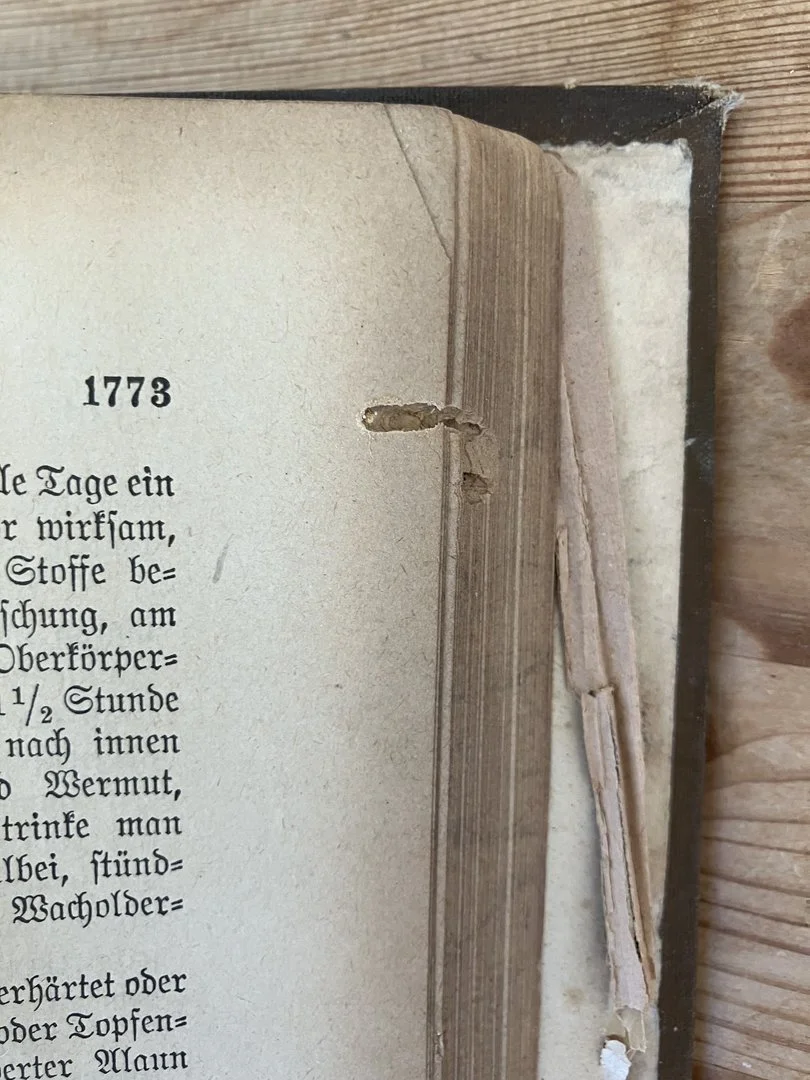
Book with bite marks, photo: Hannah Neumann
After pupating for around two weeks, the biscuit beetle gnaws its way out of the cocoon and emerges through round exit holes about 1 mm in diameter. The beetles are ready to mate immediately, and a few days later the female lays around 100 eggs on a food source or in nearby crevices, depositing them one at a time. The adult beetles do not feed. Under favourable conditions, the life cycle can be completed in as little as three to four months, allowing new generations to develop rapidly and heavy infestations to build up quickly. The beetles are strong fliers and, particularly in the summer months, may enter a building through an open window or via infested foodstuffs brought in from outside. Because they are attracted to light after laying their eggs, the beetles are often spotted on windowsills during an infestation.
Originally native to the arid regions of Africa, biscuit beetles thrive in warm conditions. Below 16°C, their development comes to a halt, although they do not die until temperatures fall to –18°C. In the wild, they live in the nests of wasps and birds as well as in tree hollows. But they are also capable of completing their entire life cycle indoors.
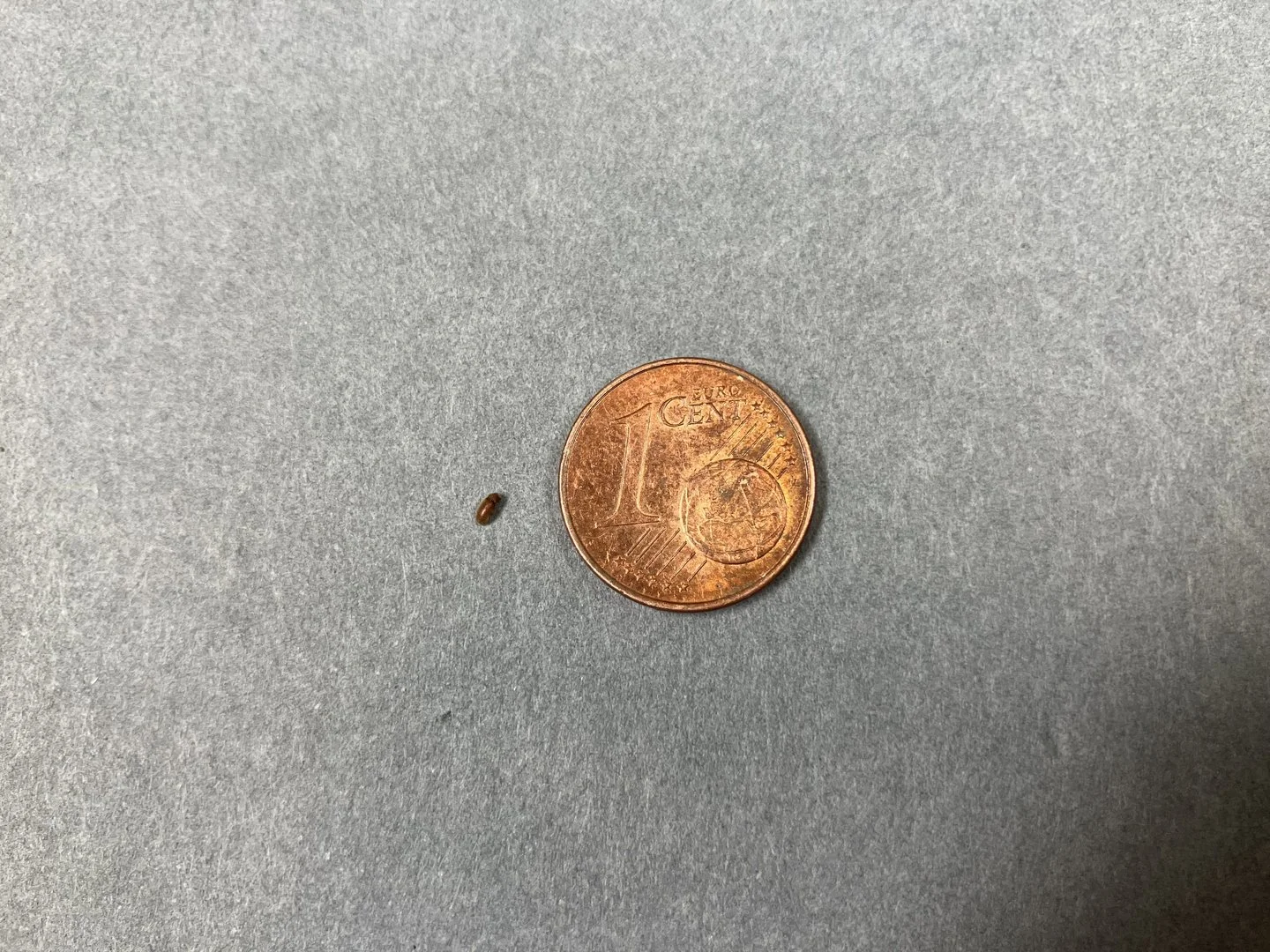
Significantly smaller than the smallest coin, photo: Hannah Neumann
The Author

Hannah Neumann
Hannah Neumann is responsible for integrated pest management (IPM) and preventive conservation at the DHM.