Pest Management at the DHM
25 May 2026 Reading duration 3 Min.
In Part 1 of our new series on pest management at the Deutsches Historisches Museum, we take a look at IPM.
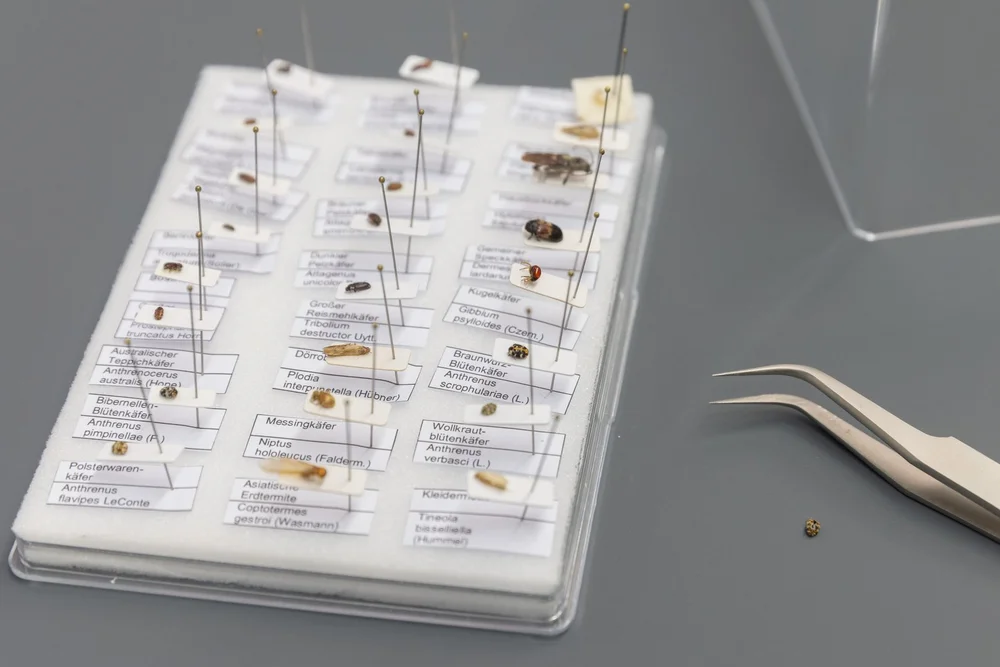
Identification of pests as part of “Integrated Pest Management”, photo: Hannah Neumann
IPM stands for Integrated Pest Management. First developed in the food industry, this approach to pest control has also been used successfully in museums and other cultural institutions since the 1980s. In both settings, IPM was adopted as a way of avoiding pesticides and the significant harm they cause to people, objects, and the environment.
The Deutsches Historisches Museum is committed to this preventive approach and has had a dedicated IPM specialist in its Conservation Department since 2023. The aim is to prevent pest populations from taking hold and to keep the collections free of pests over the long term.
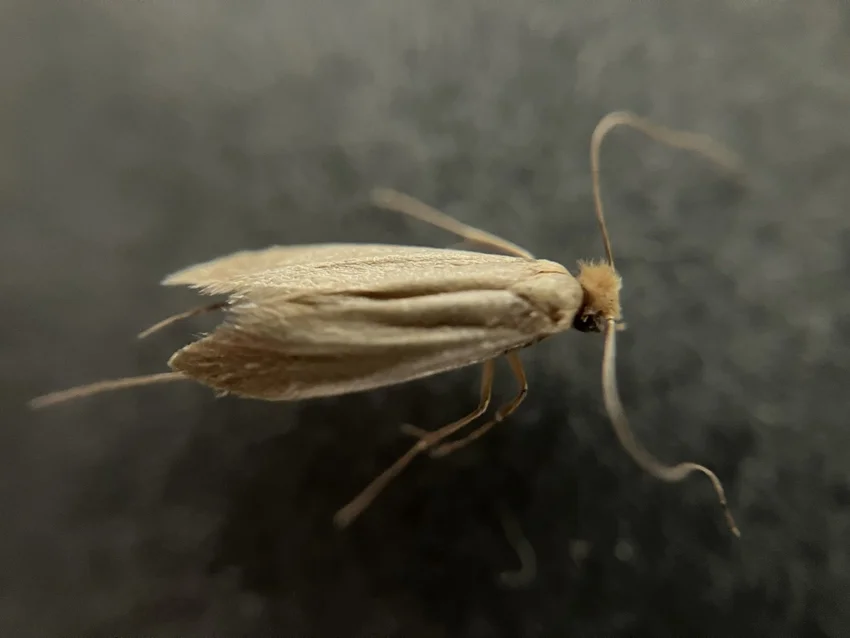
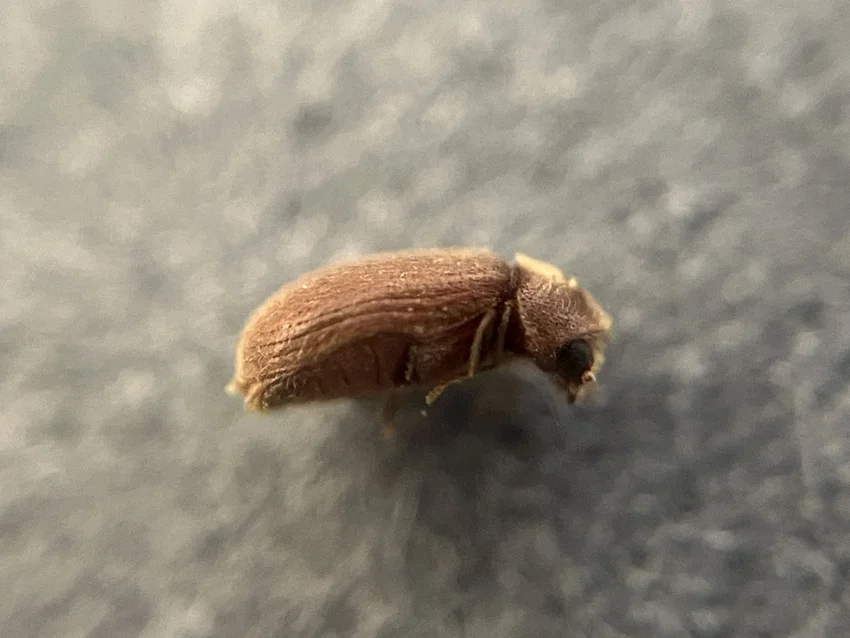
A key part of this work is understanding the species involved, their behaviour, and their life cycles. How do grey silverfish absorb water, for example? How can clothes moth populations become established in exhibition spaces? Why is it so important to act quickly when biscuit beetles appear? Only by understanding how different pests behave and identifying the conditions they need to thrive can effective action be taken.
Monitoring is the cornerstone of pest management. To detect infestations early, sticky traps and pheromone lures are placed throughout the museum – in exhibition spaces, storage areas, workshops, offices, and equipment rooms – and checked regularly. The museum’s collection is organised into risk zones, with inspection intervals determined by the vulnerability of the materials they contain: objects made of wood, paper, and textiles of animal or plant origin are more susceptible and are therefore checked more frequently than objects made of metal or plastic.
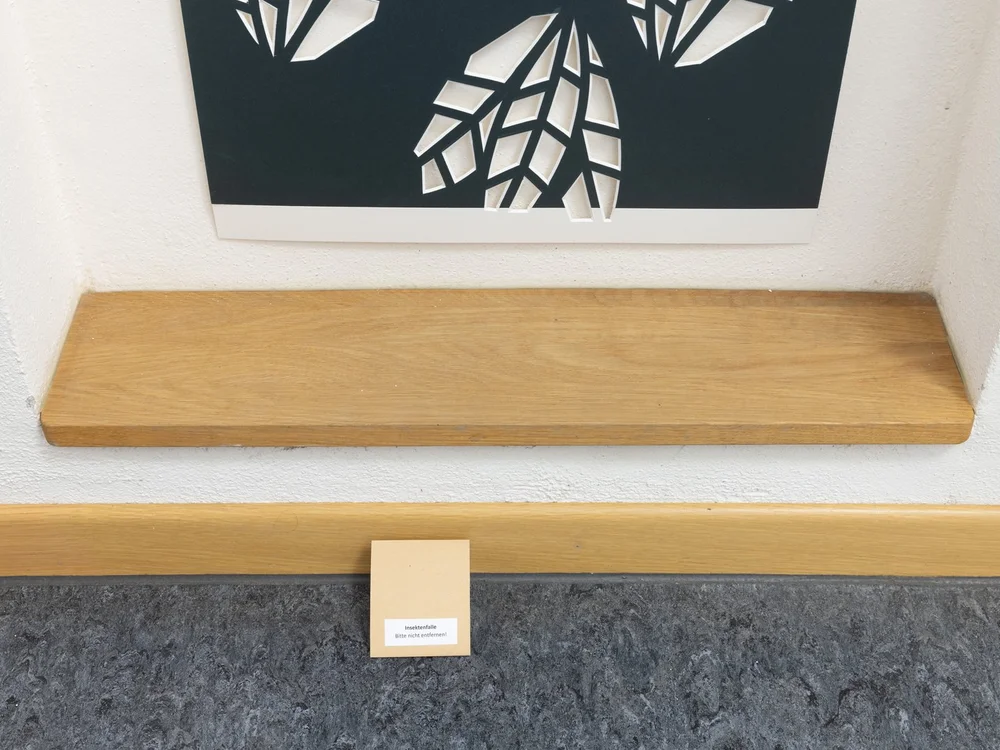
Use of an insect trap as part of “Integrated Pest Management”, photo: Hannah Neumann
Exhibition spaces require particular attention: The high volume of visitor traffic means that harmful insects have more sources of food in these places – fibres shed from clothing, hair, and skin cells – and this can settle as dust beneath display cases, where it provides sustenance for clothes moth larvae. Exhibition spaces are therefore inspected and cleaned more often.
In the collection stores, too, cleaning is an essential strategy. Insects require surprisingly little food – a single dead fly, for example, can support larder beetle larvae through to adulthood. To ensure that floors remain clean, programmed robot vacuums are deployed in some of the museum’s more extensive stores.
The way that shelves and cabinets are arranged also affects how pest populations develop. If cabinets are placed directly against exterior walls, a more humid microclimate can form behind them. Grey silverfish, for example, can absorb this moisture from the air through appendages at the end of their abdomen, and this, when combined with a sufficient food supply, can speed up their development. Under favourable environmental conditions, some species can reproduce very quickly: biscuit beetles, for example, can produce several generations a year, with females laying up to 100 eggs.
If, despite these preventive measures, pest populations do become established in the building, there are several ways of dealing with them that pose minimal risk to the collection objects and the environment. Some species of parasitic wasp, for example, parasitise the eggs or larvae of their hosts. Or silica gel powder can be used: Composed of microscopically sharp shards, it damages the cuticle, or protective outer layer, of grey silverfish as they crawl over it.
If pests are found on collection objects, various treatments can be used to eradicate them, depending on the item’s material and condition, and the nature of the infestation. These include the use of heat treatment, cold treatment, and anoxic chambers – enclosures in which oxygen is replaced by nitrogen.
The Author

Hannah Neumann
Hannah Neumann is responsible for integrated pest management (IPM) and preventive conservation at the DHM.