
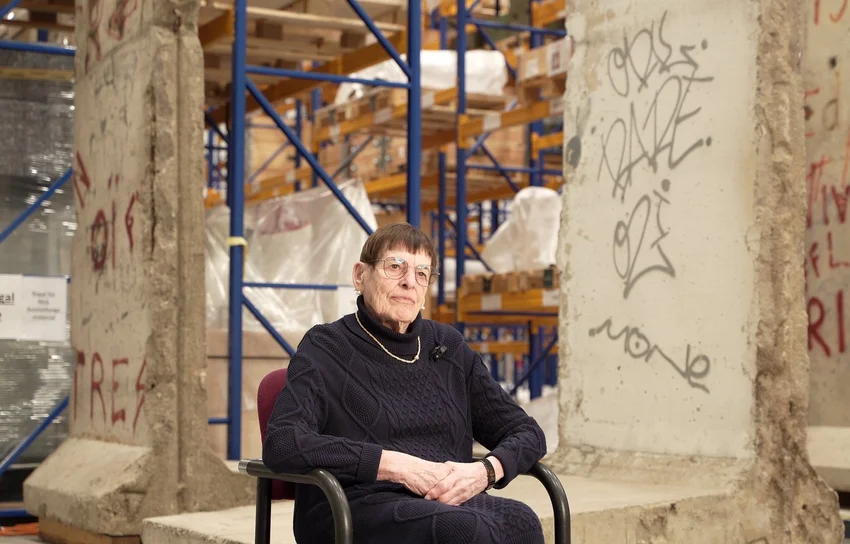
“Suddenly, you could no longer leave the country without risking your life”, recalls Renate Werwigk-Schneider, looking back on the building of the Berlin Wall
12 August 2026
7 Min.Objects. History. Stories.
3 November 2026 5 Min.
The exhibition “Objects. History. Stories. Reviewing the Collection” presents around 200 selected objects from the collections of the Deutsches Historisches Museum – items that not only trace the larger movements of history but, above all, make visible the personal stories connected to them.
The history of the Berlin Wall is well known, and it features in the current exhibition “Objects. History. Stories. Reviewing the Collection”. But the exhibition also tells the story of a very different kind of border wall.
From 1969 to 1993, a low wall made of forty-centimetre-high Leicon concrete blocks ran down the middle of a two-kilometre stretch of road separating Herzogenrath in Germany from Kerkrade in the Netherlands, two neighbouring towns north of Aachen. The wall marked the international border, with crossings controlled by two customs posts. Inspired by the Schengen Agreement and the fall of the Berlin Wall, the town councils began working towards the establishment of EURODE, a cross-border partnership, in 1991. Between 1993 and 1995, the wall was demolished as part of a project to redesign the street, known as Neustraße on the German side and Nieuwstraat on the Dutch side. Together, the two towns now form Eurode, united symbolically, if not administratively, as Europe’s first binational city. It was during the demolition that the DHM acquired two of the concrete blocks.
An illustrated timeline in the exhibition traces the complex history of the now-vanished border wall and the events that preceded its construction. It begins with the barbed-wire “death fences” erected to deter deserters and smugglers during the First World War and moves on to the identity checks carried out by the Gestapo during the German occupation (1940–1944) before turning to the post-war years, a period marked by widespread cross-border smuggling but also by growing ties and reconciliation between the two communities.
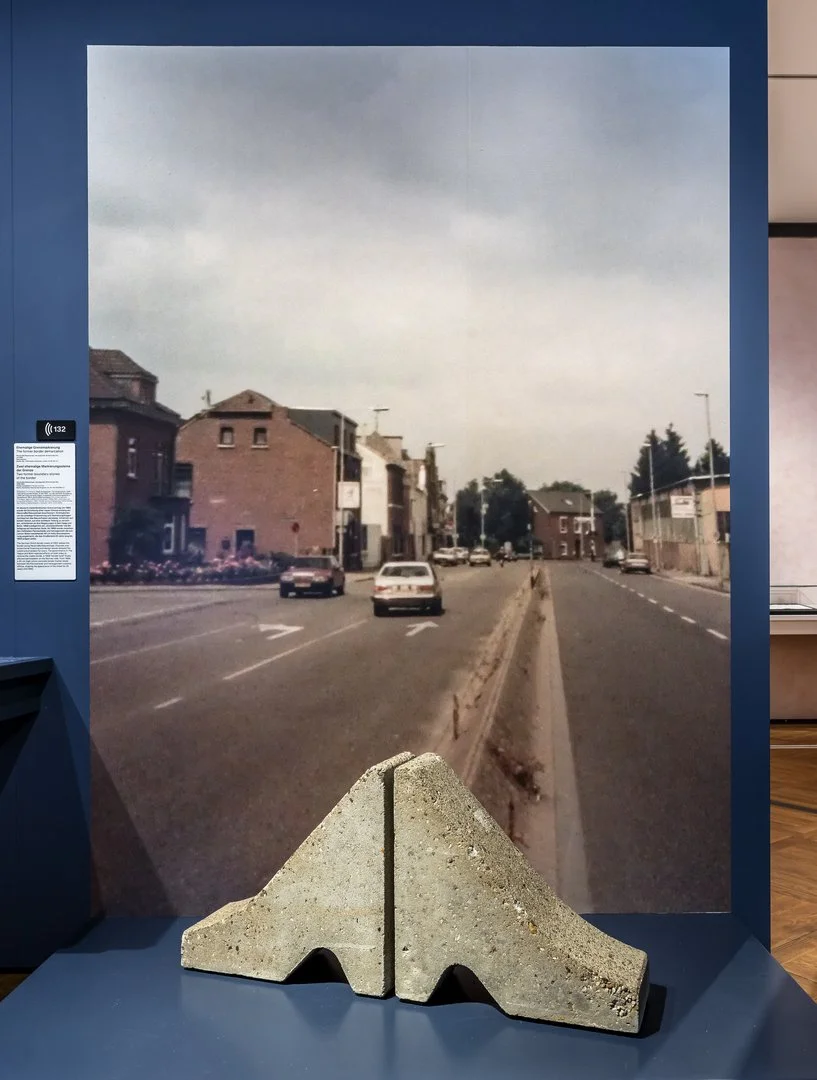
The exhibition view shows the wall that used to separate Herzogenrath and Kerkrade © DHM / David von Becker
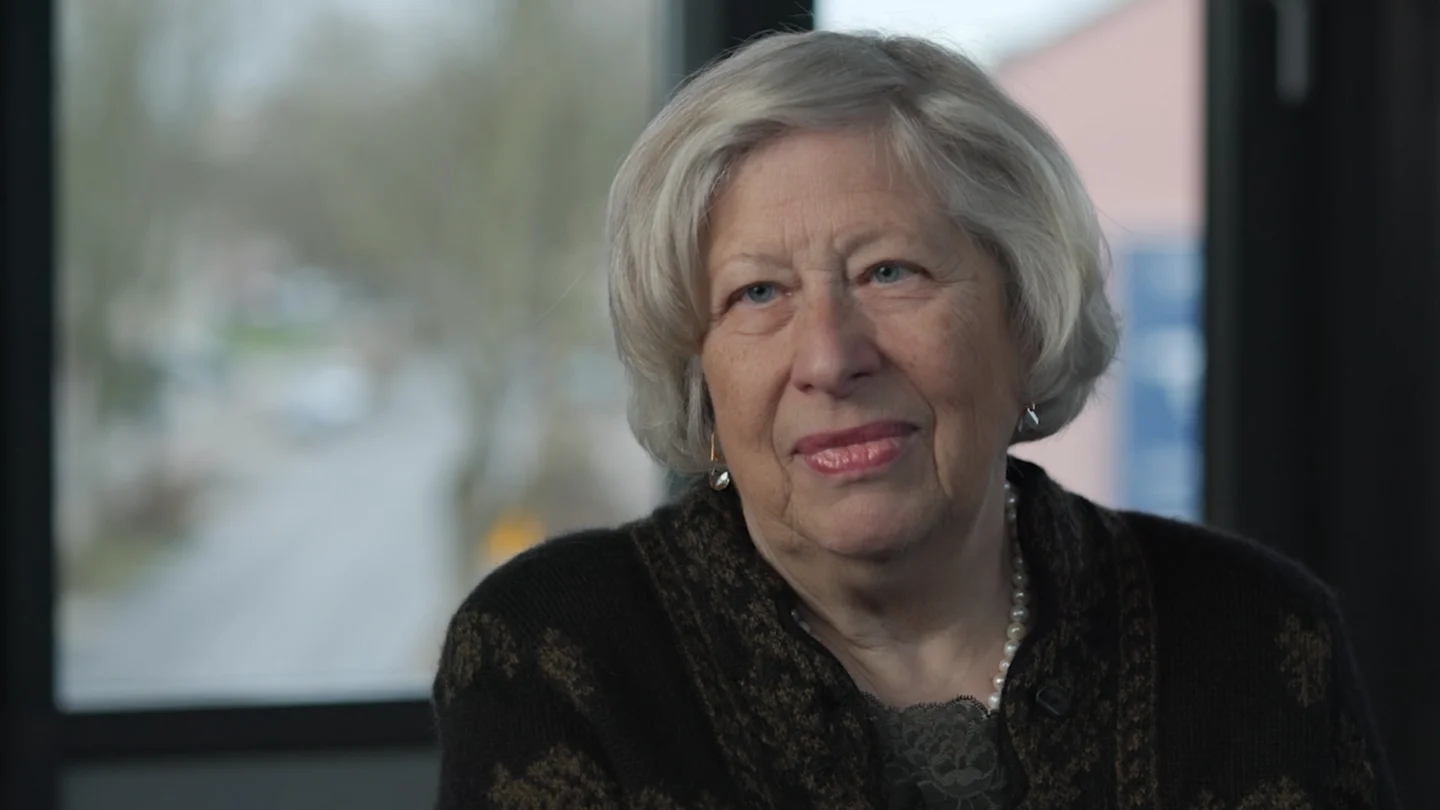
Edith Wolters, the daughter of a German mother and a Dutch father, still lives in Kerkrade in the house she grew up in. She is one of five local residents interviewed for the exhibition about what it was like to live alongside the border and how it shaped their lives. Wolters talks about her “dual identity” and the multilingualism that remains part of her family’s everyday life, focusing on the importance of “Kirchröads Platt”, a local dialect spoken on both sides of the border. She also contributed several of her parents’ identity documents from the 1940s and 1950s to the exhibition.
Dr Wolfgang Cortjaens is Head of Applied Arts and Graphics at the Deutsches Historisches Museum.
12 August 2026
7 Min.Objects. History. Stories.