Kyjiw, Berlin, Hollywood
The many faces of Anna Sten

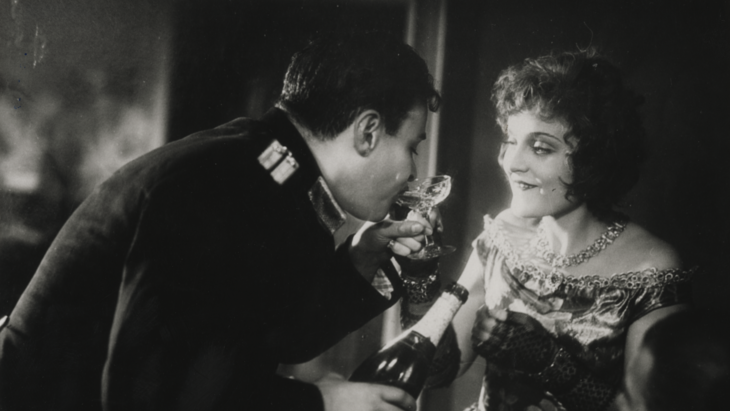
„Ich weiß nicht, zu wem ich gehöre. Ich bin doch zu schade für einen allein. Wenn ich jetzt grad Dir Treue schwöre, wird wieder ein anderer ganz unglücklich sein. Ja, soll denn etwas so Schönes nur einem gefallen? Die Sonne, die Sterne gehören doch auch allen. Ich weiß nicht, zu wem ich gehöre. Ich glaub’, ich gehöre nur mir ganz allein.“ Anna Sten sings this song, written for her by Friedrich Hollaender and Robert Liebmann, at the climax of her last German film Stürme der Leidenschaft (1932).
Shortly afterwards, she leaves for America, where producer Samuel Goldwyn wants to make her a global star: the first actress from the Soviet Union to make it big in Hollywood! They try to model her on the two other European divas, Greta Garbo and Marlene Dietrich, and teach her how a star should behave in public. Anna Sten, who is completely unfamiliar with the mannerisms and airs and graces of the stars, feels a sense of revulsion. She tells the New York Times in 1934: „I am an actress. I came here to work, to study. Not to give a monkey exhibition!“
Like previously in Germany, Anna Sten was marketed as Russian and portrayed on screen as an “exotic” figure, a foreigner, a stranger. The fact that she was born in Ukraine was almost always lost in this process of exoticization and Russification, which was also practiced in the West.
Born in Kyiv in 1904 as Anna (Hanna) Fisakova, Sten grew up at a time when the Tsarist Empire was suppressing the Ukrainian language, culture, and any desire for independence; school lessons were conducted exclusively in Russian. While her father worked as a folk dance teacher, demonstrating his attachment to Ukrainian culture, school familiarized Sten with the normative Russian cultural canon. It was not only in her family's case that the state of colonialism gave rise to seemingly contradictory behaviors bordering on self-denial.
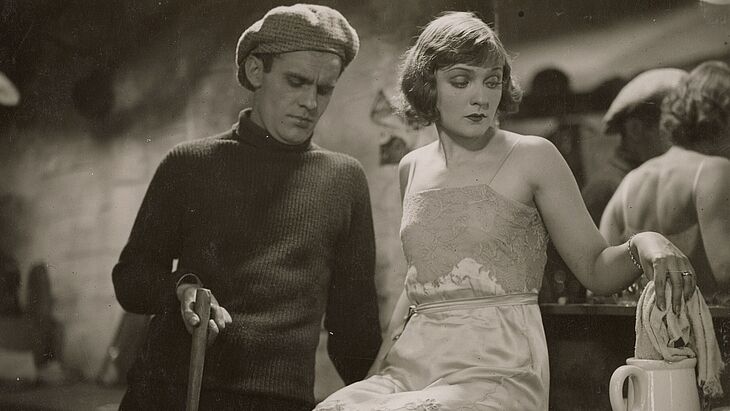
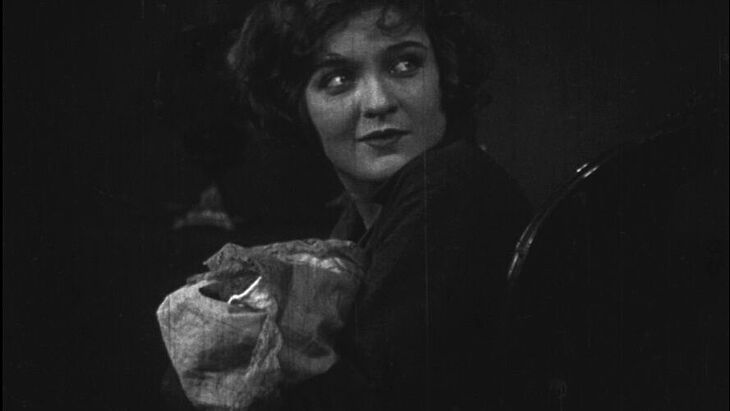
In post-revolutionary Kyiv—the capital of the Ukrainian Soviet Republic—Sten completed her artistic training in the 1920s and worked for a daily newspaper that was published in Russian and then, following a temporary relaxation of nationality policies, in Ukrainian. She also made her first film, Provokator, in Ukraine in 1926. In search of new artistic challenges, she then moved to Moscow, the center of Soviet cultural production. There, in 1927, she caused a sensation in the leading role in Devushka s korobkoi (1927), a film by the beloved and ostracized Meschrabpom studio, known as the “Red Dream Factory.” In no time at all, Anna Sten became one of the most popular stars of Soviet cinema and the face of a new beginning.
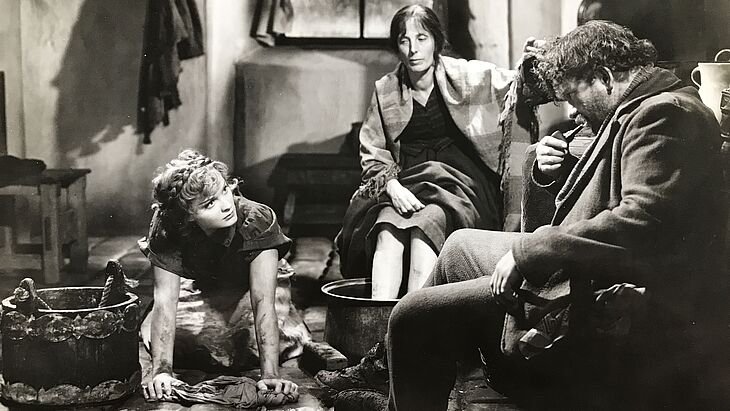
The success of her films abroad paved the way for Sten to move to Berlin in 1929, where she enjoyed an extremely productive period. Her very first sound film, Der Mörder Dimitri Karamasoff (1931), earned her a Hollywood contract, but Anna Sten was unhappy in the American studio system, which restricted her acting personality. Her three major films for Samuel Goldwyn did not meet the high commercial expectations. From then on, Sten was considered box office poison—something that is incomprehensible today—and therefore initially only appeared in independent films that her husband Eugene Frenke produced or directed. Her roles became smaller, but more diverse and subverted the established stereotypes. These were anti-Nazi films, films about emigrants and the homeless, dark, nocturnal stories about persecution and uprooting. Until 1964, Anna Sten, who had long since become an American citizen, appeared in mostly minor roles in cinema and television productions. She also acted in theater and led a life outside of show business. She died in New York in 1993.
When Anna Sten was living in California with her Polish-Jewish husband and daughter in the 1930s, and returning to her homeland, which had been ravaged by Stalinist terror and the Holodomor, was just as impossible as returning to fascist Germany, an interview with her appeared in a Ukrainian newspaper in the US under the title: “Is Anna Sten Ukrainian? What Does the Great Actress Say About Herself?” In it, she states clearly and unequivocally: “Most certainly I am Ukrainian. (...) I was born in Ukraine.” (Ukrainian Weekly, December 24, 1937)
The films that Anna Sten left her mark on with her presence and acting were made in Ukraine and Russia when they were two Soviet republics, as well as in Germany, Great Britain, and the USA. They are part of the national film heritage of all these countries and, beyond that, part of a film heritage that has no nationality but belongs to those who keep these films alive in their memories and have an imaginary home. In contrast, the artist Anna Sten—as she sings in Stürme der Leidenschaft—belonged to no one but herself. (Philipp Stiasny)
The retrospective is sponsored by the Hauptstadtkulturfond. The curator of the series is Philipp Stiasny. The curator of the panel discussion is Oleksandra Bienert from CineMova Ukrainian Empowerment Network e.V. We would like to express our special thanks to Anna Sten experts Ivan Kozlenko (Cambridge) and Peter Bagrov (Rochester), without whose help, expertise, and enthusiasm this retrospective would not have been possible.