
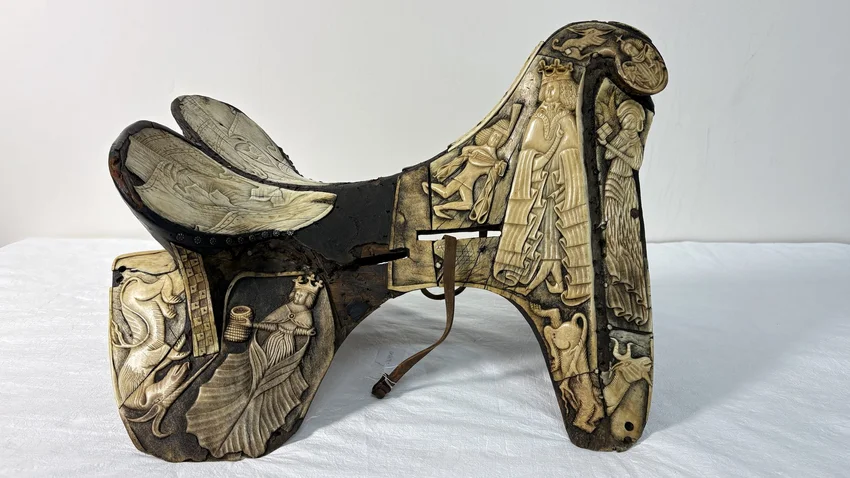
What does a luxurious saddle have to do with a unicorn?
16 October 2026 Reading duration 5 Min.
This question came up during the examination of one of the oldest objects in the Deutsches Historisches Museum’s militaria collection: a so-called “Prunksattel”, a luxurious saddle dating from the 15th century, which originally came from the private collection of Prince Friedrich Carl Alexander of Prussia (1801–1883) and is described as having belonged to the old armoury collection. It had long been displayed in the Permanent Exhibition in the Zeughaus. When the exhibition closed for restoration in 2021, the opportunity arose to examine the saddle more closely. On the one hand, there were questions regarding the materials used; on the other, the date of manufacture needed to be verified. Although the saddle was mentioned several times in the relevant literature, these publications mostly referred to the decorative motifs on the overlays applied to the saddle, which were always described as ivory. As far as I can determine, no detailed material analyses have yet been carried out.
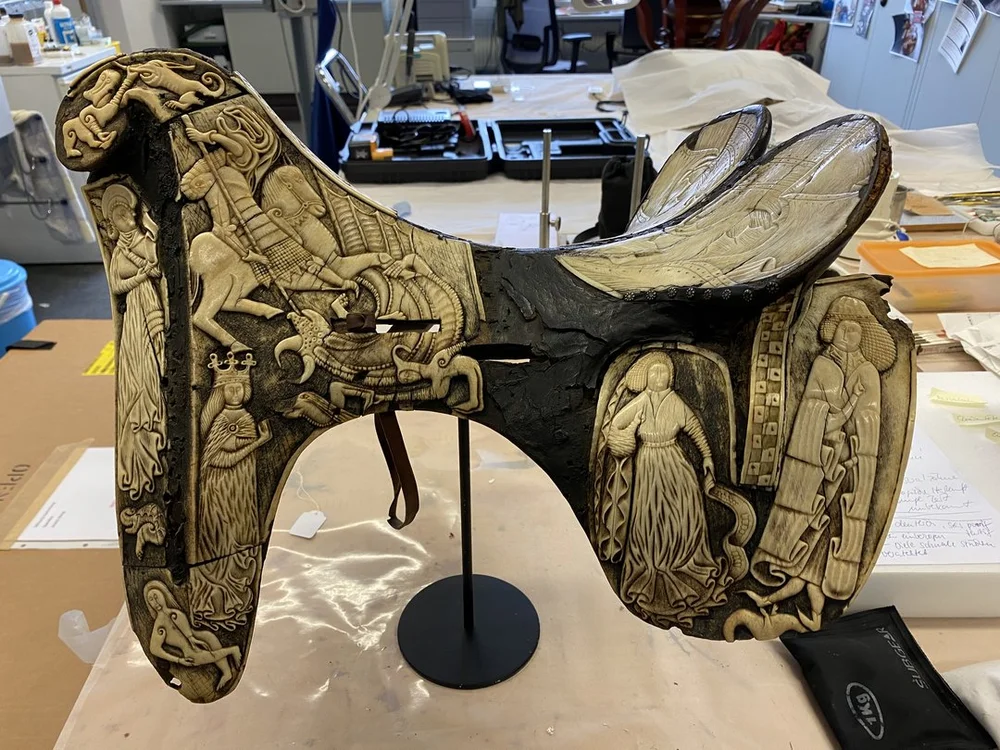
Luxurious saddle, ca. 1440, Germany © DHM
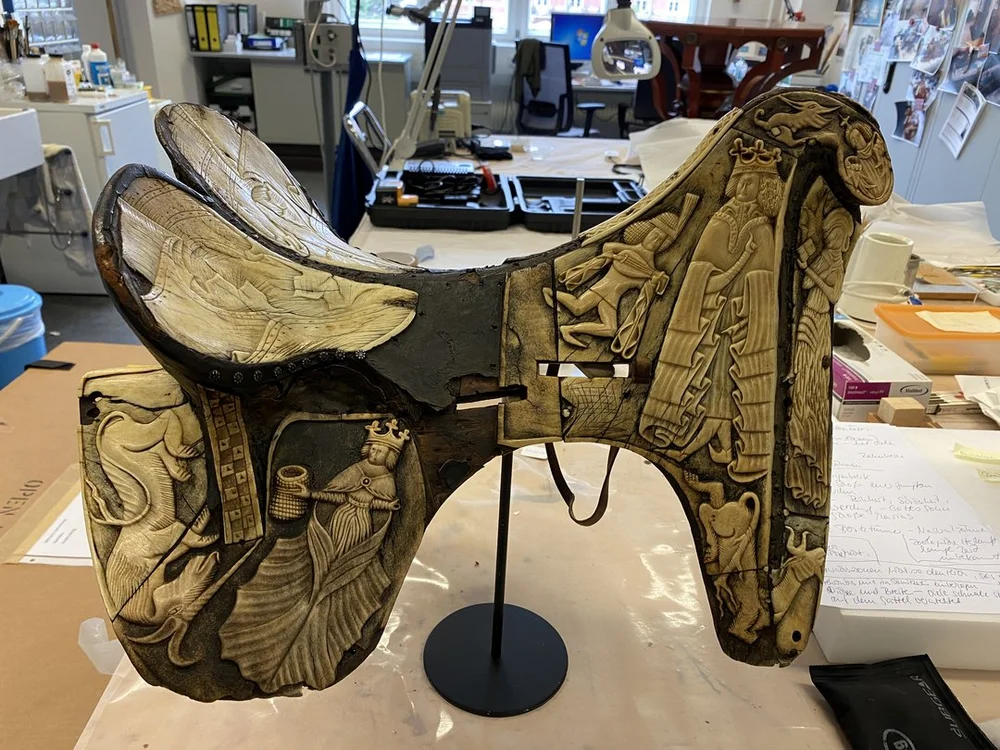
Luxurious saddle, ca. 1440, Germany © DHM
When we, as conservators, approach an object visually, our attention is first drawn to the condition of the individual materials. A trained eye may be able to recognise restoration or repair work immediately if certain procedures, such as stabilisation, supplementation or retouching, have been carried out. Signs of ageing, such as deterioration, cracks, imperfections, colour changes, or detached parts, can often be clearly identified with the aid of visible light. Photographs, particularly macro shots, initially serve as a means of verification, and it is often possible to discover details in them that might otherwise have been overlooked. Examining individual areas under magnification often provides a clear picture. Material comparisons and database research can then confirm the findings and the resulting perceptions.
If this is not sufficient, the different light wavelengths can be used to examine and document an object under ultraviolet (UV) or infrared (IR) light. These imaging techniques can provide us with more precise knowledge of the object’s material properties and current condition. The next step would then involve investigations in scientific laboratories, such as X-ray and CT scans, or analyses of material samples taken from the object.
It is always exciting to examine the areas where imperfections allow us to penetrate right down to the base material. In this way, I was able to examine the so-called saddle tree, which, upon microscopic examination, was identified as beechwood. Technically speaking, this was a good choice, as this native timber is easy to work with and can be bent under steam. I have previously identified this wood in crossbows of a similar date, as well as in very early horn bows, few of which have been preserved. Such comparisons can serve to date an object and were available to us thanks to our collections from the old armoury. They provide insight into natural ageing processes and the technology used in their workmanship. Equally revealing when identifying organic materials is always the search for their typical characteristics, but when we examined the overlays, we were not able to identify the most important characteristics normally found in the ivory of so-called proboscideans (horned or tusked animals).
It was only as the investigation progressed that I realised that the medieval sense of the German term “Prunk” (in “Prunksattel”), as well as the choice of material for the overlays, might require a different interpretation. The carvings, executed as bas-reliefs with some distinctive features, certainly point to the 15th century in terms of their technique and are exceptionally well executed in their style. They allude to the famous medieval tale of St George, who saves the king’s daughter and an entire city by slaying the dragon. The figure of George the dragon-slayer only evolved into that of a knight over the course of the centuries. Here, George is depicted wearing a knight’s armour, which thus also provides a helpful clue as to the piece’s chronological context. Focusing on his adornments, I was immediately struck by the long staff, carved with intricate windings, which George uses as a lance (Figures 1 and 2) to slay the dragon. This led me to consider the possible connection between the meaning of the pictorial representations and the choice of material as an element that reinforces this symbolism.
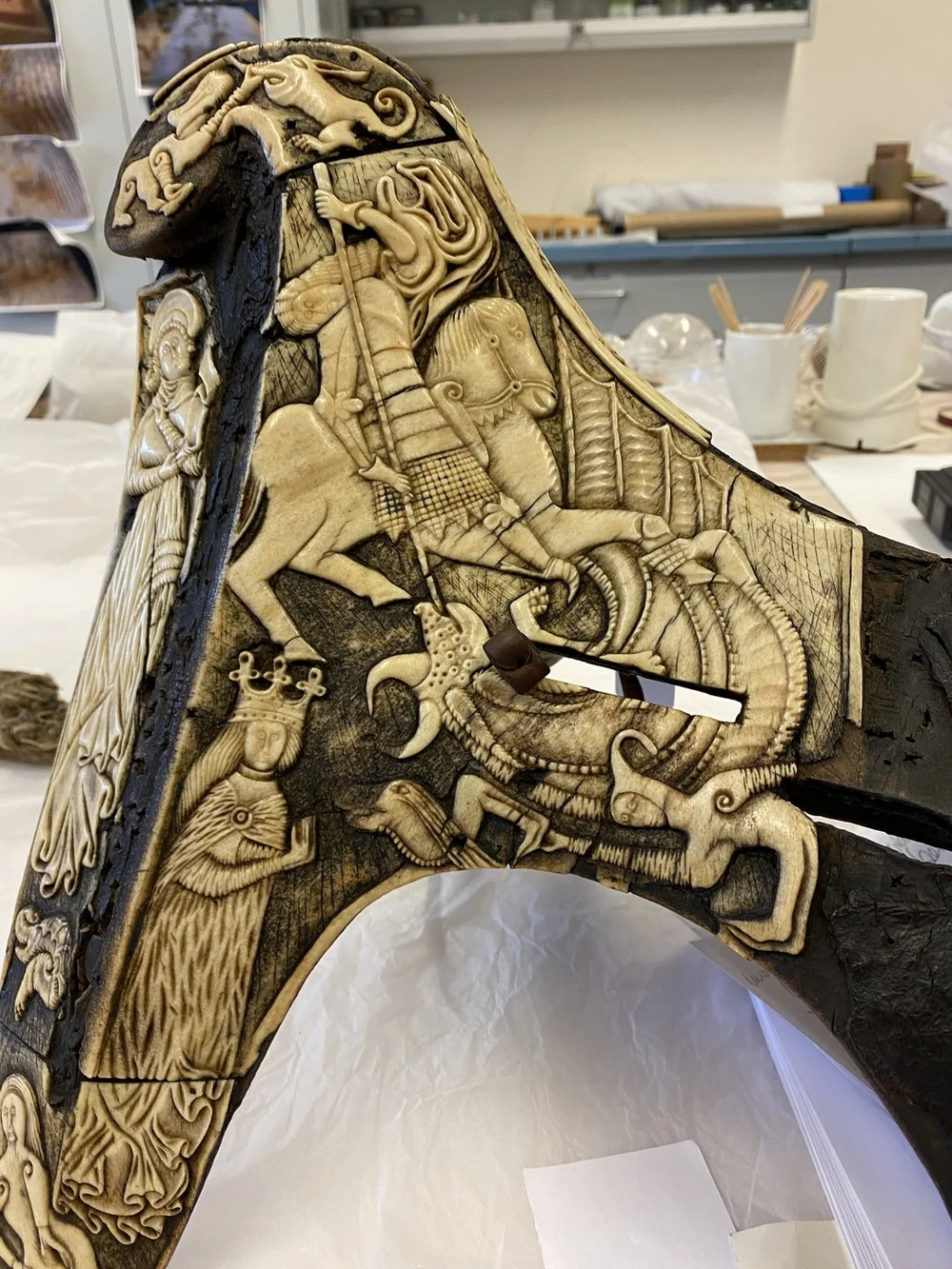
Figure 1: Luxurious saddle (detail), c. 1440, Germany © DHM
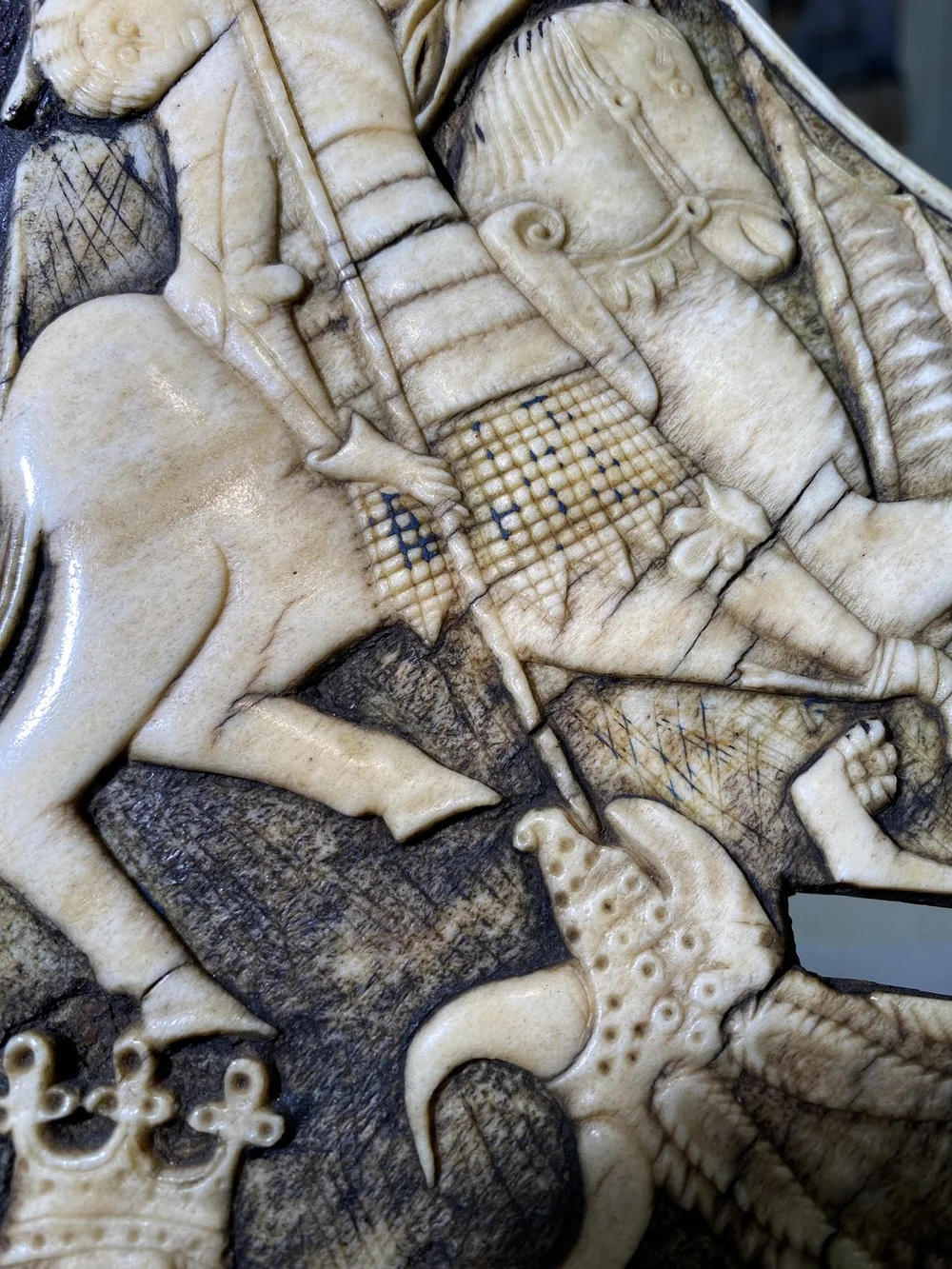
Figure 2: Luxurious saddle (detail), c. 1440, Germany © DHM
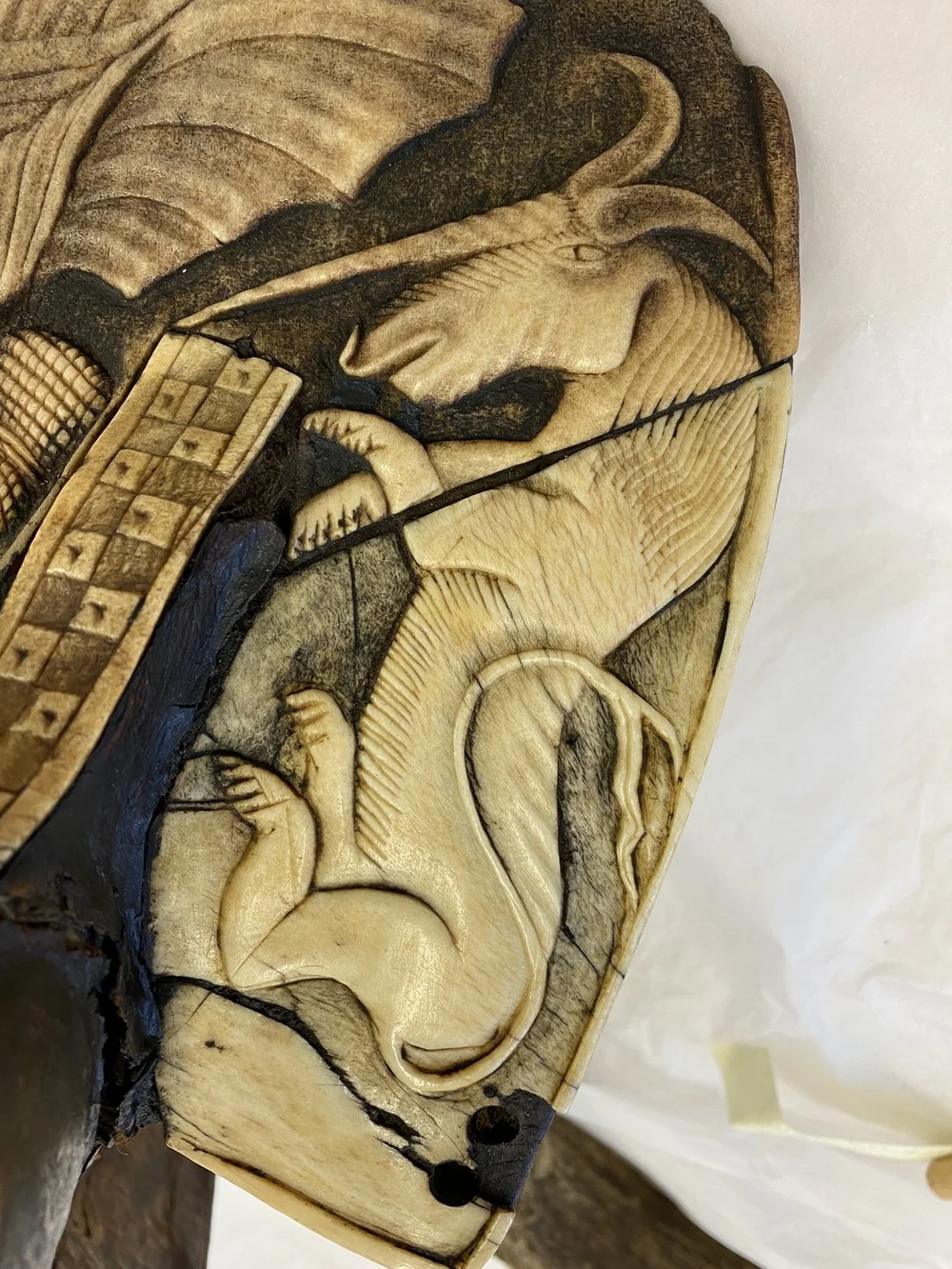
Figure 3: Luxurious saddle (detail), c. 1440, Germany © DHM
Figure 3 depicts an animal with a horn on its head, here, too, carved with intricate windings. It shows the unicorn, one of the most symbolic animals in medieval mythology. As a symbol of the Incarnation, of purity, beauty and virginity, the unicorn on the saddle links the theme of the early medieval myth of St George the Martyr and the salvation of humanity from evil with the Christian legend of St George the Knight, who rescues the virgin princess from the dragon, thereby defeating sin. The winding shape of the carved lance and that of the horn are very similar to the forms of horn specimens that were found at that time on the beaches of Iceland and Scandinavia. However, the zoological origin of these horns was entirely unknown in the Middle Ages: these finds were then regarded as evidence of the existence of the unicorn. As coveted possessions, they very quickly acquired a value that was literally worth its weight in gold. The unicorn thus became a symbol of political power, and great care was always taken to display this power. According to tradition in literature and art, it was not merely the possession of the horn itself that mattered, but the ability to imbue an object made of this material with its mythological significance: this was regarded as part of its value. Even today, there are examples of precious medieval objects crafted from this “horn”. We now know that the horn belongs to a marine mammal that still exists today: the narwhal. Due to its habitat in great depths of the sea, it is very rarely seen. It was not until the mid-17th century that the creature was described by a Danish naturalist and that the horn found on beaches was attributed to the narwhal. Over time, the unicorn theory was thus disproved, although belief in its magical powers persisted for a long time. To this day, the unicorn continues to fascinate us as a mythical creature. Its legend is passed down to future generations through stories and films.
While studying this extremely rare material, I learned that, scientifically speaking, it is not horn but tooth material. This tooth is indeed also referred to as ivory, but unlike the ivory of proboscideans, it possesses entirely different characteristics. It thus gradually became clear to me why the material used for the overlays on this saddle exhibits such uniquely different characteristics from those I had previously encountered in other comparable tooth, horn, and bone materials.
All the details of the investigation and their results will be published in a separate report, so that, for the time being, the following can be summarised regarding our object: in this saddle both splendour and “ivory” came down to us. Why, from the perspective of that era, should the rare and valuable “unicorn” material – then known as ivory – not have been used symbolically for our saddle decorations? Thus, George’s weapon was not designed as a mere lance, but appears as the mighty horn of the unicorn. This symbolism reinforces the significance of the depiction and that of the object itself. The almost faithful reproduction of the so-called unicorn shows that the carver was familiar with the material and may even have used it as a model. The magnificently designed robes of the crowned figures, and the fact that the saddle comes from the collection of Prince Carl of Prussia, suggest a connection to the high nobility. In this respect, too, the choice of the material would have been particularly appropriate. The construction of the saddle also explains why it could only have been used for prestige purposes. In summary, the selection and use of such a significant material in our saddle would explain the term “Prunk”.
The Berlin Museum of Natural History has loaned a narwhal tusk to the DHM for our exhibition “Nature and German History”. This gave me the opportunity to examine the rare tooth material more closely. I am confident that, with further opportunities for comparison, I will be able to confirm the connection between this rare and significant narwhal material and one of our most extraordinary medieval objects. Although the luxurious saddle is now in storage, it is still possible to view a narwhal horn in this exhibition in the Pei Building.
The Author
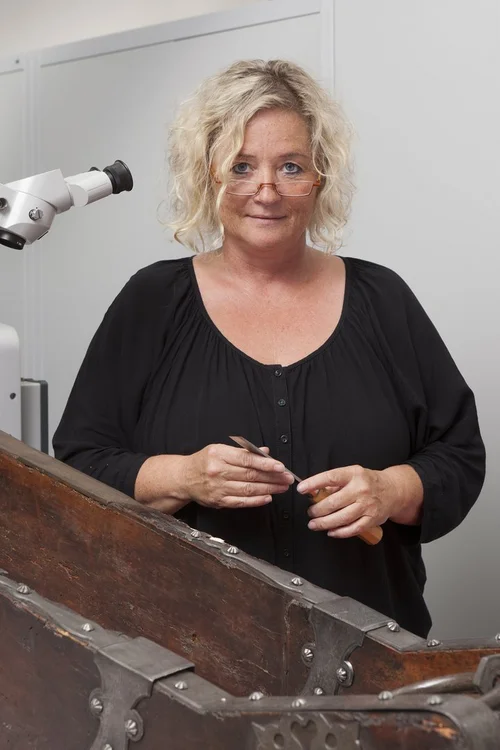
Antje Nützmann
Antje Nützmann is a wood conservator at the Deutsches Historisches Museum.
References
Did you enjoy the article?
Conservation
-
-
-

-
-
Rusty Party Badges? On Collecting Objects about National Socialism in the Deutsches Historisches Museum
25 February 2026
Thomas Weißbrich , Sören KutznerCollecting
-
-
Private and Public Collecting. The library of Imperial Count Joachim von Ortenburg and the collecting practice of the library of the Deutsches Historisches Museum
12 March 2025
Matthias MillerCollecting
-
Weapons, History and Culture: The fascinating collection of Hubert Willkomm
12 February 2025
Sven Lüken , David SchwalbeCollecting
-

Back to Berlin. Dr Dietmar J. Ponert on an extensive bestowal from a family estate
29 January 2025
5 Min.Collecting
-
