
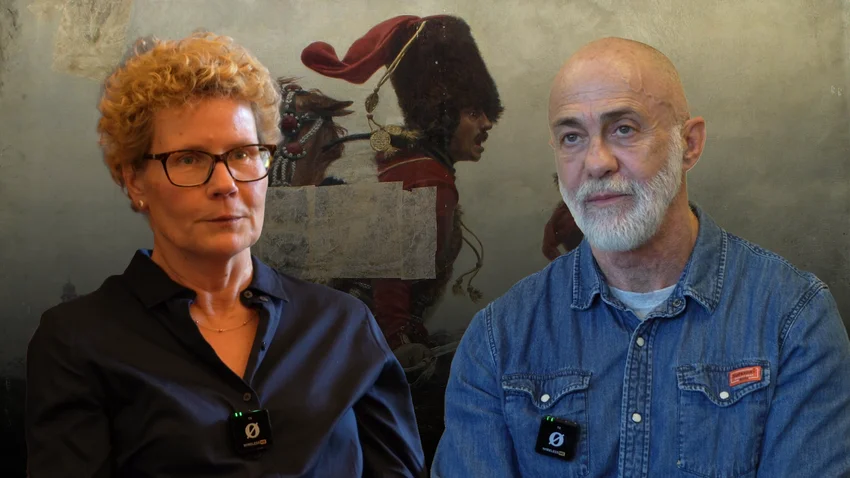
Behind the Scenes of the Restoration Workshop: “Major-General von Zieten at the Battle of Catholic Hennersdorf”
17 November 2026
7 Min.Behind the Scenes
17 November 2026 7 Min.
Not every object finds its way into an exhibition. Museum storerooms house countless items that remain hidden from the public, yet have fascinating stories to tell. This video series by the Deutsches Historisches Museum focuses on three of these objects. Here, our conservators take a closer look at objects which, for various reasons, were ultimately not selected for the exhibition “Objects. History. Stories. Reviewing the Collection”. They offer insights into the challenges of their work, tell of surprising discoveries, and ask what stories the objects might have told if they had found a place in the exhibition.
Werner Wilhelm Schuch’s monumental oil painting depicts the Prussian Major General Hans Joachim von Zieten at the Battle of Catholic Hennersdorf in 1745. Painted around 1890, the work, together with a companion piece (“General Seydlitz on Horseback before the Battle of Roßbach”), was transferred in 1910 – at the personal behest of Emperor Wilhelm II – from the Royal National Gallery to the Zeughaus, which had been converted into the Hall of Fame of the Prussian-Brandenburg Army. The painting’s transfer had been preceded by a debate, which even reached the Reichstag, about the Emperor’s influence on cultural policy and artistic taste. The national-patriotic, backward-looking historical painting of an artist such as Wilhelm Schuch was a prime example of an outdated artistic style, while modern art was making its way into art museums internationally.
However, the painting remained in the Zeughaus for only a short time. In 1922, it was loaned to the Garrison Museum in Potsdam, before being moved to Paretz Palace in 1944 due to the war. In 1953, the Brandenburg state government transferred the painting, along with other objects, to the State Palaces and Gardens of Potsdam-Sanssouci. “At that point, the painting might also have been returned to the Zeughaus, which had meanwhile become the site of the Museum für Deutsche Geschichte, the GDR’s national history museum,” explains Brigitte Reineke, Head of Central Documentation and, among other responsibilities, in charge of provenance research at the DHM. She has investigated the painting’s history and, among other things, established that it was not returned to the Zeughaus at that time.
It was not until decades later that research once again focused on the painting. As part of the preparations for a publication on the Zeughaus collection’s wartime losses, research was also carried out at the Prussian Palaces and Gardens Foundation Berlin-Brandenburg. These investigations ultimately led to the painting’s return in 2010 to the Deutsches Historisches Museum, to which the remaining holdings of the Zeughaus collection, as well as the collections of the Museum für Deutsche Geschichte, had been transferred in 1992.
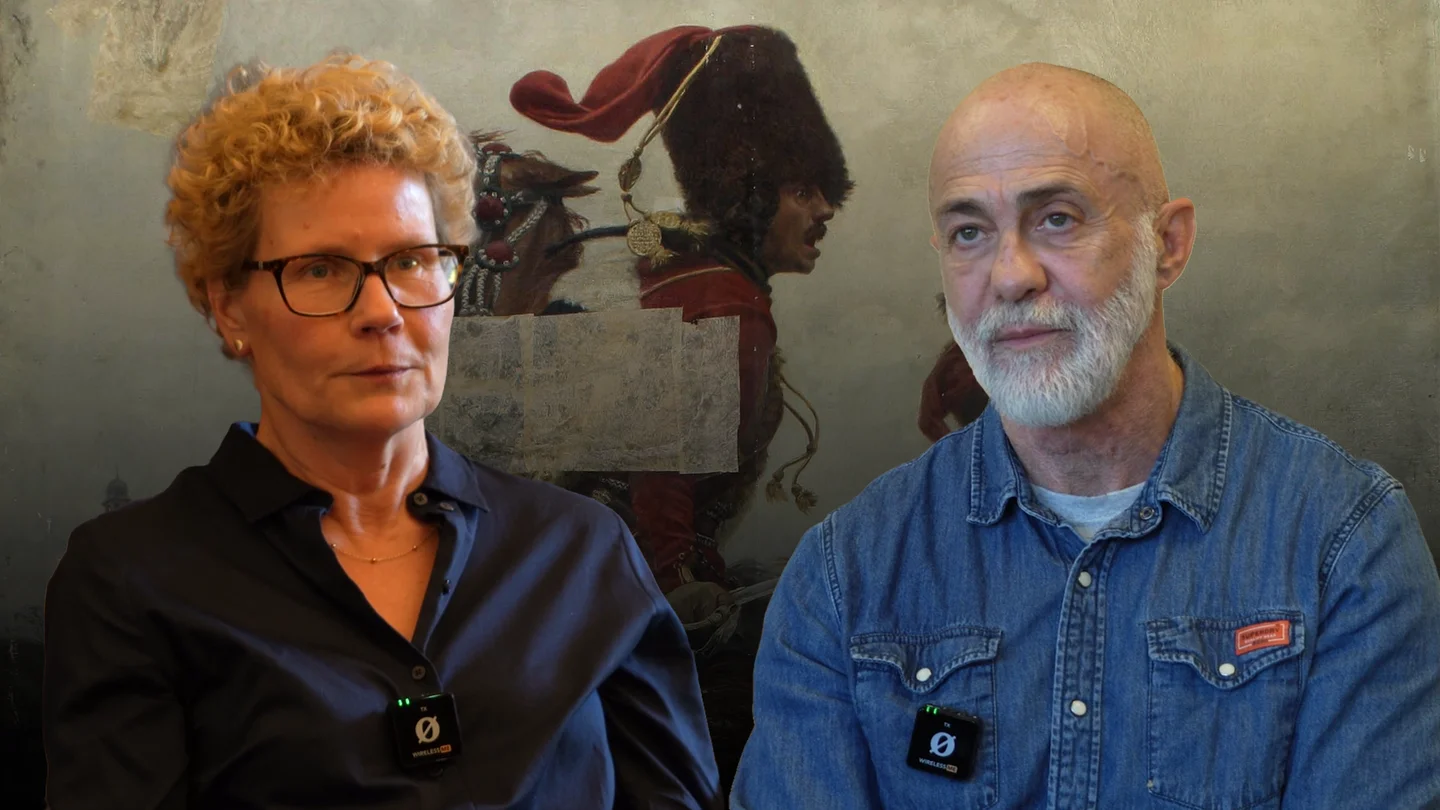
The painting’s journey over the course of a century has left visible traces. The damage provides clues to the improper handling of the work, whether as a result of the turmoil of war or inadequate storage over the years. This caused large tears in the canvas. These were stabilised, but in turn led to further damage, such as bulges and distortions in the surface. In addition, the paint layers had become loose and the painting was heavily soiled. The painting arrived at the DHM in this condition in 2010 and was conserved there by painting conservator Mathias Lang. In the film, he explains the conservation of the painting, during which only those steps absolutely necessary to preserve the work were carried out.
The painting had originally been selected by the exhibition’s curator, Wolfgang Cortjaens, as the opening object for “Objects. History. Stories.”. However, due to its considerable size, it ultimately could not be satisfactorily integrated into the exhibition design. Had it been included in the exhibition, it would have impressively illustrated the paths an object can take in the course of history, the reinterpretations it undergoes under different political systems, and how the movement of objects between changing locations is reflected in their physical condition.
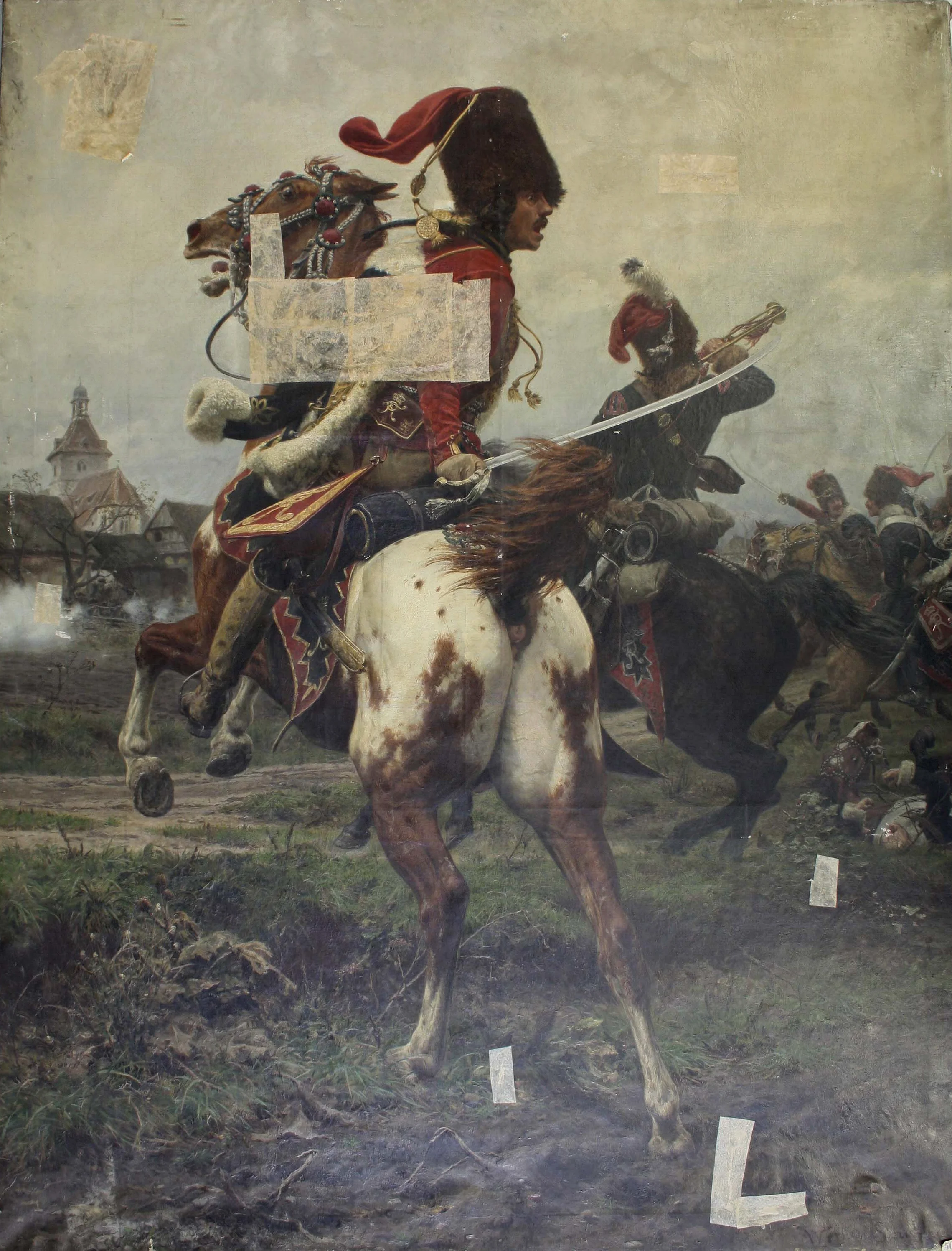
Hans Joachim von Zieten "Major General Hans Joachim von Zieten at the Battle of Catholic Hennersdorf", ca. 1890, © DHM, Reg.No. K1000840
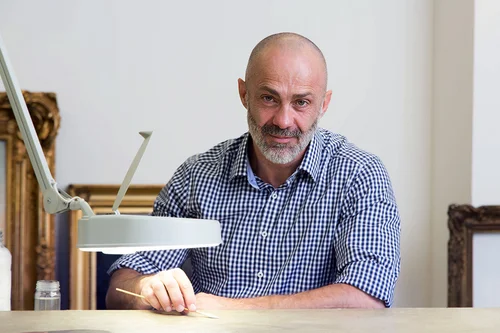
Mathias Lang is painting conservator at the Deutsches Historisches Museum.
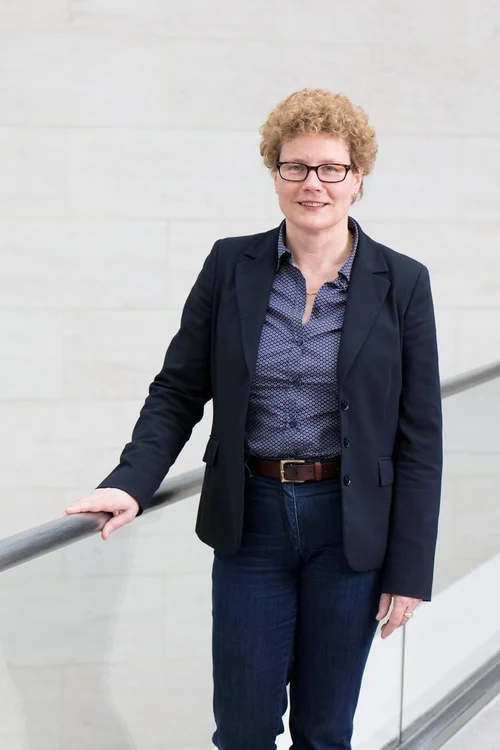
Dr Brigitte Reineke is Head of Central Documentation and Provenance Research at the Deutsches Historisches Museum.
17 November 2026
7 Min.Behind the Scenes
3 November 2026
5 Min.Objects. History. Stories.
30 September 2026
2 Min.Objects. History. Stories.
17 September 2026
2 Min.Objects. History. Stories.
9 September 2026
Simon SachaObjects. History. Stories.
12 August 2026
7 Min.Objects. History. Stories.
3 July 2026
Wolfgang Cortjaens , Dorlis BlumeObjects. History. Stories.

25 June 2026
Nicola SchnellBehind the Scenes
26 May 2026
Wolfgang CortjaensObjects. History. Stories.