
![[Translate to English:] Historisches Druckdokument auf vergilbtem Papier. Überschrift in Frakturschrift: „Im Congreß, den 4ten July, 1776. Eine Erklärung durch die Repräsentanten der Vereinigten Staaten von America, im General-Congreß versammlet.“ Darunter engbedruckter Fließtext in zwei Spalten, am unteren Rand Unterschriften, darunter „John Hancock, Präsident“. Das Papier zeigt deutliche Alterungsspuren mit leichter Bräunung und unregelmäßigen Rändern.](/journal/fileadmin/_processed_/f/5/csm_4_4_Unabh%C3%A4ngigkeitserkl%C3%A4rung_Vereingte_Staaten_H_0ee72e832a.webp)
Freedom on Paper: The German edition of the United States Declaration of Independence
3 July 2026
2 Min.
Objects. History. Stories.
3 July 2026 Reading duration 2 Min.
The Fourth of July 2026 marks the 250th anniversary of the United States Declaration of Independence. To illustrate this momentous occasion, the New York Times recently reported on a key artefact in the Deutsches Historisches Museum’s collections: the first German-language print of the Declaration of Independence, adopted on 4 July 1776 by the Founding Fathers of the United States of America, currently on display in the temporary exhibition “Objects. History. Stories. Reviewing the Collection”.
The acquisition of this unassuming print in 1993 held great symbolic significance for the Deutsches Historisches Museum’s programme, as it could be interpreted as an affirmation of Germany’s commitment to the values of Western democracies.
The separation of the thirteen North American colonies from the British motherland was strongly influenced by the ideas of natural law proposed by the European Enlightenment, according to which all people are by nature free, equal, and endowed with the same inalienable rights. From the very beginning, these included the universal right to migration. Immigrants from Germany and Switzerland played a decisive role in the dissemination of Enlightenment literature. Numerous religious refugees from Germany settled in what is now the state of Pennsylvania, which was regarded as particularly liberal. A German-language printing and publishing industry developed there early on, which became increasingly politicised as the conflicts between the colonies and Great Britain intensified. In Philadelphia, the printing shop of Henrich Miller, as well as those of Melchior Steiner and Carl Cist, maintained close contacts with the delegates of the Continental Congress, including Thomas Jefferson. In early 1776, Steiner & Cist published the German translation of Thomas Paine’s revolutionary pamphlet Common Sense under the title Gesunde Vernunft, followed in July by the single-sheet German print of the Declaration of Independence, intended for the German-speaking settlers in Pennsylvania. Only two copies of this print have survived: one is held at the Deutsches Historisches Museum, the other at the Musselman Library at Gettysburg College, Gettysburg (PA).
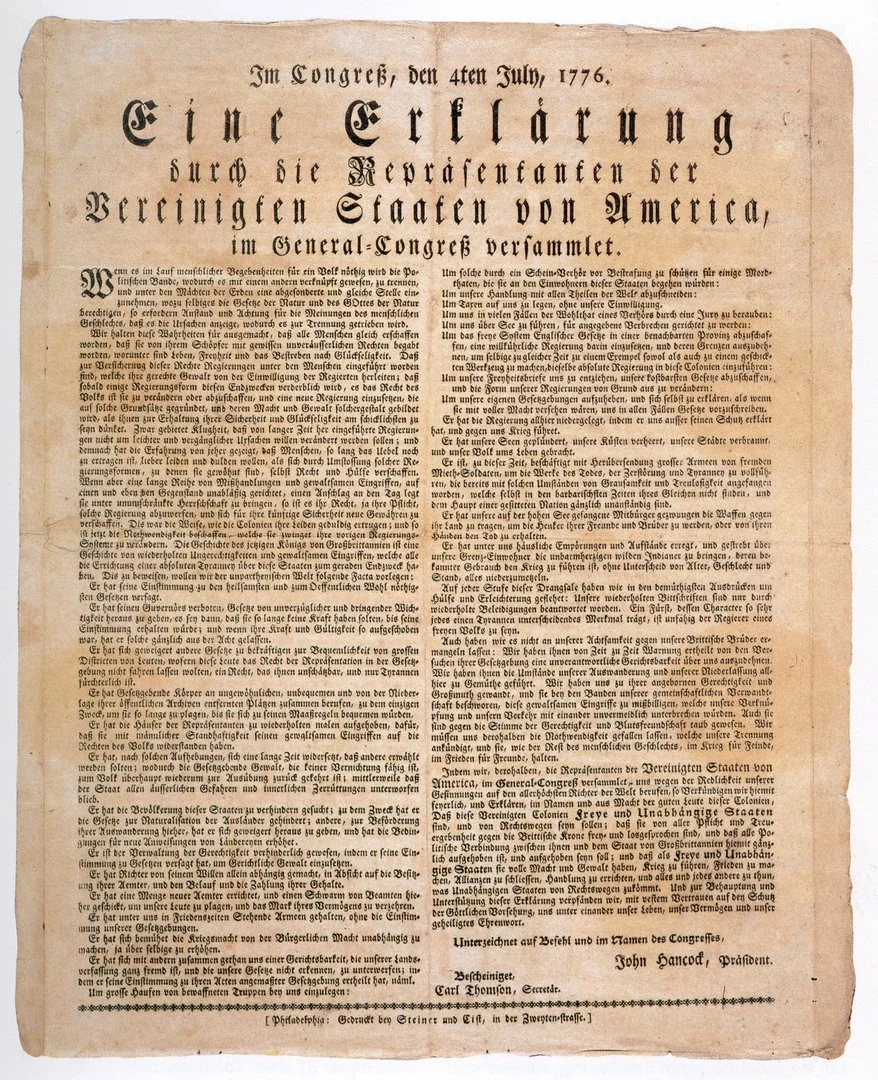
First printing of the Declaration of Independence of the United States of America in German Authors: Thomas Jefferson (1743–1826) et al., translator: Charles Cist (1738–1805) Philadelphia, 6–8 July1776 Paper, print, Berlin, DHM: Inv.-Nr. Do 93/101 Provenance: Art market, New York (USA); acquired in 1993 from an art dealer in Zurich (CH) with funding from the Deutsche Klassenlotterie Berlin
“The Declaration of Independence of the United States of America is one of my absolute favourite objects in the collection of the Deutsches Historisches Museum. This single sentence alone regularly gives me goosebumps: We hold these truths to be self-evident, that all men are created equal, that they are endowed by their Creator with certain unalienable rights, that among these are life, liberty and the pursuit of happiness.
These words are 250 years old and still highly relevant today. When I see this document, I know why and for what purpose my work is important, because the defence of these human rights is one of the most important tasks of all, as we are reminded time and again, particularly in the present day. For all these reasons, the Declaration of Independence in German is probably one of the earliest items acquired by the museum’s founding director, Christoph Stölzl, shortly after reunification, which he discovered on the Swiss art market.
The copy on display in the exhibition is in remarkably good condition. To ensure that it remains so, we can show the original for a maximum of three months, and only under exhibition lighting of 50 lux; after that, the document has to be replaced with a facsimile and must remain in the dark storage facility for at least three years to recover from the effects of the light exposure.” Thus Dorlis Blume.
If you hurry, you can still admire the original in the current exhibition: it will be on display until the beginning of August.
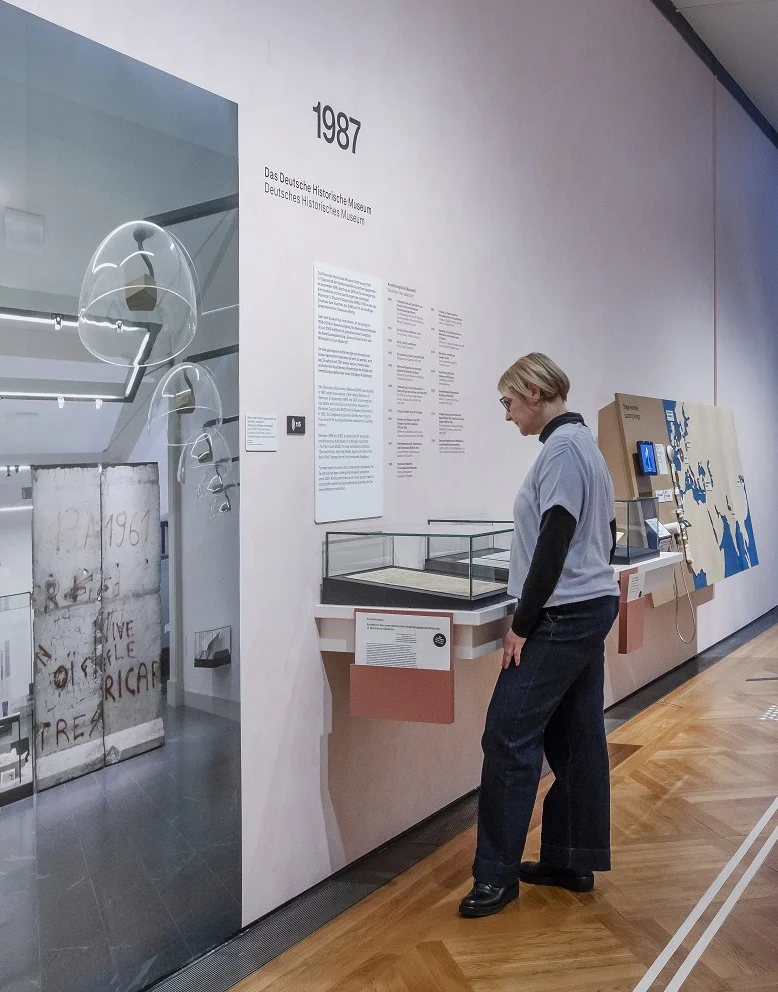
The German edition of the United States Declaration of Independence is on display in the exhibition “Objects. History. Stories. Reviewing the Collection” © DHM/David von Becker

Dr Wolfgang Cortjaens is Head of Applied Arts and Graphics at the Deutsches Historisches Museum.

Dorlis Blume is head of Temporary Exhibitions and Projects at the Deutsches Historisches Museum.
Freedom on Paper: The German edition of the United States Declaration of Independence
3 July 2026
2 Min.
Objects. History. Stories.
![[Translate to English:] Kurator Wolfgang Cortjaens spricht bei der Eröffnung der Ausstellung „Objekte. Geschichte. Geschichten. Blick in die Sammlung" im DHM](/journal/fileadmin/_processed_/1/9/csm_Objekte-Geschichte-Geschichten_c_schnitger-DHM-4590_a1111c3bdc.webp)
Opening speech by Curator Wolfgang Cortjaens on the exhibition “Objects. History. Stories. Reviewing the Collection”
26 May 2026
5 Min.
Objects. History. Stories.
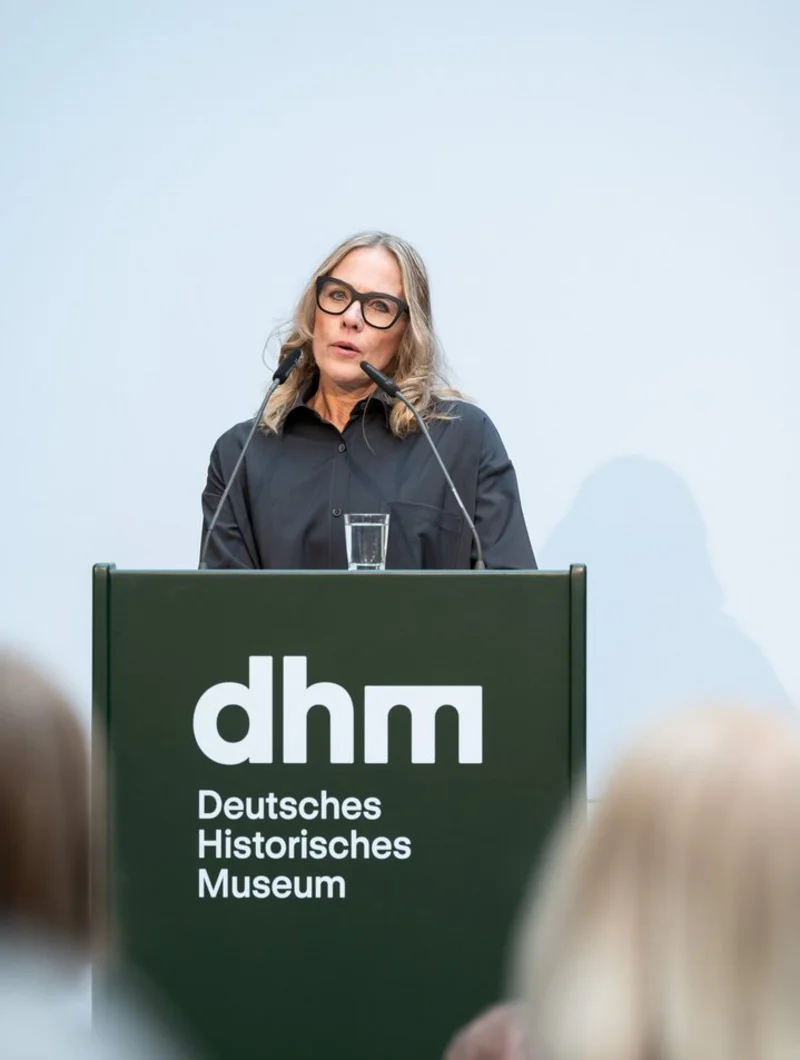
Opening speech by Charlotte Klonk on the exhibition “Objects. History. Stories. Reviewing the Collection”
26 May 2026
5 Min.
Objects. History. Stories.
![[Translate to English:] DHM-Präsident Raphael Gross spricht bei der Eröffnung der Ausstellung „Objekte. Geschichte. Geschichten. Blick in die Sammlung" im DHM](/journal/fileadmin/_processed_/f/f/csm_Objekte-Geschichte-Geschichten_c_schnitger-DHM-4312_23804f955b.webp)
Opening speech by DHM President Raphael Gross on the exhibition “Objects. History. Stories. Reviewing the Collection”
26 May 2026
3 Min.
Objects. History. Stories.
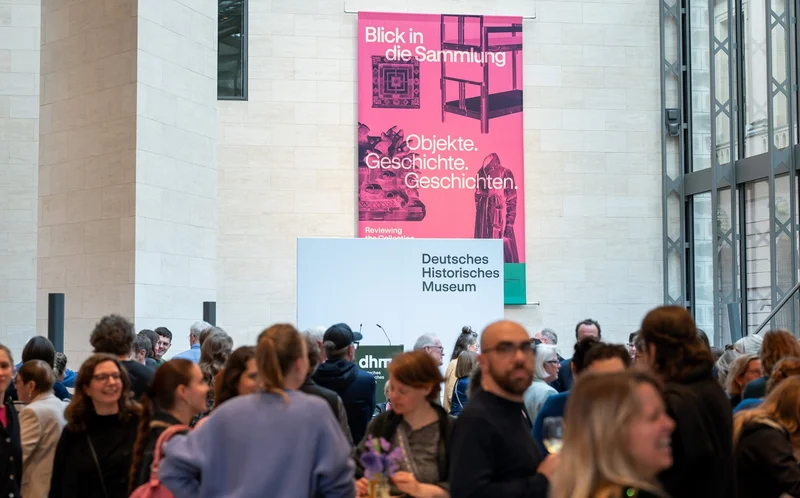
A recap in pictures: the opening of the exhibition "Objects. History. Stories. Reviewing the Collection"
26 May 2026
Objects. History. Stories.
![[Translate to English:] Gotisches Kästchen](/journal/fileadmin/_processed_/4/9/csm_Abb_1_3d041df185.webp)
Art for foreign currency, but this time the other way around – the Museum für Deutsche Geschichte’s acquisitions on the West German art market
8 April 2026
5 Min.
Research
Rusty Party Badges? On Collecting Objects about National Socialism in the Deutsches Historisches Museum
25 February 2026
8 Min.
Collecting
Collecting and researching: A closer look at the Augsburg Pictures of the Months
4 June 2025
6 Min.
Collecting
Lost and Found: Two drawings by Franz Krüger
9 April 2025
6 Min.
Collecting
Private and Public Collecting. The library of Imperial Count Joachim von Ortenburg and the collecting practice of the library of the Deutsches Historisches Museum
12 March 2025
8 Min.
Collecting
Freedom on Paper: The German edition of the United States Declaration of Independence
3 July 2026
2 Min.
Objects. History. Stories.
Opening speech by Curator Wolfgang Cortjaens on the exhibition “Objects. History. Stories. Reviewing the Collection”
26 May 2026
5 Min.
Objects. History. Stories.
Opening speech by Charlotte Klonk on the exhibition “Objects. History. Stories. Reviewing the Collection”
26 May 2026
5 Min.
Objects. History. Stories.
Opening speech by DHM President Raphael Gross on the exhibition “Objects. History. Stories. Reviewing the Collection”
26 May 2026
3 Min.
Objects. History. Stories.
A recap in pictures: the opening of the exhibition "Objects. History. Stories. Reviewing the Collection"
26 May 2026
Objects. History. Stories.
Art for foreign currency, but this time the other way around – the Museum für Deutsche Geschichte’s acquisitions on the West German art market
8 April 2026
5 Min.
Research
Rusty Party Badges? On Collecting Objects about National Socialism in the Deutsches Historisches Museum
25 February 2026
8 Min.
Collecting
Collecting and researching: A closer look at the Augsburg Pictures of the Months
4 June 2025
6 Min.
Collecting
Lost and Found: Two drawings by Franz Krüger
9 April 2025
6 Min.
Collecting
Private and Public Collecting. The library of Imperial Count Joachim von Ortenburg and the collecting practice of the library of the Deutsches Historisches Museum
12 March 2025
8 Min.
Collecting