
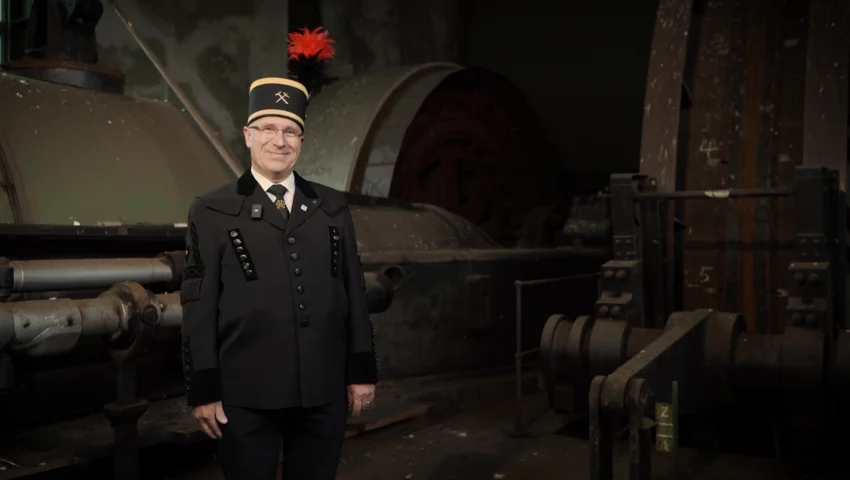
“Mining is not the work of one man” — Ralf Kusmierz reflects on the tradition of miners
30 September 2026
2 Min.Objects. History. Stories.
26 May 2026 Reading duration 5 Min.
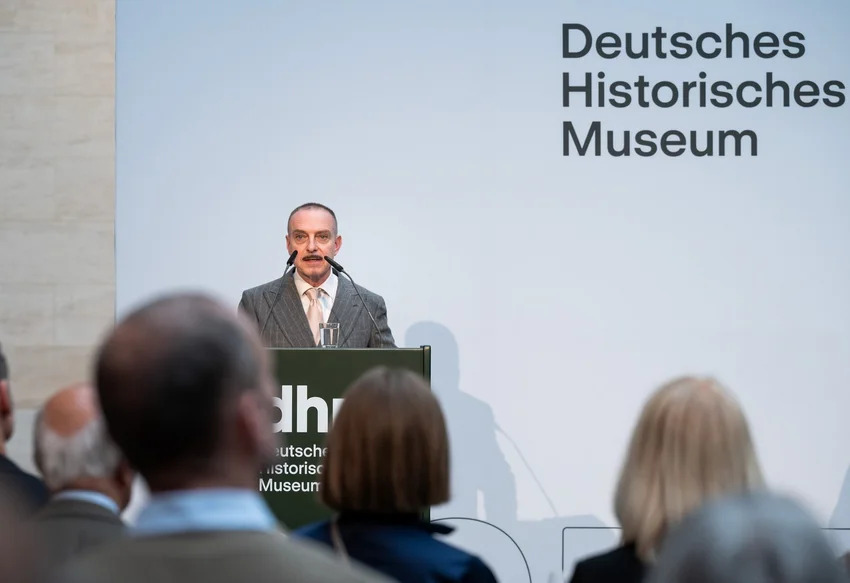
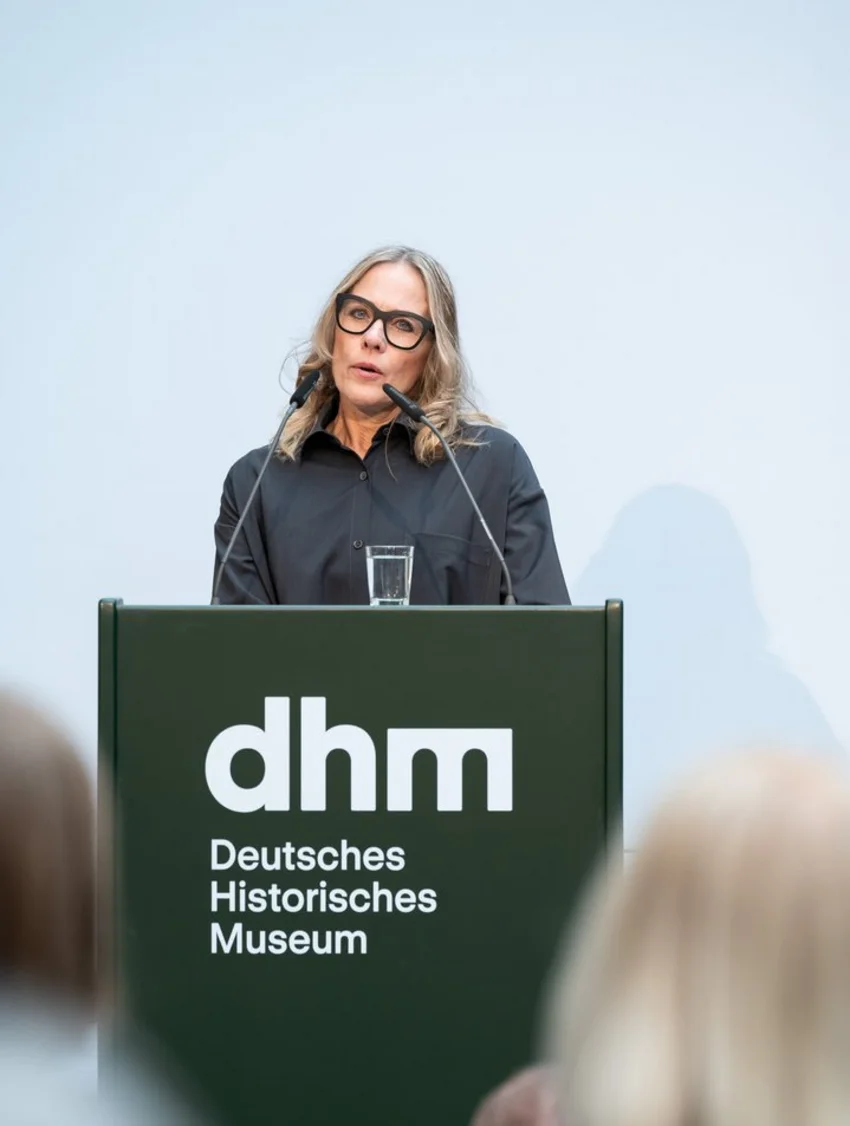
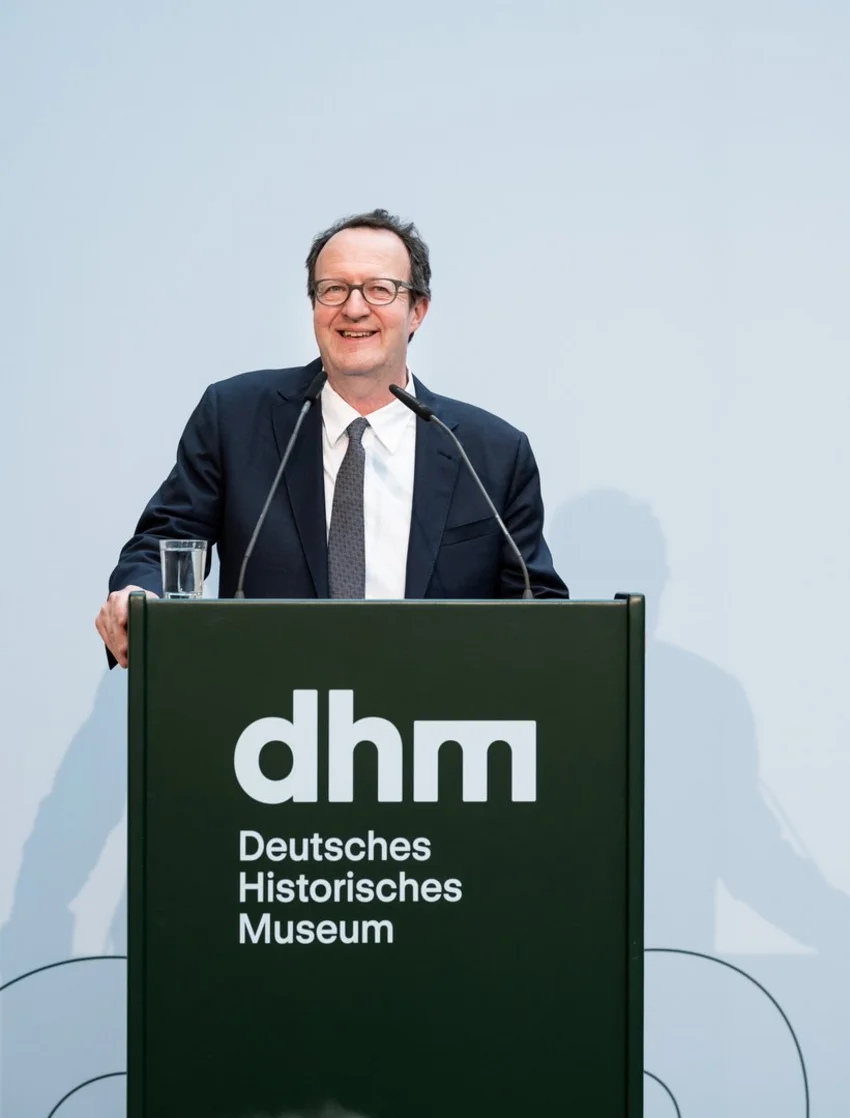
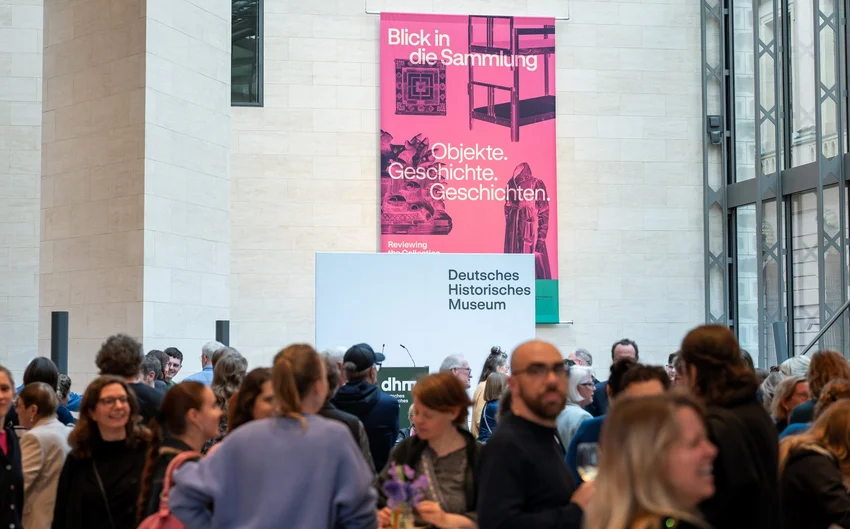
Since 8 May 2026, the exhibition “Objects. History. Stories. Reviewing the Collection” has been on display in the Pei Building of the Deutsches Historisches Museum. During the official opening on 7 May 2026, Charlotte Klonk, Professor of Art and New Media at Humboldt University in Berlin, delivered the following speech:
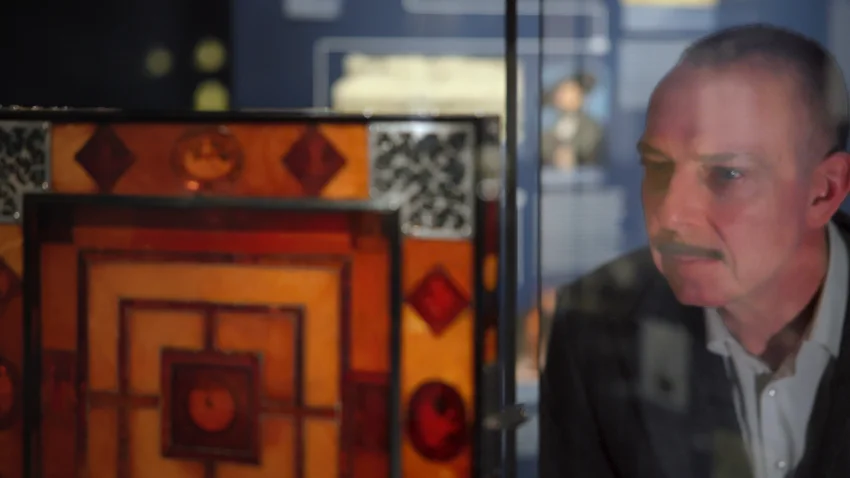
We all use objects to tell stories, both to ourselves and to others. In photo albums, pictures capture important moments in our lives, experiences we look back on with pleasure. In museums, exhibits illuminate historical, artistic, or scientific events and developments. Sometimes, however, we come across objects whose significance is unclear – heirlooms, for example, that are passed down to us without our ever knowing why our ancestors collected them. Museum collections present similar mysteries. A case in point is the enormous, richly decorated Baroque cabinet known as the Hamburg Schapp, which is on display in the exhibition. It was acquired by the Museum of German History in East Berlin in the 1960s. Yet nothing is known about where it had been before, who had owned it, or who eventually gave it to the museum. Other objects fail to find a place in the stories we tell and are relegated to a cellar or attic. When later generations discover them there, they may see them in a new light. This is what happened with a beautiful gown once worn by Queen Luise. Following its return from Russia after the war, it went to the Museum of German History but found no place in the museum’s narrative and remained in storage. Today, it is one of the most popular objects in the collection of the DHM, which inherited the holdings of the Museum of German History.
In these examples, objects have served as vehicles for the stories we tell about ourselves. But what if we reverse the perspective? What if, instead of using museum objects to tell history, we allow them to tell their own stories? Where have they been, and what were they originally made for? Who did they serve before they became items in a collection? And how did they do that? The object no longer illustrates our story; it becomes our guide, and we follow where it leads.
The exhibition “Objects. History. Stories” adopts this approach. Among the objects it considers is the Zeughaus itself – currently unavailable as an exhibition venue – together with the complex history of the collections it has housed. What do a cannon barrel and an IKEA bed have in common? Nothing, except that both are now held by the DHM. The cannon barrel arrived when the Zeughaus was used as a hall celebrating the military achievements of the Brandenburg-Prussian army. The bed did not join the collection until 2016, long after the buildings and collections of the Zeughaus and the Museum of German History in East Berlin had passed to the DHM, founded in West Berlin in 1987. Each object transports us to a different place and, in some cases, takes us on a remarkable journey – journeys whose stages are marked on maps in the exhibition space.
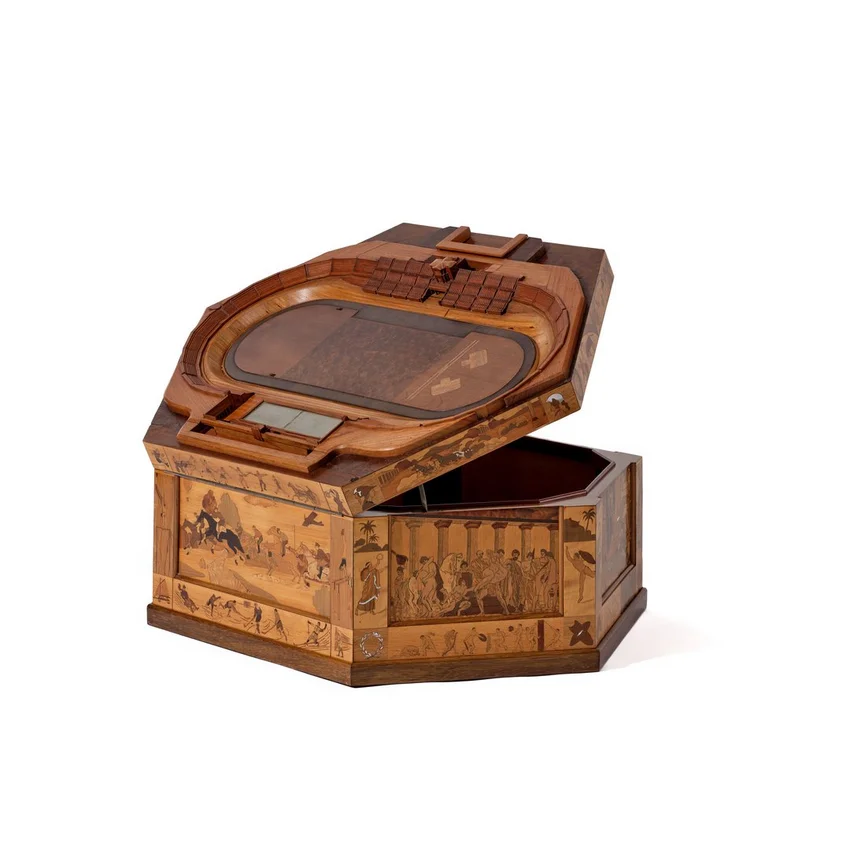
Some of the places that objects lead us to no longer serve their original purpose, although memories of them remain vivid. Not very long ago, in 2006, the Prosper-Haniel mine in Bottrop celebrated its 150th anniversary. Twelve years later, it was history. While the mine lives on as an industrial monument, other places no longer exist at all. Take the “German Stadium”, for example, once in the Charlottenburg district of Berlin. In the exhibition, it is preserved in an architectural model incorporated into an elaborately inlaid chest. The stadium itself, demolished in 1934 to make way for the Olympic Stadium, is kept alive in people’s memories only through exhibits such as this.
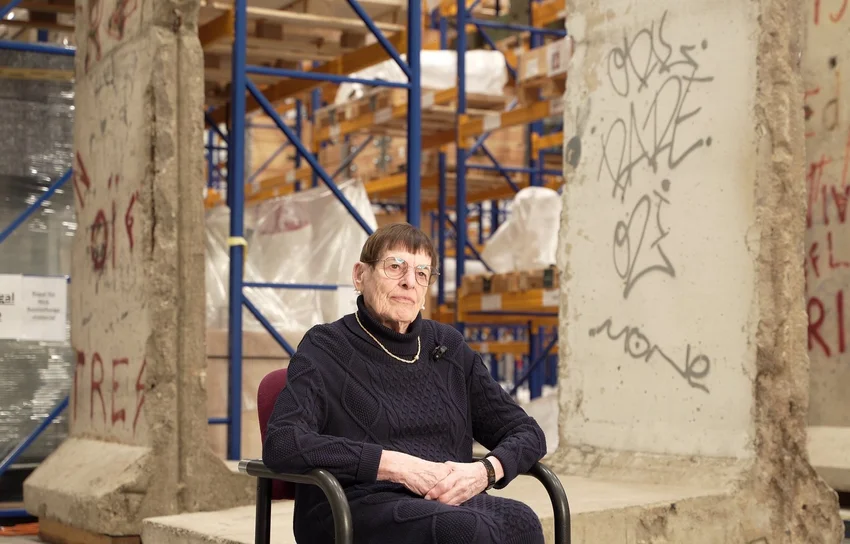
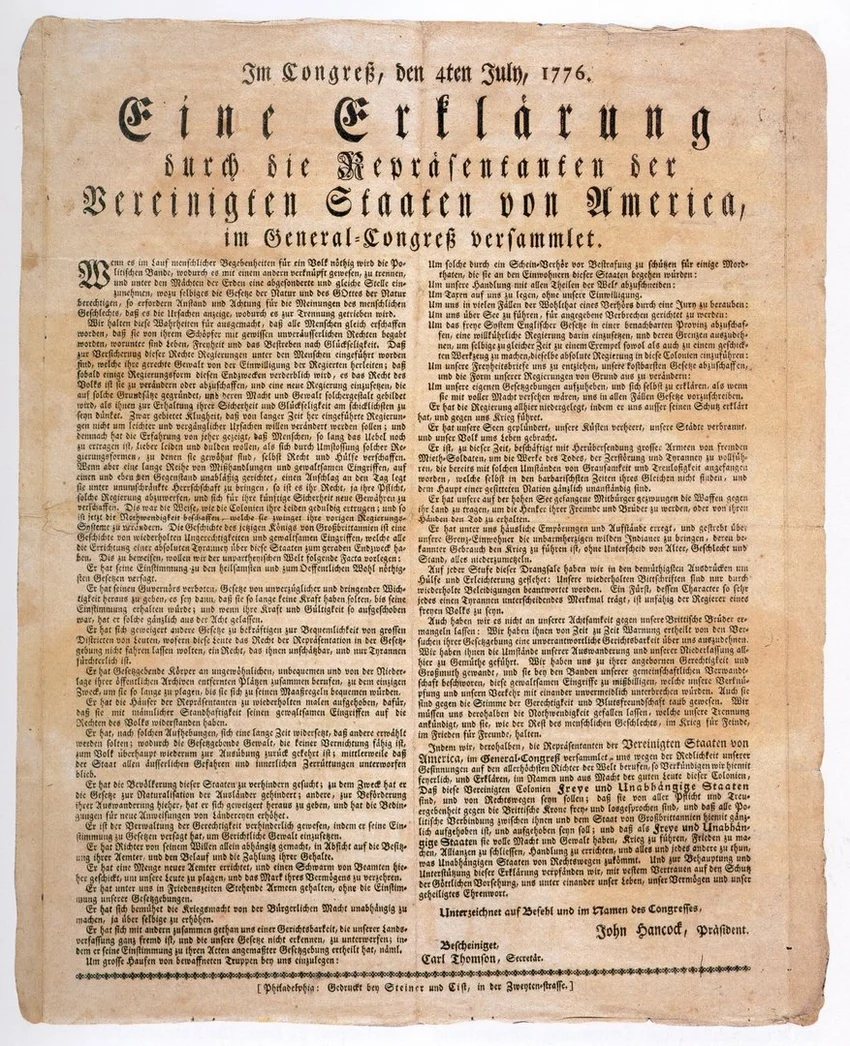
Objects do not merely evoke places from the past; sometimes, they even helped to create them. A case in point is the border marker that, until 1993, divided a street whose two sides belonged to different countries: one lay in the German town of Herzogenrath, the other in the Dutch town of Kerkrade. Anyone who jumped over the wall formed by these concrete blocks faced a fine of twenty German marks. Another such object, displayed in the first section of the exhibition, is a document dating from 1776 – a broadside that, together with others like it, helped create an entire nation: the United States of America, which celebrates its 250th anniversary this year.
When the delegates to the Second Continental Congress adopted the Declaration of Independence at the Pennsylvania State House in Philadelphia on 4 July 1776, they laid the foundations of the United States. Yet for the idea of independence from Great Britain to become a reality, it had to take material form – to become an object that could be carried out into the world. The original declaration was written on parchment, like a medieval charter. That same night, however, the text was reproduced on broadsides, which were sent to the thirteen states and, of course, to England. Public readings were held, including one ordered by George Washington for the troops in the colonies, as well as one in front of the State House itself. Since Philadelphia had a large German-speaking population, a German translation appeared in a German-language newspaper within two days. The printers Melchior Steiner and Charles Cist immediately issued it as a broadside as well. In 1993, not long after reunification, the DHM acquired one of the two surviving broadside copies. It demonstrates the power of objects to create spaces.
In 1975, the house in Philadelphia where Thomas Jefferson had drafted the Declaration of Independence was rebuilt, nearly a century after the original building was demolished in 1882. Its reconstruction served no residential or commercial purpose; it was intended solely as a memorial to the creation of the country’s founding document. The human rights set out in the Declaration’s preamble would have far-reaching consequences for the French Revolution and European history.
Jefferson’s original draft also contained a passage condemning slavery and the slave trade, but it was removed before ratification. He wrote it in the presence of his fourteen-year-old slave Robert Hemmings. Yet we know little about Hemmings – only what can be gleaned from official records that survive because they form part of Jefferson’s papers or otherwise relate to him. Hemmings remained in America when Jefferson left for France in 1784. Ten years later, he was released from slavery after saving enough money to purchase his freedom.
We know even less about the child for whom a simple IKEA bed at a refugee shelter in Kassel became, in 2015, a place of safety and a means of preserving the memory of a perilous voyage by boat across the Mediterranean. On the bed, a dark line formed by knots in the wood separates a depiction of flight from an image of peace, marked by flowers and trees. We do not know whether the child found that peace, how they are doing today, or even whether they were a girl or a boy. What is clear is that the child had few possessions, as the “privacy boxes” provided at the shelter held very little.
The family that fled from Breslau to Oldenburg after the Second World War was in a very different position. They managed to retain possession of a complete Biedermeier interior that their ancestors had commissioned in the early nineteenth century for a grand residence in Berlin near the Zeughaus.
The exhibits thus bear witness not only to places they helped create and places that have disappeared, but also to lives remembered and lives forgotten. The worlds the objects have passed through are preserved in them only by chance and to greatly varying degrees.
The exhibition shows what becomes possible when, instead of using objects to illustrate our own stories, we follow the traces they have left behind. It invites visitors to embark on the journeys that lie at the heart of museum work: every object in a collection has a provenance of its own, which must be researched before that object can take its place in an exhibition. As “Objects. History. Stories” leads us along these paths of discovery, we suddenly find ourselves in the midst of history – a history we can pass on and, at times, even carry forward.
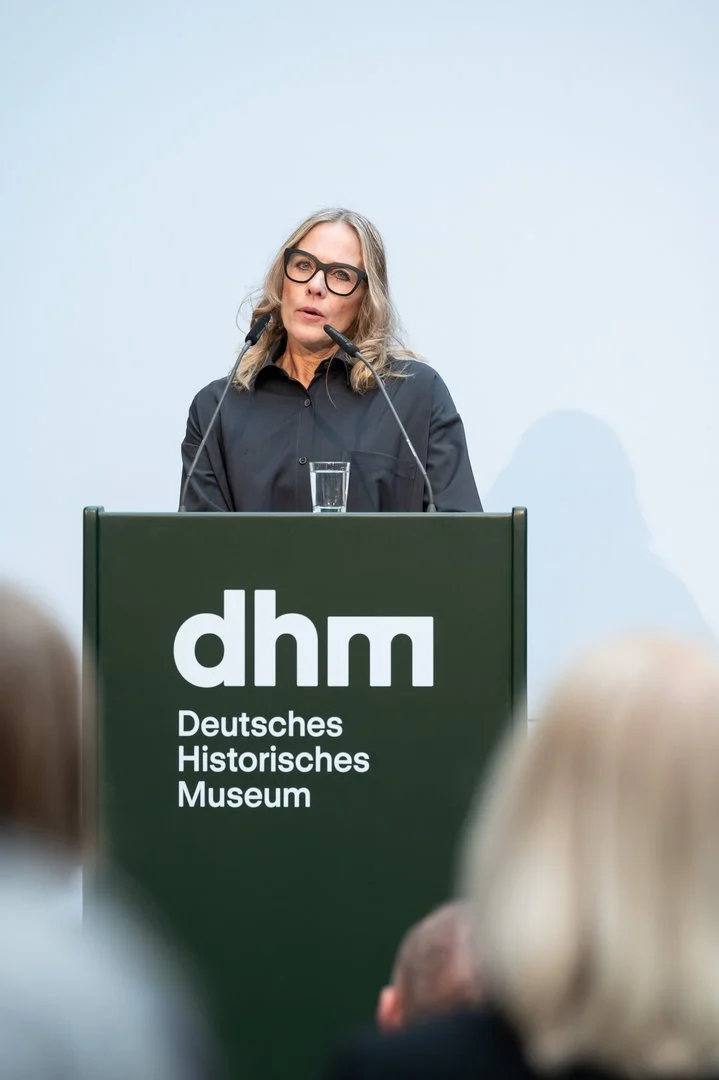
Charlotte Klonk gave the introductory speech at the Exhibition Opening © DHM/Harry Schnitger
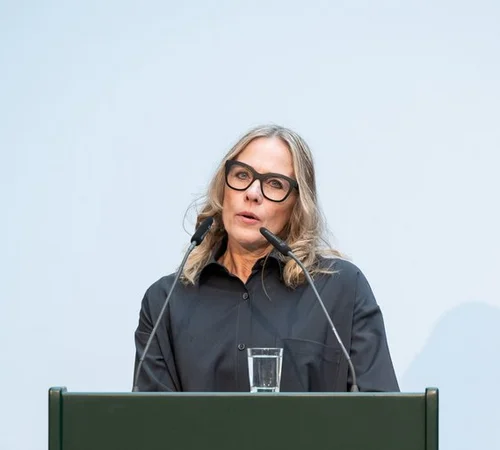
Prof. Dr. Charlotte Klonk is Professor of Art and New Media at Humboldt University in Berlin.
30 September 2026
2 Min.Objects. History. Stories.
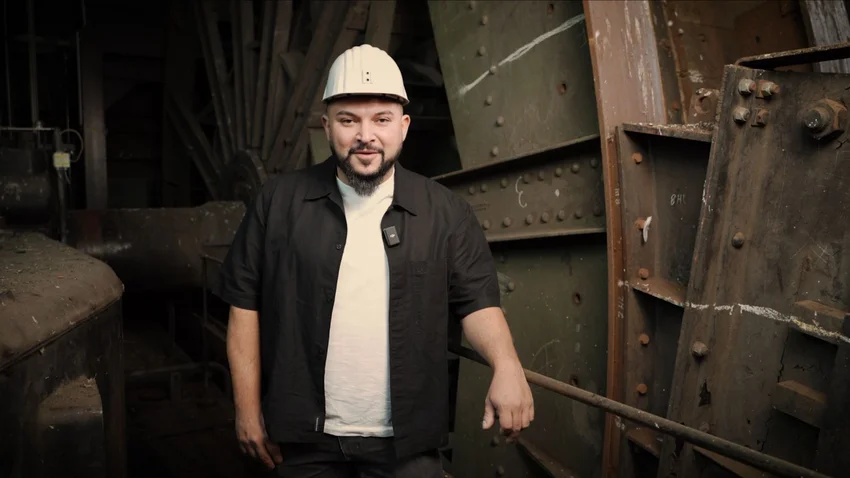
17 September 2026
2 Min.Objects. History. Stories.
9 September 2026
Simon SachaObjects. History. Stories.
12 August 2026
7 Min.Objects. History. Stories.
3 July 2026
Wolfgang Cortjaens , Dorlis BlumeObjects. History. Stories.
26 May 2026
Wolfgang CortjaensObjects. History. Stories.
26 May 2026
Charlotte KlonkObjects. History. Stories.
26 May 2026
Raphael GrossObjects. History. Stories.
26 May 2026
EditorsObjects. History. Stories.